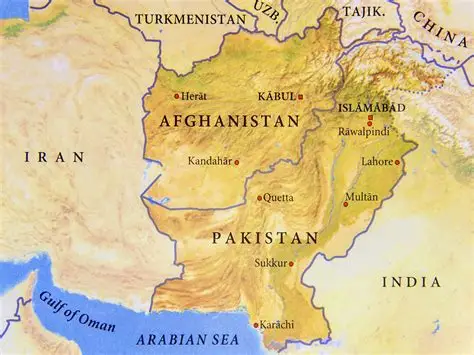
Pakistan Afghanistan Border Conflict: What We Know About the Alarming 2026 Escalation
Pakistan Afghanistan border conflict has become one of South Asia’s most dangerous security flashpoints in 2026, with cross-border airstrikes, drone claims, militant attacks, civilian casualties and failed diplomacy turning a fragile relationship into a rolling crisis.
The latest escalation is not one isolated clash. It is part of a wider breakdown that has unfolded since the October 2025 ceasefire, intensified sharply in February 2026, eased briefly after mediation attempts, and then returned through June and July. Pakistan says it is acting against militants who use Afghan territory to plan attacks. Afghanistan’s Taliban government denies sheltering such groups and accuses Pakistan of violating its sovereignty.
That is why the Pakistan Afghanistan border conflict must be treated carefully. Both governments make strong claims. Many casualty figures remain impossible to verify independently. Civilians on both sides of the border face the consequences when shelling, airstrikes and militant attacks replace diplomacy.
For background on earlier The News Ink coverage, read our report on Pakistan air strikes in Afghanistan and the later update on the Kabul rehab centre airstrike.
Why the Pakistan Afghanistan border conflict has escalated
The Pakistan Afghanistan border conflict is driven by a core dispute that neither side has resolved. Islamabad accuses the Afghan Taliban government of allowing Tehreek-e-Taliban Pakistan, or TTP, and allied groups to operate from Afghan soil. Kabul denies this and says Pakistan is using Afghanistan as a scapegoat for its own internal security failures.
The TTP is separate from the Afghan Taliban, but the two share ideological and historical links. Since the Afghan Taliban returned to power in 2021, Pakistan has repeatedly argued that the TTP has found greater space to reorganise, recruit and attack. Afghan officials reject that charge and say Pakistan should solve its militancy problem inside its own borders.
The argument has now moved beyond diplomatic statements. Pakistan has carried out strikes inside Afghanistan, saying it targeted militant camps and safe havens. The Taliban government has responded with cross-border fire, drone claims and warnings of retaliation.
The result is a pattern of action and reaction. One side reports an attack. The other says it is responding. Then the first side responds again. The Pakistan Afghanistan border conflict has therefore become a cycle rather than a single event.
What happened in the February escalation
The February phase of the Pakistan Afghanistan border conflict began after Taliban forces said they launched large-scale operations against Pakistani military positions along the border. Fighting was reported across several eastern Afghan provinces, including Nangarhar, Nuristan, Kunar, Khost, Paktia and Paktika.
Pakistan said Afghan forces opened fire on multiple positions in Khyber Pakhtunkhwa. It then launched strikes that officials said targeted Taliban military installations, including locations in Kabul, Kandahar and provinces close to the border.
Reuters reported that the fighting entered a third day on February 28, 2026, with foreign governments calling for urgent talks. The report said Pakistan accused the Taliban of harbouring TTP militants, while Kabul said Pakistan had violated Afghan sovereignty.
This is where the Pakistan Afghanistan border conflict became more dangerous. Pakistan’s defence minister described the situation as “open war,” while Taliban officials warned that wider fighting would carry serious consequences. That language raised fears that border clashes could move into a broader state-to-state confrontation.
The casualty claims remain disputed
The casualty figures from the Pakistan Afghanistan border conflict are highly contested. Pakistan said 12 of its soldiers were killed, 27 were injured and one was missing during the February fighting. It also claimed that 274 Taliban fighters were killed and hundreds more wounded.
The Taliban government presented a different account. Afghan officials said Pakistani soldiers had suffered far higher losses and claimed Afghan fighters had captured or destroyed military positions. They also accused Pakistani strikes of killing civilians, including women and children.
Al Jazeera reported that both sides claimed major casualties but that the figures could not be independently verified. That caveat is essential. In active conflicts, governments often inflate enemy losses, understate their own losses and frame civilian casualties in politically useful ways.
The safest wording for readers is this: both sides reported heavy losses, but exact military casualty figures remain unverified. Civilian harm, however, has been documented by the United Nations and major news organisations in later phases of the conflict.
The October ceasefire did not hold
The Pakistan Afghanistan border conflict was supposed to be restrained by the ceasefire agreement reached in October 2025. The deal, mediated by Qatar and Turkey, followed more than a week of deadly fighting. It included pledges that neither side would attack the other’s forces, civilians or infrastructure, and that hostile groups would not be supported.
AP reported that the agreement was signed in Doha and that a follow-up mechanism was planned to review claims and ensure implementation. The two countries also share a long and disputed frontier, commonly known as the Durand Line, stretching more than 2,600km.
But the ceasefire did not solve the underlying issue. Border crossings remained vulnerable to closure. Trade was disrupted. Refugees and traders were stranded. The TTP question remained unresolved.
By February, the Pakistan Afghanistan border conflict had returned at a far more serious level than the ceasefire was designed to prevent.
Timeline of the 2025-26 border crisis
| Date | Development | Why it mattered |
|---|---|---|
| October 2025 | Pakistan and Afghanistan agreed to a ceasefire mediated by Qatar and Turkey | The deal temporarily paused fighting but did not resolve the TTP dispute |
| February 2026 | Taliban and Pakistani forces exchanged major cross-border attacks | The conflict became the worst confrontation since the Taliban returned to power |
| March 2026 | UN reports and independent estimates pointed to heavy civilian harm | Civilian casualties became central to the crisis |
| April 2026 | China hosted talks in Urumqi to reduce tensions | Diplomacy resumed but did not end the cycle |
| June 2026 | Pakistan carried out air operations in Afghanistan after attacks inside Pakistan | The conflict widened again after a brief lull |
| July 2026 | Pakistan said it intercepted four drones launched from Afghanistan | Drone use added a new risk to the escalation pattern |
The timeline shows why the Pakistan Afghanistan border conflict cannot be explained only through one week of clashes. It has become a prolonged crisis with repeated attempts at de-escalation and repeated returns to violence.
June and July brought the crisis back
The Pakistan Afghanistan border conflict re-entered a dangerous phase in late June. Pakistan said it had targeted militants after attacks inside Pakistan, including a Karachi attack claimed by Jamaat-ul-Ahrar, a TTP splinter faction. Afghanistan said civilians were killed in Pakistani strikes.
Reuters reported that UNAMA said at least 28 civilians were killed and 49 injured in Pakistani airstrikes along the Afghan border. Pakistan said it targeted militant facilities and killed militants in Paktia, Paktika and Kunar. Afghan Taliban officials gave a higher civilian casualty figure.
Then, on July 1, Pakistan said it had intercepted four drones launched from Afghanistan into Balochistan. Al Jazeera reported that Afghanistan’s defence ministry said it had carried out strikes in Pakistan’s Balochistan and Khyber Pakhtunkhwa provinces, while Pakistan said the drones were rudimentary and were brought down by its air defence network.
The Taliban do not have a conventional air force. Their drone use is therefore different from state airpower. Even so, drones introduce a new layer of danger because they can be used for symbolic retaliation, harassment or targeted strikes while allowing each side to deny or frame responsibility.
The News Ink’s coverage of Ukraine AI drones and advanced technology shows how drones have changed modern battlefields. The Pakistan-Afghanistan case is different, but it reflects the same trend: cheaper aerial systems can complicate border security and escalation control.
Why Balochistan matters to the conflict
The Pakistan Afghanistan border conflict is often discussed through Khyber Pakhtunkhwa and the tribal border belt, but Balochistan has become increasingly important. The province borders Afghanistan and Iran, hosts key routes and has long faced separatist violence, militant activity and state counterinsurgency operations.
In July 2026, Pakistan reported a major wave of violence in Balochistan. Reuters reported that Pakistan’s military said 42 police and army personnel were killed in three militant attacks since July 6, while 54 militants were killed in response. AP also reported that Pakistan blamed insurgents and alleged Afghan involvement, while Kabul denies supporting such attacks.
This matters because Pakistan increasingly frames militancy in Balochistan and Khyber Pakhtunkhwa as linked to cross-border sanctuaries. Afghanistan rejects that framing. The more Pakistan links domestic attacks to Afghan territory, the more likely it becomes that militant violence inside Pakistan will trigger cross-border retaliation.
That makes the Pakistan Afghanistan border conflict not only a frontier dispute, but also a domestic security crisis for Pakistan and a sovereignty crisis for the Taliban government in Kabul.
Civilian casualties are the most serious warning
The most troubling part of the Pakistan Afghanistan border conflict is the civilian toll. Military claims can be contested, but civilian harm has been documented by UNAMA and reported by major international outlets.
In May, Al Jazeera reported that UNAMA documented at least 372 Afghan civilians killed and 397 injured in cross-border violence in the first three months of 2026. The report said airstrikes were the leading cause of civilian casualties, while indirect cross-border fire also caused harm.
Those figures show why the Pakistan Afghanistan border conflict cannot be treated only as a military exchange. Airstrikes, shells and drones do not remain limited to military maps. They hit villages, roads, homes, schools, clinics and border communities already living with poverty, displacement and uncertainty.
Pakistan says it targets militants and tries to avoid civilians. Afghanistan says civilians are being killed. The legal and moral test is whether both sides can protect non-combatants, investigate credible allegations and avoid strikes where the civilian risk is too high.
What both sides want
Pakistan wants the Afghan Taliban government to stop TTP and allied militants from using Afghan territory. Islamabad also wants proof that Kabul can control border areas and prevent attacks from being planned or launched across the frontier.
Afghanistan’s Taliban government wants Pakistan to stop airstrikes and recognise Afghan sovereignty. Kabul also wants to avoid looking weak at home by appearing to accept Pakistani military action inside Afghanistan.
That creates a difficult political trap. Pakistan cannot easily ignore attacks that kill soldiers, police or civilians. The Taliban cannot easily accept Pakistani strikes without responding. The Pakistan Afghanistan border conflict therefore rewards escalation unless there is a credible mechanism to verify claims and punish violations.
China, Qatar and Turkey have all tried to create diplomatic space. Al Jazeera reported that Pakistan and Afghanistan held talks in Urumqi in April 2026 aimed at ending the worst conflict between the neighbours since the Taliban returned to power in 2021. But talks can only work if both sides believe the other can deliver on security promises.
Why verification is so difficult
The Pakistan Afghanistan border conflict is hard to verify because many clashes occur in remote mountains, closed border zones or politically sensitive areas. Independent journalists and monitors often face limited access. Official statements arrive quickly, but field confirmation takes much longer.
This creates an information gap. Pakistan may report militant deaths. Afghanistan may report civilian deaths. Local residents may give different accounts. International organisations may later confirm some casualties but not all details.
That is why responsible reporting should avoid presenting every number as settled fact. Words such as “claimed,” “said,” “reported,” “according to officials” and “could not be independently verified” are not weak language. They are necessary language in a conflict where misinformation, propaganda and battlefield fog are constant risks.
The best current reading is that the Pakistan Afghanistan border conflict has caused significant military and civilian harm, but many specific casualty and damage claims remain contested.
What could happen next
The Pakistan Afghanistan border conflict has three possible paths.
The first is managed escalation. Pakistan continues limited strikes after major militant attacks, while the Taliban responds with controlled border fire or drone claims. This would keep the conflict dangerous but below full war.
The second is renewed diplomacy. China, Qatar or Turkey could push both sides toward a stronger mechanism for verifying TTP-related claims, investigating civilian casualties and preventing border closures from becoming economic punishment.
The third is a wider confrontation. A major attack inside Pakistan, a large civilian casualty event in Afghanistan, or a successful drone strike on a sensitive Pakistani site could trigger a much larger response.
The most likely short-term path is continued tension with periodic flare-ups. The deeper problem remains unresolved: Pakistan does not trust Kabul’s promises on militants, and Kabul does not accept Pakistan’s right to strike inside Afghanistan.
Why the region is watching closely
The Pakistan Afghanistan border conflict affects more than two governments. It can disrupt trade routes, refugee movements, regional diplomacy and security planning across South and Central Asia.
China has an interest in preventing instability that could affect regional connectivity and security. Gulf states have tried to mediate. Iran watches its own border and refugee pressures. The United States and European governments monitor militant networks and humanitarian consequences.
Pakistan’s domestic politics also matter. When security forces suffer heavy casualties, public pressure for retaliation rises. Afghanistan’s Taliban government faces its own legitimacy concerns and cannot appear passive when foreign strikes hit Afghan territory.
That is why small incidents can become major tests. A drone crossing, a border post attack or an airstrike can carry symbolic weight beyond the immediate damage.
What we know so far
The Pakistan Afghanistan border conflict has moved through several stages. The October 2025 ceasefire reduced fighting temporarily but did not end the core dispute. February 2026 brought the most serious escalation in years. March and May reports showed heavy civilian harm. April diplomacy in China lowered tensions for a time. June and July then brought renewed airstrikes, drone claims and militant violence.
The key facts are clear enough:
- Pakistan says it is targeting militant networks linked to attacks inside Pakistan.
- Afghanistan denies sheltering militants and accuses Pakistan of violating sovereignty.
- Civilian casualties have been documented by UNAMA.
- Both sides’ military casualty claims remain difficult to verify.
- Drone claims have added a new escalation risk.
- Diplomacy has reduced violence at times but has not produced a durable settlement.
The conflict is not over. It is moving between battlefield pressure and diplomatic attempts, with civilians paying the highest price whenever talks fail.
The real test is whether both sides can stop the cycle
Pakistan Afghanistan border conflict will not be solved by one more strike, one more denial or one more dramatic statement. Pakistan needs credible assurances that armed groups are not using Afghan territory to organise attacks. Afghanistan needs credible guarantees that its sovereignty and civilians will not be violated by cross-border military action.
Both needs can be legitimate at the same time. That is why the only workable solution requires verification, not just accusation. If Pakistan presents evidence of cross-border militant planning, there must be a mechanism to investigate and act on it. If Afghanistan reports civilian casualties, there must be credible investigation and accountability.
Without that, the pattern will continue. Militants attack. Pakistan strikes. Afghanistan retaliates. Civilians suffer. Diplomats intervene. The cycle pauses, then starts again.
The Pakistan Afghanistan border conflict is now a regional security crisis, not a temporary border incident. The coming months will show whether Islamabad and Kabul can move from retaliation to enforcement, from propaganda to verification, and from fragile pauses to a real mechanism that protects civilians on both sides of the frontier.
For more regional-security coverage and updates, follow The News Ink on X as we continue tracking major developments across South Asia and the wider region.