Millions of voters in Nepal have cast their ballots in the country’s first general election since youth-led protests forced the government from power last year.
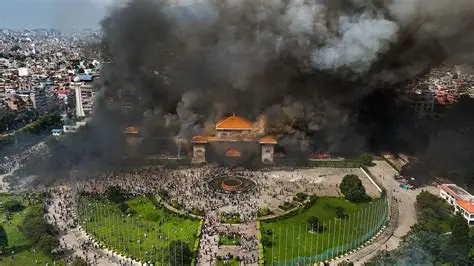
The protests erupted in September and left 77 people dead. Many protesters died after clashes with police. Demonstrators demanded an end to corruption, economic stagnation and inequality.
The election now marks a critical moment for the country. It pits traditional political leaders against a new wave of candidates supported by young voters.
Nearly 19 million citizens registered to vote in the 5 March election for the House of Representatives. Almost one million of them are first-time voters.
Officials expect turnout to reach around 60%. Voting remained mostly peaceful, with heavy security deployed across the country.
Counting votes may take several days. Nepal’s mountainous geography slows the transport of ballot boxes. Officials also count votes manually, which adds to the delay.
The election features several high-profile candidates. Former prime minister KP Sharma Oli hopes to return to power after protesters forced him from office. His party, the Communist Party of Nepal (UML), argues that the protests did not reflect public opinion about his leadership.
Oli told the media he remains confident about winning the election.
Another major contender is Balen Shah, a former rapper and the ex-mayor of Kathmandu. Shah resigned earlier this year to challenge Oli in the key Jhapa 5 constituency. He represents the Rastriya Swatantra Party.
Shah’s campaign has attracted strong support from younger voters who want new leadership. However, some media groups worry about his limited engagement with journalists.
Meanwhile, Gagan Thapa of the Nepali Congress says young voters have grown tired of unstable coalition governments and poor governance. He believes his party understands the demands of the younger generation.
Despite the promises from established parties, some activists remain sceptical.
Youth leader Rakshya Bam said many political groups have failed to include the reform agreements made with the Gen Z movement in their election manifestos.
She warned that some politicians are simply using the Gen Z movement’s name to gain support.
Many young voters say unemployment and corruption remain major concerns.
One voter in Kathmandu said she joined the protests to push for political stability and job opportunities. She added that many young people leave the country because they cannot find work at home.
For decades, Nepal’s politics has been dominated by a small group of parties. Frequent coalition changes have created instability and slowed reforms.
This election will test whether voters want a new generation of leaders or prefer experienced politicians who have governed the country for years.
The parliament has 275 seats. Of these, 165 are decided through direct voting. The remaining 110 seats are allocated through proportional representation based on national vote shares.
The Election Commission of Nepal plans to release results for directly elected seats within 24 hours after counting begins. Final results may take several more days.
The next government will face major challenges. Leaders must tackle corruption, boost the economy and improve governance across the country.
Many voters say they want development beyond major cities. They hope the next government will focus on rural areas that still lack basic infrastructure and opportunities.
For young voters especially, the election represents a chance to reshape Nepal’s political future.