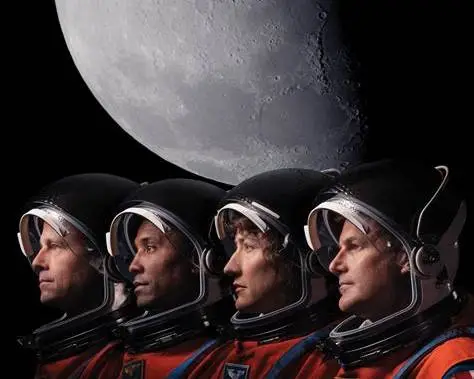
NASA Artemis Program Explained: Missions, SLS, Orion and the Return to the Moon
The NASA Artemis Program is the United States’ most ambitious human lunar exploration campaign since Apollo, but it is not simply an attempt to repeat the Moon landings of the 1960s and 1970s.
Artemis is designed around a broader goal.
NASA wants to return astronauts to the Moon, conduct science in the lunar South Pole region, develop technologies for longer stays beyond Earth, expand commercial and international partnerships and use those experiences to prepare for eventual human missions to Mars.
The program has already passed two major milestones.
Artemis I sent an uncrewed Orion spacecraft around the Moon in 2022.
Artemis II carried four astronauts around the Moon in April 2026, becoming the first crewed mission beyond Earth orbit since Apollo 17.
The architecture has also changed substantially.
Under NASA’s current plan, Artemis III will not land astronauts on the Moon. Instead, it is planned for 2027 as a crewed demonstration in low-Earth orbit, where Orion will test rendezvous and docking with commercial lunar-lander test vehicles from Blue Origin and SpaceX.
NASA now targets Artemis IV in early 2028 for the first Artemis crewed lunar landing, with two astronauts expected to spend roughly a week near the lunar South Pole.
That revision is important because thousands of older articles still describe Artemis III as the first landing mission.
They are now outdated.
The modern NASA Artemis Program is increasingly built around testing systems in stages before committing astronauts to a lunar landing.
NASA Artemis Program at a Glance
| Mission | Current Role | Status / Target |
|---|---|---|
| Artemis I | Uncrewed SLS and Orion lunar test | Completed 2022 |
| Artemis II | First crewed Orion lunar flyby | Completed April 2026 |
| Artemis III | Crewed Earth-orbit docking and lander demonstration | Planned 2027 |
| Artemis IV | First current Artemis lunar surface landing | Targeted early 2028 |
| Artemis V | Additional lunar surface mission | NASA anticipates 2028 |
| Later Artemis | Repeated lunar expeditions and surface infrastructure | Developing |
NASA says Artemis III will evaluate commercial landing systems in low-Earth orbit, while Artemis IV is currently targeted as the first Artemis return to the lunar surface.
What Is the NASA Artemis Program?
The NASA Artemis Program is NASA’s campaign to establish a new era of human exploration around and on the Moon.
Unlike Apollo, Artemis is intended to involve a wider network of systems.
These include:
- the Space Launch System rocket;
- Orion spacecraft;
- commercial human landing systems;
- next-generation spacesuits;
- lunar rovers;
- surface power;
- communications and navigation;
- robotics;
- science instruments;
- commercial companies;
- international partners.
The goal is not merely to perform another short flag-and-footprints mission.
NASA increasingly describes Artemis as part of a larger Moon-to-Mars strategy in which lunar operations become a testing ground for technologies and procedures that could eventually support crews much farther from Earth.
For the broader agency overview, this cluster should link upward to NASA Explained once the main NASA pillar is published.
Why Is It Called Artemis?
Artemis is the twin sister of Apollo in Greek mythology.
The name deliberately connects the modern lunar program with NASA’s Apollo heritage while signaling that this is a different generation of exploration.
Apollo proved humans could travel to the Moon, land, conduct science and return.
The NASA Artemis Program is trying to answer a harder question:
Can humans build a repeatable exploration system that supports longer and more frequent operations beyond Earth?
That requires more than a rocket.
It requires transportation, landers, suits, mobility, communications, power, science equipment and eventually surface infrastructure.
How Artemis Differs From Apollo
Apollo and Artemis share the Moon, but their architectures are very different.
| Apollo | Artemis |
|---|---|
| Primarily government-developed systems | Government + commercial + international systems |
| Lunar equatorial and mid-latitude sites | Strong focus on lunar South Pole |
| Short surface expeditions | Longer and eventually more frequent missions |
| Saturn V | SLS plus commercial launch vehicles |
| Apollo Command/Service Module | Orion |
| Apollo Lunar Module | Commercial Human Landing Systems |
| Limited surface mobility | Future commercial lunar rovers |
| Moon as primary destination | Moon used partly to prepare for Mars |
Apollo lunar crews spent limited periods on the surface.
NASA’s longer-term vision for the NASA Artemis Program involves progressively more capable expeditions, greater mobility and infrastructure that could support continuing lunar activity.
Artemis I: The First Integrated Test
Artemis I launched on November 16, 2022.
It was uncrewed.
The mission was the first integrated flight of:
Space Launch System
Orion
and
Exploration Ground Systems.
Orion traveled around the Moon and returned to Earth on December 11.
NASA lists the mission duration as 25 days, 10 hours and 53 minutes, with Orion traveling approximately 1.4 million miles during the test.
The purpose was engineering validation.
NASA needed to demonstrate that its launch vehicle, spacecraft, navigation, communications, propulsion and re-entry systems could operate in deep space before placing astronauts aboard.
Why Artemis I Was Important
Human spacecraft returning from the Moon enter Earth’s atmosphere at much higher speeds than vehicles returning from low-Earth orbit.
Artemis I therefore placed Orion in conditions that could not be fully reproduced on Earth.
NASA tested:
- launch performance;
- spacecraft power;
- communications;
- navigation;
- propulsion;
- radiation environment;
- lunar trajectory operations;
- heat-shield performance;
- parachutes;
- ocean recovery.
Orion re-entered at approximately 25,000 mph, subjecting its heat shield to extreme conditions.
The mission succeeded overall, but post-flight inspection identified unusual heat-shield behavior.
NASA later determined gases inside the Avcoat heat-shield material did not vent as expected, producing cracking and loss of some charred material. The agency adjusted the Artemis II return trajectory and continued improvements for subsequent Orion heat shields.
That illustrates the purpose of the NASA Artemis Program flight-test approach.
Problems discovered without a crew can be studied before later missions become more complicated.
Artemis II: Humans Return to the Lunar Region
Artemis II launched on April 1, 2026.
Its crew was:
Reid Wiseman, NASA — commander
Victor Glover, NASA — pilot
Christina Koch, NASA — mission specialist
Jeremy Hansen, Canadian Space Agency — mission specialist
They flew aboard Orion on a nearly 10-day mission around the Moon and splashed down in the Pacific on April 10.
Artemis II became the first crewed Orion flight.
More historically, it was the first time humans had departed Earth orbit for the Moon since Apollo 17 in 1972.
Artemis II Set a Distance Record
The NASA Artemis Program also produced a new human spaceflight distance record.
On April 6, the Artemis II crew traveled approximately 248,655 miles from Earth, surpassing the previous human-distance record associated with Apollo 13.
Artemis II did not enter lunar orbit or attempt a landing.
That was intentional.
It tested how Orion and its human-support systems performed with an actual crew during deep-space flight.
The astronauts also conducted observations and helped teams evaluate operations that can inform future lunar missions.
Why Artemis III Changed
For years, Artemis III was widely described as the mission that would land astronauts near the Moon’s South Pole.
That plan changed in February 2026.
NASA added an additional demonstration step before attempting the crewed landing.
Artemis III is now scheduled for 2027 and will remain in low-Earth orbit.
Its main purpose is to test integrated operations between Orion and commercial lunar-lander systems.
NASA says the mission is expected to involve test versions of landers being developed by Blue Origin and SpaceX.
This makes the modern Artemis III fundamentally different from the mission described in pre-2026 reporting.
NASA Artemis Program: Artemis III Mission Plan
The current Artemis III concept involves several launches.
NASA will launch four astronauts aboard Orion using SLS.
Commercial partners will launch their own lander test vehicles.
Orion will then perform rendezvous and docking demonstrations in Earth orbit.
NASA currently expects the mission to test:
- spacecraft rendezvous;
- docking systems;
- interfaces;
- communications;
- propulsion;
- integrated spacecraft operations;
- crew transfer into lander test articles.
NASA has described the mission as lasting roughly two weeks, although the precise duration will depend on launch and docking operations.
Artemis III Crew
NASA announced the current Artemis III prime crew in June 2026:
| Astronaut | Role |
|---|---|
| Randy Bresnik | Commander |
| Luca Parmitano | Pilot |
| Andre Douglas | Mission specialist |
| Frank Rubio | Mission specialist |
NASA astronaut Bob Hines was named backup.
Parmitano’s assignment also represents the first time an ESA astronaut has been assigned to an Artemis mission.
Crew assignments and schedules can change, so this section should be checked before publication and whenever the mission date approaches.
SpaceX and Blue Origin Lunar Landers
The NASA Artemis Program does not use a NASA-built equivalent of Apollo’s lunar module.
NASA instead contracted commercial companies to develop Human Landing Systems, or HLS vehicles.
The two major providers are:
SpaceX
and
Blue Origin.
SpaceX is adapting Starship for lunar operations.
Blue Origin is developing its Blue Moon architecture.
The landers are intended to carry astronauts between lunar orbit and the Moon’s surface, then return them to Orion or another staging point.
NASA provides requirements, certification and technical oversight while the companies lead development of their vehicles.
Why Artemis III Will Test Both Lander Systems
Testing landers in Earth orbit before placing them into a crewed lunar landing architecture allows NASA to examine interfaces under real spaceflight conditions.
Docking is not a minor detail.
Orion and a commercial lander must successfully:
find each other,
approach safely,
dock,
exchange crew,
share required interfaces,
undock
and continue their individual missions.
NASA’s 2026 Artemis III plan has Blue Origin and SpaceX developing test articles for these operations.
The demonstrations are intended to reduce risk before Artemis IV.
Human Landing Systems Remain a Major Schedule Risk
The commercial approach can bring innovation, but it does not remove engineering difficulty.
The U.S. Government Accountability Office reported in July 2026 that NASA’s HLS project continues to face substantial schedule risks.
GAO highlighted cryogenic propellant transfer and storage as major technical challenges and said the project was reviewing cost and schedule estimates following the 2026 Artemis architecture changes. Its established HLS Initial Capability cost baseline was $4.9 billion, although that baseline is now under review.
NASA’s Office of Inspector General separately reported that the agency expects to spend more than $18 billion on HLS development through fiscal year 2030 and identified schedule and crew-safety challenges that still require attention.
That is why Artemis IV’s 2028 date should be described as a target, not a guarantee.
Artemis IV: The Current First Lunar Landing Mission
Under NASA’s current September 2026 schedule, Artemis IV is targeted for early 2028.
This is now the first planned crewed lunar landing of the NASA Artemis Program.
NASA says four astronauts will travel to lunar orbit aboard Orion.
Two will transfer into a commercial Human Landing System.
Those two astronauts will descend to the Moon while the remaining crew stay in orbit.
NASA currently describes the surface expedition as lasting approximately one week near the lunar South Pole.
After completing their surface operations, the moonwalkers will ascend to lunar orbit, reunite with their crewmates and return to Earth aboard Orion.
Which Company Will Land Artemis IV Astronauts?
NASA’s latest Artemis IV launch information does not commit the actual crewed landing to a single company in the way many older descriptions did.
Instead, NASA says lander readiness will determine which commercial provider carries the crew to the surface and back.
That is another reason older Artemis guides need updating.
The landing architecture has become more competitive and more dependent on demonstrated readiness.
Why the Lunar South Pole Matters
Apollo astronauts explored regions closer to the Moon’s equator.
Artemis is focused strongly on the South Pole.
One reason is science.
Some polar craters contain permanently shadowed regions that have remained extremely cold for enormous periods of time.
NASA missions have found evidence that water ice exists in some of these locations.
Water matters scientifically because it can preserve information about the history of the Moon and solar system.
It could also become useful to future explorers if technologies eventually make extraction practical.
Water could potentially contribute to:
drinking water,
oxygen,
and hydrogen and oxygen resources.
But resources are only one part of the story.
The lunar South Pole contains ancient terrain and geological records that may help scientists understand the history of large impacts, the early Earth-Moon system and billions of years of solar-system evolution.
Science Is Central to the NASA Artemis Program
Artemis should not be understood as only a geopolitical or engineering project.
NASA intends surface astronauts to work as field scientists.
Activities can include:
- geological observations;
- photography and mapping;
- sample collection;
- deploying scientific instruments;
- investigating shallow ice;
- studying moonquakes;
- measuring the surface environment.
In August 2026, NASA announced that hardware development was complete on the Lunar Environment Monitoring Station, an instrument suite designed for long-term seismic monitoring near the lunar South Pole.
The more time humans can spend on the surface, the more sophisticated that field science can become.
Space Launch System: The Artemis Rocket
The Space Launch System, usually called SLS, is NASA’s heavy-lift rocket for launching Orion and its crews.
The core system uses technology with heritage from the Space Shuttle era, including large solid rocket boosters and RS-25 engines.
SLS successfully launched Artemis I and Artemis II.
That does not mean the design is frozen.
The NASA Artemis Program underwent a major architecture revision in 2026, including plans to standardize the SLS configuration for future missions rather than continue exactly with the earlier Block 1B approach.
GAO reported that NASA stopped work on several elements associated with the previous Block 1B architecture and was reassessing major Artemis project estimates following the program changes.
This is another area that needs periodic updating.
Orion: The Crew’s Deep-Space Spacecraft
Orion is the spacecraft that carries Artemis crews from Earth into deep space and returns them home.
Its major components include:
Crew Module
The pressurized spacecraft where astronauts live during flight.
European Service Module
Supplied by the European Space Agency, providing power, propulsion and other services.
Launch Abort System
Designed to pull the crew capsule away from the rocket during certain launch emergencies.
Orion is not itself the lunar lander.
For surface missions, astronauts must transfer from Orion into an HLS vehicle.
This division of roles is central to understanding the NASA Artemis Program architecture.
Next-Generation Moon Spacesuits
Astronauts cannot simply use Apollo-era spacesuits.
Modern Artemis missions require new systems with greater mobility and updated life-support technology.
NASA is working with Axiom Space on the AxEMU, or Axiom Extravehicular Mobility Unit.
NASA’s current Artemis IV mission page says lunar astronauts are expected to use Axiom’s advanced suit during surface operations.
The spacesuit is effectively a one-person spacecraft.
It must provide:
pressure,
oxygen,
carbon-dioxide removal,
temperature regulation,
communications,
mobility,
dust protection
and emergency capability.
NASA’s Inspector General has warned, however, that the next-generation spacesuit effort carries schedule risk ahead of the planned 2028 lunar landing.
Lunar Rovers and Surface Mobility
Walking alone severely limits how much lunar terrain astronauts can explore.
NASA therefore plans commercial Lunar Terrain Vehicles.
These are intended to transport astronauts, cargo, instruments and samples across the surface.
NASA has been testing vehicle concepts and developing a service-based model in which commercial companies own and operate the rovers while NASA buys mission capability.
The current plan connects more advanced rover operations with later Artemis missions rather than the first landing.
The vehicles are also expected to support remote and autonomous operation when astronauts are not physically present.
That creates a natural connection between Artemis and the growing role of robotics in exploration. The News Ink’s Robotics Explained pillar provides broader context for autonomous robotic systems.
What Happened to Gateway?
Gateway was originally presented as one of the central pieces of the Artemis architecture: a small international space station orbiting the Moon.
Its role is now less straightforward.
In March 2026, NASA announced plans to pause Gateway in its then-current form and shift more attention toward infrastructure supporting sustained lunar-surface operations. GAO later confirmed that work on Gateway Initial Capability was among the Artemis-related projects paused or placed under review following the architecture changes.
At the same time, some NASA Gateway pages continue to describe future Gateway modules and are explicitly being updated to reflect the latest Artemis architecture.
The safest current conclusion is:
Gateway’s exact place in the future NASA Artemis Program remains in transition.
Do not build a 2026 Artemis article around older Gateway schedules as though they are fully settled.
Artemis V and the Shift Toward Repeated Landings
NASA currently says it anticipates Artemis V as another lunar surface mission in 2028, followed by a roughly annual cadence.
Beyond Artemis V, NASA has also discussed greater use of commercially procured reusable hardware and eventually more frequent surface missions.
In March 2026, the agency outlined an ambition to move toward lunar landings as frequently as every six months as commercial capabilities mature.
That is a goal rather than a guaranteed schedule.
Launching two crewed lunar missions in one year would require a major increase in production, launch, lander and operational capability.
From Artemis to a Moon Base
The latest NASA Artemis Program strategy increasingly emphasizes surface infrastructure.
NASA describes a phased approach that could eventually include:
- power generation;
- energy storage;
- mobility;
- communications;
- navigation;
- autonomous robotics;
- resource utilization;
- landing infrastructure;
- longer surface operations.
NASA’s lunar-surface technology program is already working on systems related to extracting resources, producing power, managing abrasive dust and supporting construction in the South Pole environment.
The phrase Moon Base should not be interpreted as a fully built lunar city arriving immediately.
The development is expected to be incremental.
Why the NASA Artemis Program Is Connected to Mars
NASA repeatedly describes Artemis as part of Moon to Mars.
Mars introduces problems that are much more difficult than lunar exploration.
A Moon mission is measured in days.
A Mars expedition would involve months of travel and enormous periods without rapid emergency return.
Crews would need greater independence.
Robots and spacecraft would need more autonomy.
Life-support systems would have to operate reliably for much longer.
Radiation exposure would increase.
Communications delays would make real-time control impossible.
The Moon therefore provides a comparatively nearby environment where NASA can learn how to operate complex systems away from Earth before attempting the much harder journey to Mars.
Artemis Is Also a Commercial Space Program
The NASA Artemis Program represents a major change in how NASA builds exploration systems.
NASA still leads the overall campaign.
It still owns Orion and SLS program responsibilities.
But major elements come from industry.
SpaceX and Blue Origin develop landers.
Axiom Space develops lunar spacesuits.
Commercial companies are developing rovers.
Private rockets launch some supporting systems and technology.
This model gives NASA access to private investment and faster commercial development, but it also means mission schedules depend on the performance of companies that are developing technically difficult systems.
Artemis Is an International Program
The program also involves international partners.
The European Space Agency supplies Orion’s European Service Module.
A Canadian Space Agency astronaut flew on Artemis II.
ESA astronaut Luca Parmitano is currently assigned to Artemis III.
International involvement extends beyond individual missions through broader lunar exploration cooperation.
This makes Artemis structurally different from Apollo, which was overwhelmingly a U.S.-government program developed during the Cold War.
How Expensive Is Artemis?
There is no single simple current figure that captures the entire NASA Artemis Program.
That is partly because Artemis includes multiple programs, contracts, spacecraft and facilities whose architectures have changed.
GAO reported in July 2026 that cost and schedule estimates for five of six Artemis or Artemis-related projects were being reviewed because of mission changes and performance challenges.
This means old headline totals can quickly become misleading.
The better way to evaluate cost is to separate:
SLS,
Orion,
Human Landing System,
ground systems,
spacesuits,
surface systems,
and other infrastructure.
Cost transparency remains one of the major issues highlighted by federal oversight bodies.
Biggest Risks Facing the NASA Artemis Program
Commercial lander readiness
Starship and Blue Moon must complete extensive development and testing before carrying astronauts.
Cryogenic fuel transfer
Large lunar landers depend on storing and transferring cryogenic propellants in space, an area GAO continues to identify as a significant technical risk.
Spacesuit schedule
Axiom’s lunar suit must pass demanding design, safety and operational testing.
SLS architecture changes
NASA is revising parts of the future SLS system after abandoning elements of the earlier Block 1B architecture.
Cost
Artemis involves numerous expensive projects with changing baselines.
Mission complexity
Lunar landings require multiple spacecraft developed by different organizations to function together.
Schedule pressure
A 2028 landing target leaves limited room for major development problems.
None of these automatically means Artemis IV will fail.
They mean announced dates should always be described as targets.
NASA Artemis Program Timeline
| Date | Milestone |
|---|---|
| November 2022 | Artemis I launches |
| December 2022 | Artemis I returns to Earth |
| February 2026 | NASA revises Artemis architecture |
| April 1, 2026 | Artemis II launches |
| April 10, 2026 | Artemis II splashes down |
| June 2026 | NASA announces Artemis III crew |
| 2027 | Artemis III currently planned |
| Early 2028 | Artemis IV lunar landing target |
| 2028 | NASA anticipates Artemis V |
| Later | Repeated lunar missions and Moon-to-Mars development |
Frequently Asked Questions About the NASA Artemis Program
What is the NASA Artemis Program?
The NASA Artemis Program is NASA’s campaign to return astronauts to the Moon, develop longer-term lunar exploration capabilities and prepare technology and operations for eventual human missions to Mars.
Was Artemis I successful?
Yes. Artemis I completed an uncrewed 25-day lunar mission in 2022 and successfully tested SLS, Orion and ground systems.
Did Artemis II land on the Moon?
No. Artemis II carried four astronauts around the Moon in April 2026 but did not attempt a landing.
Who flew on Artemis II?
Reid Wiseman, Victor Glover, Christina Koch and Canadian astronaut Jeremy Hansen.
Will Artemis III land astronauts on the Moon?
No under NASA’s current 2026 plan. Artemis III is scheduled as a low-Earth-orbit demonstration mission in 2027 to test rendezvous and docking with commercial lunar landers.
When will NASA land humans on the Moon again?
NASA currently targets Artemis IV in early 2028 for the first crewed Artemis lunar landing.
Where will Artemis astronauts land?
NASA is focusing its crewed lunar exploration on the Moon’s South Pole region, which has scientifically valuable terrain and areas where water ice may exist.
What rocket does Artemis use?
The NASA Artemis Program uses NASA’s Space Launch System to launch Orion and its crews.
What is Orion?
Orion is NASA’s deep-space crew spacecraft. It carries astronauts away from Earth and returns them home but is not itself the lunar landing vehicle.
Who is building the Moon landers?
SpaceX and Blue Origin are developing commercial Human Landing Systems for NASA.
What spacesuits will Artemis astronauts wear?
NASA is working with Axiom Space on the AxEMU next-generation lunar spacesuit.
Is Gateway still part of Artemis?
Its exact future role is being revised. NASA announced a pause of Gateway in its earlier form in 2026, while some NASA Gateway pages remain online and are being updated to reflect the new architecture.
Is Artemis only about the Moon?
No. The NASA Artemis Program is part of NASA’s wider Moon-to-Mars strategy. Lunar missions are intended to develop capabilities that can help prepare for eventual human Mars exploration.
Conclusion: The NASA Artemis Program Is Becoming Much Bigger Than One Moon Landing
The NASA Artemis Program began with a simple sequence.
Test the rocket and spacecraft without astronauts.
Then fly astronauts around the Moon.
Then land.
Reality has become more complicated.
Artemis I completed its uncrewed lunar journey in 2022.
Orion traveled roughly 1.4 million miles before returning safely to Earth.
Artemis II then took the next enormous step.
On April 1, 2026, four astronauts launched aboard SLS and Orion.
For the first time since Apollo 17, humans left Earth orbit for the lunar region.
They returned safely on April 10 after a record-setting journey.
But instead of moving directly to a landing, NASA revised the architecture.
That change is one of the most important things to understand about the current NASA Artemis Program.
Artemis III is now a 2027 Earth-orbit demonstration.
Its purpose is to test one of the most difficult parts of the future mission architecture: getting Orion and commercial landers from different companies to meet, dock and operate together in space.
Only after those capabilities are demonstrated does NASA currently intend to attempt the lunar surface return.
That landing is now assigned to Artemis IV.
The target:
Early 2028.
Four astronauts would travel toward the Moon.
Two would transfer into a commercial lander.
They would descend toward the South Pole.
And for the first time since Apollo 17, human beings would again stand on the lunar surface.
The destination itself matters.
Apollo astronauts explored different regions.
The South Pole offers new science.
Ancient terrain.
Permanent shadows.
Potential deposits of water ice.
A landscape that could help scientists reconstruct parts of solar-system history while testing technologies needed for future exploration.
But landing once is not the end goal.
The NASA Artemis Program increasingly points toward repeated expeditions.
Rovers.
Longer surface stays.
Power.
Communications.
Robotic systems.
Commercial services.
And eventually infrastructure capable of supporting a sustained presence.
That future is not guaranteed.
NASA still faces serious engineering and financial challenges.
Commercial lunar landers must prove they can safely operate.
Cryogenic propellant technology must mature.
Spacesuits must be ready.
SLS architecture changes must work.
Costs must be controlled.
And a chain of complicated spacecraft must operate together without failure.
Federal oversight organizations continue to identify real schedule and technical risks, particularly around the commercial landers and changing Artemis architecture.
That is why Artemis should not be presented as a fixed calendar of guaranteed events.
It is an evolving exploration program.
But the direction is clear.
The Moon is no longer being treated simply as a destination NASA visited in the past.
It is being treated as the next testing ground for human deep-space exploration.
And Mars remains the longer-term horizon.
If NASA succeeds, the most important legacy of Artemis may not be the first new footprint on the Moon.
It may be the systems built afterward.
Reusable landers.
Robotic infrastructure.
Surface vehicles.
Power generation.
Resource utilization.
Commercial transportation.
International cooperation.
And the operational experience needed to keep humans working far from Earth for increasingly long periods.
Apollo answered whether humans could reach the Moon.
The NASA Artemis Program is attempting to answer a different question:
Can humanity learn to stay, explore repeatedly and use the Moon as the first step toward living and working much farther from Earth?
That is what makes Artemis one of NASA’s most important programs of the modern era.
For broader related coverage on autonomous exploration systems, read The News Ink’s Robotics Explained.
For the growing role of intelligent autonomous systems in science and engineering, see Artificial Intelligence Explained.
Once the main NASA pillar is live, add an upward internal link near the introduction and conclusion using the anchor NASA Explained.
Follow The News Ink
Stay connected with The News Ink for technology, science, space exploration and global news:
X
Pinterest
Medium
Quora
TikTok
Instagram
Substack
Threads
Bluesky
Mastodon
Authoritative Sources
NASA Artemis IV mission schedule
GAO 2026 NASA major-project assessment
NASA Moon water and ice science