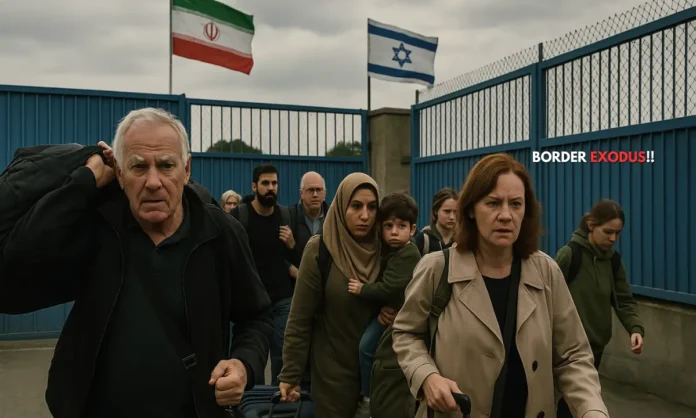
The recent US and Israeli airstrikes in Iran have sparked a mix of fear and relief across the country. Around 09:40 local time, explosions were reported in several cities, sending residents running for safety as sirens blared and chaos unfolded.
Videos on social media show panicked crowds near blast sites, with sounds of screaming and crying in the background. At the same time, some Iranians expressed relief or even celebration, believing the attacks could weaken the regime. In one clip, a woman claims Ayatollah Khamenei’s residence was hit, while schoolchildren are seen dancing and chanting about the strikes.
Long queues at petrol stations and residents leaving Tehran for northern areas indicate widespread anticipation of potential attacks. An almost total internet blackout has made communication difficult, though some have used Starlink or VPNs to stay online temporarily.
Pro-regime figures reported hearing explosions and fighter jets over Tehran, with heavy security near the Supreme Leader’s compound. Many residents stocked up on essentials as tension filled the streets.
Some Iranians shared messages on social media, asking others to remember civilians who oppose military action and expressing concern for the safety of children. “We are human and have the right to live. Try to make our future democratic, not dependent on individuals,” wrote one user. Another urged, “Promise that if anything happens to us, you will look after our children.”
While some welcome regime change even through military action, others fear airstrikes alone may strengthen the government and lead to harsher repression. Messages encouraging citizens to stay home and urging regime forces to disarm suggest authorities are trying to manage public reaction.
The strikes have revealed a country deeply divided in sentiment: panic in some areas, cautious hope in others, and a tense uncertainty about what comes next.