How Trump’s New 10% Global Tariffs Will Work After Supreme Court Ruling
The US Supreme Court has ruled that President Donald Trump exceeded his authority when he imposed sweeping global tariffs under emergency powers. In a 6–3 decision, the court said he could not rely on the International Emergency Economic Powers Act (IEEPA) of 1977 to levy import taxes on nearly every country.
The ruling potentially opens the door for refund claims on an estimated $130bn raised through those tariffs, though that issue is likely to be decided in future legal battles.
Within hours of the decision, Trump introduced a new temporary 10% tariff on most imports, this time using Section 122 of the Trade Act of 1974.
Why the Supreme Court Blocked the Earlier Tariffs
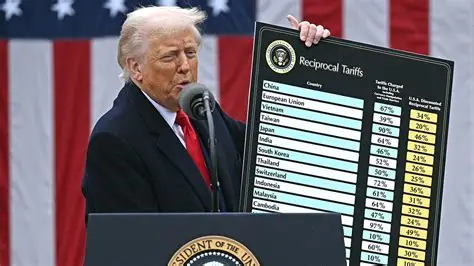
Trump had invoked the IEEPA in early 2025 to justify tariffs on goods from China, Mexico, and Canada, citing fentanyl trafficking as a national emergency. Later that year, he expanded those measures globally, arguing that the US trade deficit posed an “extraordinary and unusual threat.”
However, the Supreme Court ruled that Congress — not the president — holds the constitutional authority to create new taxes. The court determined that the IEEPA was designed to regulate commerce during emergencies, not to raise revenue.
Importantly, the decision does not affect all tariffs introduced during Trump’s term. Industry-specific tariffs on steel, aluminium, lumber, and automobiles remain in place because they were imposed under Section 232 of the Trade Expansion Act of 1962, which allows tariffs on national security grounds.
How the New 10% Global Tariff Works
Trump’s new tariff relies on Section 122 of the 1974 Trade Act. This rarely used provision allows the president to impose tariffs of up to 15% for a period of 150 days without prior congressional approval.
After 150 days, Congress must decide whether to extend or block the measure, making it a temporary solution. However, some legal analysts suggest the administration could potentially reintroduce similar measures through new emergency declarations if the tariffs expire.
The White House says the new tariffs aim to address international payment imbalances and rebalance US trade.
Other Legal Tools Still Available
The administration may also rely on Section 301 of the Trade Act of 1974. This provision allows the US Trade Representative to investigate foreign trade practices deemed discriminatory or unfair. If violations are found, targeted tariffs can be imposed.
In addition, Section 232 of the 1962 Trade Expansion Act remains an option. This requires an investigation into national security risks before tariffs can be applied, a process that takes time but may make such measures more difficult to overturn once implemented.
US Treasury Secretary Scott Bessent has indicated that combining Section 122 tariffs with enhanced Section 232 and Section 301 measures could result in similar tariff revenue in 2026, effectively offsetting the loss from the invalidated IEEPA tariffs.
What Happens Next?
The Supreme Court’s ruling represents a significant legal setback for Trump’s trade agenda, reinforcing congressional authority over taxation. At the same time, the swift introduction of new tariffs under alternative laws suggests that trade tensions are far from over.
Future court challenges, congressional debates, and potential international retaliation could shape the next chapter of US trade policy.