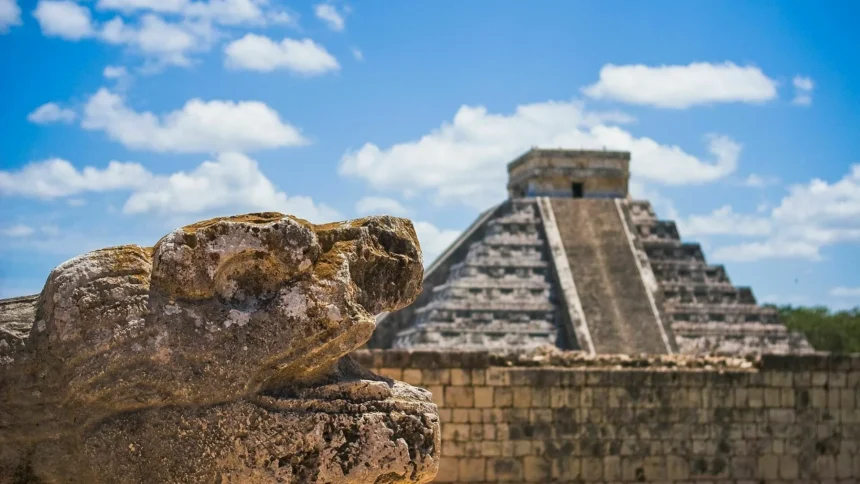
Some journeys are memorable because of the scenery. Others remain with us because the places feel connected to a much larger story.
A ruined city carved into rose-colored rock, a mountain sanctuary built above a dramatic valley, a Roman street preserved beneath volcanic material or a temple complex slowly reclaimed by forest can reveal more than an ordinary attraction. These places show how earlier societies lived, worshipped, traded, designed cities and responded to the landscapes around them.
Historical travel is the experience of visiting destinations shaped by the past. It may involve exploring archaeological sites, walking through old neighborhoods, following ancient trade routes or visiting cultural landmarks that remain part of living communities. Historical travel can bring textbook history into the real world, but it also carries responsibility. Ancient sites are not disposable backdrops for photographs. They are fragile places connected to local identity, memory and heritage.
This article explores the meaning of historical travel, the value of UNESCO World Heritage Sites and some of the ancient cities and ruins that continue to inspire visitors. It also explains how to plan historical travel more thoughtfully, avoid common mistakes and support the protection of the places you visit.
The aim is not to collect destinations like trophies. It is to understand why they matter.
What Historical Travel Really Means
Historical travel is broader than visiting one famous monument.
A traveler may stand before a temple, walk through a medieval street, explore a former imperial capital or follow a route once used by merchants and pilgrims. Each experience offers a different perspective on the past.
Historical travel may include:
| Type of destination | What visitors can experience |
|---|---|
| Ancient cities | Urban planning, architecture and daily life from earlier civilizations |
| Archaeological ruins | Physical remains revealed through excavation and preservation |
| Sacred sites | Religious traditions, pilgrimage routes and spiritual history |
| Historic neighborhoods | Living communities shaped by centuries of change |
| Trade routes | Networks connecting cultures, goods and ideas |
| Fortresses and defensive walls | Evidence of conflict, strategy and political power |
| Cultural landscapes | Places where people and nature shaped one another over time |
| Museums near heritage sites | Artifacts, context and explanations that enrich the visit |
A strong historical-travel experience begins before arrival.
It helps to understand who built the site, why the location mattered and how the destination changed over time. Without context, a ruin may appear to be only an arrangement of old stones. With context, those same stones reveal choices about engineering, belief, trade, power and survival.
Historical travel is therefore not only visual. It is interpretive.
The News Ink has already explored several related themes, including ancient civilizations, lost cities and ancient wonders. These topics belong together because they help readers see travel as a way of understanding human history.
Why UNESCO World Heritage Sites Matter
UNESCO World Heritage designation is one of the most recognizable signals of cultural or natural significance.
A World Heritage Site is not simply a popular tourist destination. The designation reflects outstanding universal value under the World Heritage Convention.
The official UNESCO World Heritage List includes cultural sites, natural sites and mixed properties combining both dimensions.
| UNESCO property type | What it recognizes |
|---|---|
| Cultural heritage | Monuments, archaeological sites, historic cities and cultural landscapes |
| Natural heritage | Landscapes, ecosystems, geological features and biodiversity |
| Mixed heritage | Places with both cultural and natural importance |
UNESCO status can increase international attention, but attention also creates pressure.
More visitors may support local employment, guides, accommodation and small businesses. However, overcrowding can damage delicate spaces, disrupt communities and reduce the quality of the experience.
UNESCO’s World Heritage and Sustainable Tourism Programme promotes an approach in which tourism planning and heritage management work together. The goal is not to stop people from traveling. It is to protect cultural and natural assets while encouraging suitable forms of tourism.
The UNESCO sustainable-tourism toolkit offers practical guidance for managers and stakeholders responsible for heritage destinations.
Historical travel becomes more meaningful when visitors understand this tension. A site can be famous and vulnerable at the same time.
Historical Travel Is Not Only About Ruins
Ruins are powerful because they encourage imagination.
A visitor walks through an incomplete structure and tries to picture what once existed. Where did people gather? What did they hear? How did the streets look? What work happened here? Why did the city grow, and why did it decline?
However, historical travel should not reduce a destination to collapse.
Many heritage sites are connected to living cultures. Local communities may maintain traditions, languages, food, crafts, stories and religious practices shaped by the same history that attracts visitors.
A responsible traveler recognizes both the past and the present.
| Narrow way to view a destination | Better approach |
|---|---|
| “This is an abandoned place for photographs.” | Learn who built it, who lives nearby and why preservation matters. |
| “This culture disappeared.” | Understand continuity, adaptation and living traditions. |
| “The site belongs to tourists.” | Respect that heritage places remain connected to local communities. |
| “The most famous viewpoint is the only reason to visit.” | Explore museums, interpretation centers and lesser-known areas where permitted. |
| “A quick visit is enough.” | Allow time for context and reflection. |
Historical travel becomes richer when the journey includes human stories rather than only visual landmarks.
Twelve Historical Destinations Worth Understanding
The world contains thousands of important heritage places.
The following destinations are not a ranking. They represent different forms of historical travel, from mountain sanctuaries and caravan cities to Roman ruins and living cultural landscapes.
| Destination | Country or region | Why it stands out |
|---|---|---|
| Petra | Jordan | Nabataean caravan city carved into rock |
| Machu Picchu | Peru | Inca sanctuary set within a dramatic Andean landscape |
| Angkor | Cambodia | Vast archaeological landscape of Khmer capitals and temples |
| Pompeii and Herculaneum | Italy | Roman urban life preserved after the eruption of Vesuvius |
| Great Zimbabwe | Zimbabwe | Major stone-built African heritage site |
| Hegra | Saudi Arabia | Nabataean tombs and monumental façades |
| Pyramids of Giza | Egypt | Monumental legacy of ancient Egyptian civilization |
| Aït-Ben-Haddou | Morocco | Earthen architecture and fortified settlement traditions |
| Wadi Rum | Jordan | Cultural landscape showing long human interaction with the desert |
| Koh Ker | Cambodia | Sacred urban ensemble connected to Khmer history |
| Frontiers of the Roman Empire | Multiple countries | Remains of walls, forts and settlements across a vast border system |
| Ancient trade routes | Multiple regions | Networks that connected ideas, religions and goods |
Each destination can support a deeper historical-travel itinerary.
Petra: A City Carved Into Stone
Petra is one of the world’s most recognizable archaeological sites.
The ancient Nabataean city stands between the Red Sea and the Dead Sea in Jordan. UNESCO describes Petra as an important crossroads between Arabia, Egypt and Syria-Phoenicia. The city is partly built and partly carved into rock, surrounded by mountains, passages and gorges.
The official UNESCO Petra page explains why the site is so important.
Visitors often first encounter Petra through the Siq, a narrow gorge leading toward the famous Treasury façade. That moment is unforgettable, but Petra is much larger than one viewpoint.
A thoughtful visit should consider:
- The Nabataean role in regional trade
- Water-management systems in a desert environment
- Rock-cut architecture
- Religious and funerary spaces
- The wider landscape
- The need to protect the site from erosion and tourism pressure
Petra is ideal for historical travel because it combines architecture, environment and trade history.
The city also connects naturally with The News Ink’s article on ancient trade routes. Petra mattered partly because movement across regions brought goods, wealth and cultural exchange.
What Petra Teaches Travelers
Petra shows that ancient cities were not isolated curiosities.
They could be connected to wider economic networks. Their success depended on geography, water, political judgment and the ability to serve travelers moving between regions.
Historical travel becomes more interesting when a destination is placed back into its network.
Machu Picchu: Architecture Within a Mountain Landscape
Machu Picchu is among the most admired historical destinations in the world.
The UNESCO Machu Picchu page describes the sanctuary as one of the greatest artistic, architectural and land-use achievements and a major tangible legacy of the Inca civilization.
The site stands within a dramatic landscape where the Peruvian Andes meet the Amazon Basin.
Its terraces, walls and pathways do not feel separate from the surrounding mountains. They appear connected to the environment.
This is one reason Machu Picchu belongs naturally within historical travel and environmental travel at the same time.
The News Ink’s article about history and nature explores this connection across several destinations.
Why Context Matters at Machu Picchu
A rushed visitor may see only the famous viewpoint.
A deeper historical-travel approach considers:
- Inca engineering
- Agricultural terraces
- Stonework
- The relationship between architecture and landscape
- The complexity of access
- Visitor management
- The importance of respecting permitted routes
UNESCO’s materials note that Machu Picchu stands within an extraordinarily beautiful tropical mountain setting.
The landscape is not a background. It is part of the heritage.
Travel Responsibly
Follow local rules and official routes.
Do not treat restricted areas as opportunities for a more dramatic photograph. Stay on designated paths, respect time slots and follow the instructions of site staff.
Historical travel should never come at the cost of the place being visited.
Angkor: A Vast Archaeological Landscape
Angkor is not simply one temple.
The official UNESCO Angkor page describes an archaeological park extending across a vast landscape and containing the remains of different capitals of the Khmer Empire from the ninth to the fifteenth centuries.
The site includes Angkor Wat and the Bayon Temple at Angkor Thom, among many other remains.
Visitors often arrive with one iconic image in mind: towers reflected in water at sunrise.
That image is beautiful, but historical travel at Angkor requires more patience.
The park contains forests, temples, reservoirs, causeways, carvings and evidence of a highly organized civilization.
| Angkor feature | Why it matters |
|---|---|
| Angkor Wat | Monumental religious architecture |
| Angkor Thom | Major urban and ceremonial center |
| Bayon Temple | Distinctive sculptural decoration and faces |
| Ta Prohm | Striking relationship between ruins and vegetation |
| Hydraulic systems | Evidence of large-scale water management |
| Wider landscape | Reminder that Angkor was more than a single monument |
Angkor demonstrates why ancient sites should not be reduced to photo spots.
A temple complex is part of a larger system of history, belief and landscape.
Avoid the Rush
A slower itinerary may be more rewarding than racing through several temples.
Visit fewer places with greater attention. Use a knowledgeable local guide. Respect active religious areas. Avoid climbing where access is restricted.
Historical travel is not measured by the number of stops completed in one day.
Pompeii and Herculaneum: Daily Life Preserved by Disaster
Pompeii and Herculaneum offer a different historical-travel experience.
When Mount Vesuvius erupted in AD 79, the Roman towns and surrounding villas were buried. UNESCO notes that the sites have been progressively excavated and made accessible to visitors since the eighteenth century.
The official UNESCO page for Pompeii and Herculaneum explains the importance of the archaeological areas.
Petra feels monumental. Machu Picchu feels integrated with a mountain landscape. Pompeii feels startlingly human.
Visitors can walk through streets, houses, public spaces and commercial areas. The ruins make ancient urban life easier to imagine.
What Makes Pompeii Different?
The site does not only show wealth or power.
It reveals routines.
| Feature | What it can reveal |
|---|---|
| Streets | Movement through the city |
| Houses | Domestic life and social differences |
| Shops | Trade and daily commerce |
| Public buildings | Civic life |
| Wall paintings | Art and decoration |
| Baths | Social customs |
| Villas | Wealth and lifestyle |
| Inscriptions | Voices from everyday life |
Herculaneum adds another perspective because its preservation differs from Pompeii.
A responsible visitor should avoid reducing the eruption to spectacle. The disaster affected real people.
Historical travel should create empathy, not only curiosity.
Great Zimbabwe: Challenging Narrow Views of African History
Great Zimbabwe is one of the most important heritage sites in southern Africa.
The UNESCO Great Zimbabwe page explains that the property was built between approximately 1100 and 1450 and includes the Hill Ruins, Great Enclosure and Valley Ruins.
Its stone architecture demonstrates the complexity and significance of societies that developed in the region.
Great Zimbabwe matters because historical narratives have often been distorted by colonial assumptions.
A thoughtful historical-travel itinerary should not focus only on Europe, the Mediterranean or a limited group of famous landmarks.
The world’s heritage is geographically diverse.
Travelers should seek out places that broaden their understanding rather than simply confirm familiar stories.
What to Look For
At Great Zimbabwe, consider:
- Dry-stone construction
- The scale of the Great Enclosure
- Regional trade connections
- Political organization
- Local interpretation
- The history of scholarship and misrepresentation
Historical travel becomes more valuable when it corrects oversimplified ideas.
Hegra: Nabataean Heritage Beyond Petra
Petra is more famous, but it is not the only significant Nabataean site.
The UNESCO Hegra page describes Hegra as the largest conserved site of Nabataean civilization south of Petra. It features monumental tombs with decorated façades dating from the first century BC to the first century AD, along with inscriptions and cave drawings.
Hegra is located in Saudi Arabia.
The site expands the historical-travel story.
Instead of viewing Petra as an isolated wonder, visitors can understand a broader cultural and regional network.
Historical travel becomes deeper when related places are examined together.
| Petra | Hegra |
|---|---|
| Major Nabataean caravan city | Significant Nabataean site south of Petra |
| Rock-cut architecture | Monumental tomb façades |
| Jordan | Saudi Arabia |
| Connected to regional trade | Expands the understanding of Nabataean reach |
Visitors should follow current local access rules and use official planning information before arranging a trip.
The Pyramids of Giza: Beyond the Famous Photograph
The Pyramids of Giza are among the most recognizable structures ever created.
Their scale continues to inspire questions about engineering, labor, belief and state organization.
For many travelers, the pyramids represent an early dream of historical travel.
However, the experience becomes more rewarding when visitors move beyond the basic checklist photograph.
Consider:
- The wider archaeological landscape
- The relationship between monuments and burial practices
- The role of museums and interpretation
- The scale of planning and labor
- The importance of respectful behavior
- The modern city surrounding the site
Historical travel should replace vague mystery with curiosity grounded in evidence.
Ancient monuments do not become less impressive when myths are removed. They become more impressive because real people planned and created them.
The News Ink’s article on ancient wonders offers further inspiration for readers drawn to surviving landmarks.
Aït-Ben-Haddou: Living Architecture and Cultural Landscape
Not every historical destination is an excavated ruin.
The UNESCO page for Aït-Ben-Haddou describes the ksar as a striking example of southern Moroccan architecture. A ksar is a fortified settlement containing a grouping of dwellings.
Aït-Ben-Haddou reminds visitors that historical travel can include living architectural traditions.
The destination sits within a landscape shaped by climate, building materials and community life.
Its earthen structures look dramatically different from stone ruins such as Petra or Pompeii.
This difference matters.
Historical travel should reveal the diversity of human responses to environment and place.
Visit With Care
A community is not a film set.
Be respectful when taking photographs. Support local businesses thoughtfully. Avoid entering private areas without permission.
The most meaningful historical-travel experiences often come from observing responsibly rather than trying to capture everything.
Wadi Rum: A Landscape Filled With Human History
Wadi Rum is famous for its desert scenery, but the landscape also contains deep cultural history.
The UNESCO Wadi Rum page describes a mixed natural and cultural property in southern Jordan featuring gorges, arches, cliffs, caverns, inscriptions and archaeological remains. Those remains testify to thousands of years of human interaction with the environment.
Wadi Rum is a useful reminder that heritage is not confined to buildings.
A landscape can preserve evidence of movement, survival, communication and belief.
Historical travel and nature travel frequently overlap.
The News Ink’s article on destinations where history and nature collide explores this relationship further.
Koh Ker and the Value of Looking Beyond the Most Famous Site
Angkor Wat receives enormous attention, but Cambodia’s heritage extends beyond its most famous temple.
The UNESCO Koh Ker page describes a sacred urban ensemble of temples, sanctuaries, sculptures, inscriptions and archaeological remains associated with an important period of Khmer history.
Koh Ker helps demonstrate one of the best habits in historical travel:
Do not stop at the most recognizable landmark.
A region often contains several related places that deepen understanding.
This does not mean avoiding famous destinations. Famous places are often famous for good reasons.
It means building enough time into the itinerary to see the wider story.
Ancient Trade Routes: Traveling Through Connections
Historical travel becomes especially interesting when destinations are connected through routes.
Trade routes moved more than goods.
They also carried:
- Languages
- Religions
- Technologies
- Artistic styles
- Food
- Scientific ideas
- Political influence
- Stories
A city may have grown because it stood at an important crossroads. A port may have flourished because ships arrived from distant regions. A desert settlement may have survived because it supported caravans.
The News Ink’s article on ancient trade routes explores journeys that modern travelers can still understand through landscapes and heritage sites.
Routes add depth to historical travel.
Instead of asking only, “What monument should I see?” ask:
“How was this place connected to the wider world?”
Sacred Sites and the Need for Respect
Many heritage places remain spiritually important.
A temple, shrine, mosque, church, monastery or pilgrimage route may attract tourists while continuing to serve religious communities.
Historical travel requires extra care in such places.
The News Ink’s article on sacred sites explores destinations shaped by belief and tradition.
Before visiting a sacred place:
| Check | Why it matters |
|---|---|
| Dress expectations | Respect local customs |
| Photography rules | Some spaces restrict cameras |
| Opening times | Religious activities may affect access |
| Noise levels | Quiet behavior may be expected |
| Restricted areas | Not every space is open to visitors |
| Local guidance | Practices vary by destination |
A respectful visit is not difficult.
Observe first. Ask when uncertain. Avoid turning worshippers into background objects for photographs.
Historical Travel and Archaeology
Archaeology changes the way people understand the past.
New discoveries can challenge old assumptions, reveal forgotten settlements and add context to places already known.
The News Ink’s article on archaeological discoveries examines discoveries that changed historical understanding.
Historical travel becomes richer when visitors understand the difference between evidence and speculation.
A dramatic story may attract attention, but responsible interpretation matters.
Ask:
- Who studied the site?
- What evidence was found?
- Is the interpretation accepted or debated?
- Has the site been excavated fully?
- What remains uncertain?
- How is the local community involved?
Good historical travel leaves room for uncertainty.
Not every question has a final answer.
Responsible Historical Travel: How to Protect the Places You Visit
Tourism can support heritage conservation and local livelihoods, but poor behavior can create damage.
The UN Tourism Global Code of Ethics emphasizes responsible tourism and respect for communities. The ICOMOS cultural-heritage tourism charter also supports stronger protection and responsible management.
Visitors have a role.
Do Not Touch Fragile Surfaces
Stone, murals, carvings and archaeological remains can be damaged by repeated contact.
One touch may appear harmless. Thousands of touches are not.
Stay on Permitted Paths
Restricted routes usually exist for a reason.
They protect visitors, archaeology, vegetation and restoration work.
Do Not Remove Anything
A small stone, pottery fragment or piece of material is not a souvenir.
Removing objects damages the site and may break the law.
Use Responsible Photography
Photography can help preserve memories, but it should not override respect.
Do not climb restricted structures, block pathways or disturb religious activity for a photograph.
Support Local Communities
Choose local guides, businesses and crafts thoughtfully.
Tourism should provide value to the people connected to the destination.
Learn Before You Arrive
Read official information.
Understand access rules, opening times and local expectations.
Historical travel is better when preparation replaces guesswork.
A Practical Historical-Travel Planning Table
| Planning step | What to do |
|---|---|
| Research the destination | Read official heritage pages and reputable historical sources |
| Check access conditions | Confirm opening times, permits and seasonal rules |
| Allow enough time | Avoid rushing through large sites |
| Choose suitable clothing | Prepare for climate, terrain and cultural expectations |
| Carry water responsibly | Stay hydrated without leaving waste |
| Book local expertise | Use qualified guides where helpful |
| Respect photography rules | Ask before photographing people or sacred spaces |
| Use marked routes | Protect fragile areas |
| Visit museums | Gain context before or after the site |
| Support local businesses | Spend thoughtfully in surrounding communities |
| Avoid removing objects | Leave the site unchanged |
| Review current advice | Check official travel guidance before departure |
A good itinerary is realistic.
Trying to visit too many sites in one day can reduce the quality of the experience and encourage careless behavior.
Historical travel benefits from slower pacing.
Common Historical-Travel Mistakes
Many travel mistakes come from treating heritage sites like ordinary attractions.
Rushing Through the Destination
A checklist itinerary may produce photographs without understanding.
Spend time observing.
Ignoring Museums and Interpretation Centers
A museum can explain what the ruins alone cannot.
It may contain artifacts, maps, reconstructions and context.
Photographing Without Respect
Not every moment needs to be recorded.
A sacred ceremony, private home or grieving visitor is not a photo opportunity.
Trusting Every Online Claim
Ancient places often attract myths.
Read official sources and reputable scholarship.
Climbing Where Access Is Restricted
A dramatic image is not worth damaging a site or risking safety.
Visiting Only the Famous Viewpoint
The most familiar image may represent only a small part of the story.
Forgetting the Local Community
Heritage tourism should not inconvenience the people who live nearby.
Historical travel becomes better when visitors behave as guests.
How to Build a Historical-Travel Itinerary
A useful itinerary combines famous landmarks with context.
Example 1: Nabataean Heritage
| Stop | Focus |
|---|---|
| Petra | Caravan city, rock-cut architecture and water management |
| Wadi Rum | Desert landscape and long human interaction |
| Hegra | Monumental tombs and Nabataean reach |
| Local museums | Artifacts and regional history |
Example 2: Roman Urban Life
| Stop | Focus |
|---|---|
| Pompeii | Streets, public spaces and domestic architecture |
| Herculaneum | Different preservation conditions |
| Nearby museum collections | Context for artifacts and daily life |
| Wider Roman sites | Comparison across the region |
Example 3: Khmer Heritage
| Stop | Focus |
|---|---|
| Angkor Wat | Monumental temple architecture |
| Angkor Thom | Urban and ceremonial space |
| Ta Prohm | Relationship between architecture and forest |
| Koh Ker | Wider Khmer history beyond the most famous site |
The best itinerary tells a story.
It does not merely connect locations on a map.
Historical Travel for Different Kinds of Travelers
Historical travel can suit many interests.
| Traveler interest | Suitable experience |
|---|---|
| Architecture | Temples, fortresses, historic cities and monumental structures |
| Archaeology | Excavated settlements, museums and guided site tours |
| Nature | Cultural landscapes and mountain sanctuaries |
| Photography | Landscapes and architecture, with responsible behavior |
| Religion | Sacred places and pilgrimage routes |
| Food | Historic markets and regional traditions |
| Walking | Old cities, trails and trade-route segments |
| Education | Museums, interpretation centers and guided tours |
Families can also enjoy historical travel when the itinerary is paced carefully.
Children may engage more easily with stories, maps and visible details than with long lectures.
A guide can help turn an unfamiliar ruin into a memorable narrative.
The Role of Local Guides
A qualified local guide can transform historical travel.
Good guides connect architecture with human stories. They explain details that visitors might miss and help travelers understand local customs.
A guide may answer questions such as:
- Why was the city built here?
- How did people obtain water?
- Which structures remain original?
- How did trade affect the city?
- What restoration work is happening?
- Which areas are sacred?
- How does tourism affect the community?
Local knowledge also supports the destination economically.
Choose guides through reputable channels where possible.
The best historical-travel experience is not always the most expensive one. It is often the one with the clearest context.
Related Historical-Travel Articles From The News Ink
The News Ink already has several Travel articles connected to this topic.
| Related article | Why it is useful |
|---|---|
| UNESCO sites | Introduces major World Heritage destinations |
| Ancient trade routes | Shows how historical destinations were connected |
| History and nature | Explores landscapes shaped by heritage |
| Forgotten empires | Introduces civilizations often overlooked |
| Sacred sites | Examines destinations shaped by belief |
| Ancient civilizations | Connects ruins with wider historical context |
| Lost cities | Explores places rediscovered over time |
| Ancient wonders | Highlights surviving landmarks |
| Historical destinations | Offers further inspiration for travel planning |
| Archaeological discoveries | Shows how evidence reshapes knowledge |
These supporting articles should link back to this pillar page using short anchors such as historical travel, heritage travel or ancient cities.
Frequently Asked Questions About Historical Travel
What is historical travel?
Historical travel involves visiting places connected to the past, such as ancient cities, archaeological ruins, cultural landscapes, historic neighborhoods and sacred sites.
What is a UNESCO World Heritage Site?
A UNESCO World Heritage Site is a cultural, natural or mixed property recognized for outstanding universal value under the World Heritage Convention.
Is historical travel the same as heritage tourism?
The terms overlap. Heritage tourism often refers to travel involving cultural or natural heritage. Historical travel focuses especially on understanding places shaped by the past.
Why are ancient ruins important?
Ruins can reveal architecture, engineering, trade, religion, daily life and political history. They also help visitors understand how civilizations changed over time.
Is Petra a UNESCO World Heritage Site?
Yes. Petra is a UNESCO World Heritage Site in Jordan and an important Nabataean caravan city.
Is Machu Picchu only an archaeological site?
Machu Picchu is also part of a dramatic natural landscape. UNESCO recognizes the Historic Sanctuary of Machu Picchu as a mixed property with cultural and natural significance.
Is Angkor only one temple?
No. Angkor is a vast archaeological landscape containing the remains of several Khmer capitals and many important structures, including Angkor Wat and Angkor Thom.
What is the difference between Pompeii and Herculaneum?
Both Roman towns were affected by the eruption of Vesuvius in AD 79, but they were preserved under different conditions. Visiting both can provide a richer understanding of Roman urban life.
How can visitors protect heritage sites?
Follow official paths, respect restrictions, avoid touching fragile surfaces, do not remove objects, use responsible photography and support local communities.
Should I hire a local guide?
A qualified local guide can add valuable context and help visitors understand the site more deeply.
Can children enjoy historical travel?
Yes. Choose a realistic itinerary and focus on engaging stories, maps and visible details.
Is historical travel suitable for photographers?
Yes, but photography should remain respectful. Do not climb restricted structures, block pathways or photograph people without appropriate consideration.
How can I find reliable information about a UNESCO site?
Begin with the official UNESCO World Heritage Centre page and the destination’s official visitor information.
Why should travelers visit lesser-known historical places?
Lesser-known sites can broaden understanding, reduce pressure on famous landmarks and provide a deeper view of regional history.
Why Historical Travel Still Matters
Historical travel matters because the past is not abstract.
It exists in streets, walls, landscapes, carvings, temples, fortresses and homes. It exists in the routes people followed and the cities they built. It also exists in the communities that continue living near heritage places today.
Ancient ruins do not provide every answer.
They raise questions.
How did people solve difficult engineering problems? Why did a city rise in one location rather than another? What beliefs shaped the buildings? How did trade connect distant regions? Why did a settlement decline? What deserves protection now?
Historical travel can make people more curious and more careful.
The goal is not to rush through a list of famous places.
It is to walk slowly enough to understand why they survived, why they remain vulnerable and why they still matter.
Discover More Travel Stories With The News Ink
Explore more destinations, cultural stories and practical ideas in our Travel section. Follow The News Ink on Instagram for visual travel inspiration, new articles and important updates.