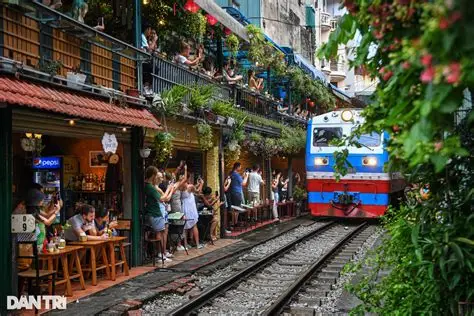
A train barrels through Hanoi, threading a narrow path lined with cafes and Chinese lanterns. Tourists, eager for the perfect social media shot, often pose on the tracks just moments before the horn blasts. It’s a scene repeated daily on Hanoi’s 400-meter-long Train Street, where trains pass dangerously close to tables and chairs.
Despite repeated government crackdowns since 2017, the street remains one of Vietnam’s most visited attractions. Police barricades rise and edicts warn operators and cafe owners, yet visitors keep coming.
Train Street began as an ordinary residential alley alongside the North-South Railway, built by French colonialists in 1902. By the 1970s, it was considered a slum, with homes shaking as trains passed. Locals lived ordinary lives amidst the tracks, until social media turned the street into a viral hotspot.
Tours launched in 2013 by Hanoi-based photography guides introduced travelers to the street’s unique charm. A Travel Channel feature in 2014 and Instagram’s new video-sharing tools helped cement its fame. By 2017, locals began selling coffee and beer, inviting tourists to linger and watch trains roar past. Colorful lanterns and lights soon transformed the alley into the now-famous Phố Đường Tàu, or Train Street.
Visitors like Julia Husum, a university student from Norway, enjoy the thrill. “We put our beer caps on the railway, and the train flattened them, creating souvenirs,” she said. Social media has fueled the craze, encouraging risk-taking for picture-perfect shots. While visually stunning, the street’s popularity comes with real danger—reminding visitors that some Instagram moments carry a high price.