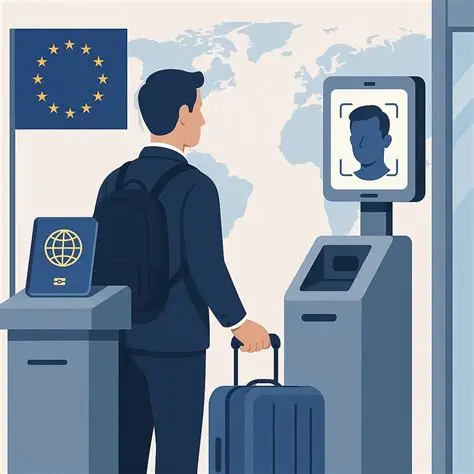
The European Union has launched a new digital border system that requires travellers to provide fingerprints and a photo along with their passport details. This system aims to strengthen security while improving border management across Europe.
Known as the Entry/Exit System (EES), the new rules apply to non-EU travellers entering the Schengen Area. Authorities have worked to roll out the system across 29 countries, although some locations still face delays in full implementation.
🌍 What Is the Entry/Exit System (EES)?
The Entry/Exit System is a digital platform that records when travellers enter and leave the Schengen Area. It replaces traditional passport stamping with biometric verification.
Under this system, travellers must:
- Provide fingerprints
- Take a facial photo
- Scan their passport
The goal is to improve security, reduce illegal overstays, and modernize border control processes.
✈️ Where Does It Apply?
The system covers 29 European countries within the Schengen Area. Popular destinations include:
- France
- Spain
- Portugal
- Italy
- Greece
Travellers can move freely between these countries once they enter the Schengen zone.
🧳 What Travellers Should Expect
Travellers will complete the EES process at border entry points, usually at airports upon arrival.
However, the system rollout has not been smooth everywhere. Some airports have already reported long queues and technical issues.
⏳ Delays and Travel Disruptions
Several travellers have experienced delays lasting hours, especially during busy periods. Popular destinations have faced congestion due to system challenges.
Authorities have warned that delays may increase during peak holiday seasons. To manage this, officials may temporarily relax checks at crowded locations.
Some airports are still not fully using the system, which means travellers may encounter different procedures depending on their destination.
⚠️ Partial Implementation
Not all locations have activated the system yet. Some major European cities continue to delay full rollout while resolving technical issues.
This phased approach allows authorities to address problems before complete implementation.
📌 Conclusion
The Entry/Exit System marks a major shift in how Europe manages its borders. While it promises better security and efficiency, travellers should prepare for possible delays during the transition period.
Planning ahead and allowing extra time at airports can help reduce stress and ensure a smoother travel experience.