

The International Monetary Fund (IMF) has warned that the global economy could slide toward a recession if the ongoing conflict between the United States, Israel, and Iran continues. Rising energy prices remain the biggest concern.
In its latest World Economic Outlook report, the IMF explained that global growth could drop below 2% in 2026 under worst-case conditions. These conditions include sharp and sustained increases in oil, gas, and food prices over the next two years.
Such a slowdown would bring the world dangerously close to a recession—a rare event that has occurred only a few times since 1980, most recently during the COVID-19 pandemic.
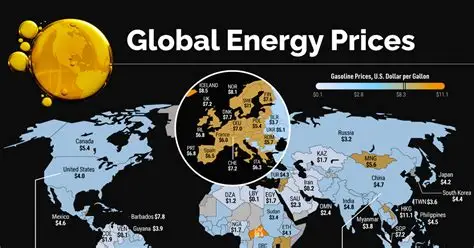
Energy prices surged shortly after the conflict began more than six weeks ago. The disruption largely stems from the closure of the Strait of Hormuz, a vital global oil transit route. At the same time, failed peace negotiations between the US and Iran have added to market uncertainty.
The IMF emphasized that geopolitical tensions in the Middle East have once again threatened global economic stability. According to its projections, oil prices could average $110 per barrel this year and climb to $125 by 2027 if the conflict persists.
Higher energy costs would likely push global inflation up to around 6% next year. In response, central banks may increase interest rates to control rising prices. However, higher rates could also slow economic activity and increase borrowing costs.
IMF chief economist Pierre-Olivier Gourinchas warned that a prolonged conflict would fuel inflation, raise unemployment, and increase food insecurity in vulnerable regions.
He added that even if the conflict ends soon, the disruption to oil supply could mirror the impact of the 1970s oil crisis. During that period, oil embargoes caused major economic shocks worldwide.
However, he noted that the global economy is now less dependent on fossil fuels. This shift could reduce the overall impact on consumers compared to past crises.
Oil prices recently approached $120 per barrel during peak tensions but have since dropped. As of now, crude oil trades at around $98 per barrel, offering some relief to global markets.
The IMF also clarified that recession risks will increase significantly only if severe conditions persist over two years. If the conflict resolves in the coming weeks and energy exports from the Middle East stabilize by mid-year, global growth could reach 3.1% in 2026.
Although this figure is slightly below earlier forecasts, it suggests that the global economy can still avoid a major downturn if conditions improve.
Among advanced economies, the United Kingdom may face the strongest impact from rising energy costs. The IMF has lowered its growth forecast for the UK to 0.8% this year, down from 1.3%. However, it expects the economy to recover gradually, with growth reaching 1.3% next year.