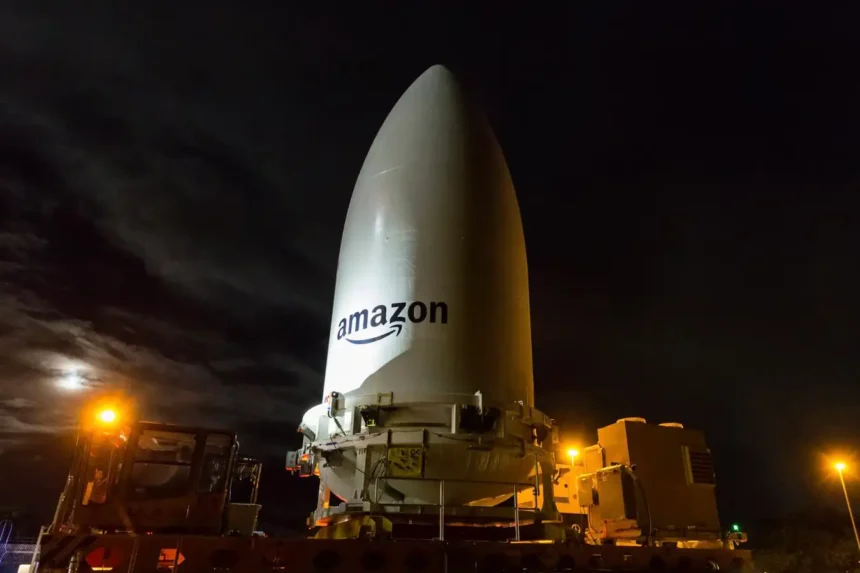
Amazon Satellite Internet Push Expands With Major Acquisition
The Amazon satellite internet strategy has taken a major step forward after the company announced an $11.57bn deal to acquire Globalstar. The move is designed to strengthen its space-based connectivity ambitions and directly challenge competitors in the growing satellite broadband market.
Amazon Leo Project Enters Next Growth Phase
The Amazon satellite internet initiative is centered on its Project Leo network, which aims to deliver global internet and mobile connectivity through low-Earth orbit satellites. With the Globalstar acquisition, the company plans to accelerate deployment and launch a next-generation system by 2028.
Competition With Starlink Intensifies
A major driver behind the Amazon satellite internet expansion is increasing competition with Starlink. While Starlink already operates thousands of satellites and serves millions of users, Amazon currently has only a small fraction in orbit, making rapid scaling essential.
Globalstar Infrastructure Strengthens Amazon Network
Through the deal, Amazon will gain access to Globalstar’s existing satellite infrastructure and global operations. This includes facilities across multiple countries, helping Amazon expand coverage and improve service reliability for future customers.
Growing Demand for Satellite Connectivity
The Amazon satellite internet project has already attracted commitments from major partners, including airlines, telecom companies, and government agencies. These agreements indicate strong demand for satellite-based broadband, especially in remote and underserved regions.
Industry Competition Heats Up
The satellite internet sector is becoming increasingly competitive, with multiple companies racing to deploy large constellations. As Amazon scales its network, it will face competition not only from Starlink but also from other emerging space-based internet initiatives.
Future Outlook for Amazon’s Space Strategy
The Amazon satellite internet expansion signals a long-term investment in global connectivity infrastructure. With thousands of satellites planned for deployment, the company aims to establish itself as a major player in the rapidly growing space communications industry.