



Sign In
The News Ink™ | World News | Sports | Technology | Business
  • Technology
  • Anime
  • Sports
  • Business & Finance
  • Beauty & Fashion
  • Top Stories
  • More
    • Lifestyle
    • Bizarre
    • Current Affairs
    • Entertainment
    • Health
    • Opinion
    • Science
    • Travel
Reading: EU Introduces Biometric Border System: What Travellers Need to Know
Share
Font ResizerAa
The News Ink™ | World News | Sports | Technology | BusinessThe News Ink™ | World News | Sports | Technology | Business
  • Travel
  • Opinion
  • Science
  • Technology
  • Beauty & Fashion
  • Technology
  • Anime
  • Sports
  • Business & Finance
  • Beauty & Fashion
  • Top Stories
  • More
    • Lifestyle
    • Bizarre
    • Current Affairs
    • Entertainment
    • Health
    • Opinion
    • Science
    • Travel
Have an existing account? Sign In
The News Ink™ | World News | Sports | Technology | Business > Blog > Technology > EU Introduces Biometric Border System: What Travellers Need to Know
Technology

EU Introduces Biometric Border System: What Travellers Need to Know

Dowry Lane
Last updated: September 14, 2026 10:32 am
Dowry Lane
Share
Traveller scanning fingerprint at European airport under new biometric border system
Travellers provide biometric data as the EU introduces its new Entry Exit System.
SHARE

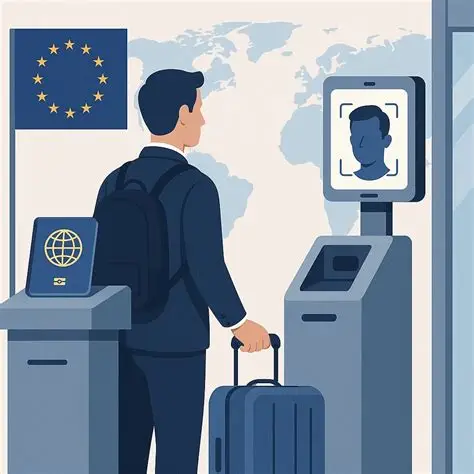
The European Union has launched a new digital border system that requires travellers to provide fingerprints and a photo along with their passport details. This system aims to strengthen security while improving border management across Europe.

Contents
🌍 What Is the Entry/Exit System (EES)?✈️ Where Does It Apply?🧳 What Travellers Should Expect⏳ Delays and Travel Disruptions⚠️ Partial Implementation📌 Conclusion

Known as the Entry/Exit System (EES), the new rules apply to non-EU travellers entering the Schengen Area. Authorities have worked to roll out the system across 29 countries, although some locations still face delays in full implementation.

🌍 What Is the Entry/Exit System (EES)?

The Entry/Exit System is a digital platform that records when travellers enter and leave the Schengen Area. It replaces traditional passport stamping with biometric verification.

Under this system, travellers must:

  • Provide fingerprints
  • Take a facial photo
  • Scan their passport

The goal is to improve security, reduce illegal overstays, and modernize border control processes.

✈️ Where Does It Apply?

The system covers 29 European countries within the Schengen Area. Popular destinations include:

  • France
  • Spain
  • Portugal
  • Italy
  • Greece

Travellers can move freely between these countries once they enter the Schengen zone.

🧳 What Travellers Should Expect

Travellers will complete the EES process at border entry points, usually at airports upon arrival.

However, the system rollout has not been smooth everywhere. Some airports have already reported long queues and technical issues.

⏳ Delays and Travel Disruptions

Several travellers have experienced delays lasting hours, especially during busy periods. Popular destinations have faced congestion due to system challenges.

Authorities have warned that delays may increase during peak holiday seasons. To manage this, officials may temporarily relax checks at crowded locations.

Some airports are still not fully using the system, which means travellers may encounter different procedures depending on their destination.

⚠️ Partial Implementation

Not all locations have activated the system yet. Some major European cities continue to delay full rollout while resolving technical issues.

This phased approach allows authorities to address problems before complete implementation.

📌 Conclusion

The Entry/Exit System marks a major shift in how Europe manages its borders. While it promises better security and efficiency, travellers should prepare for possible delays during the transition period.

Planning ahead and allowing extra time at airports can help reduce stress and ensure a smoother travel experience.


Subscribe to Our Newsletter

Subscribe to our newsletter to get our newest articles instantly!

[mc4wp_form]
TAGGED:Biometric BordersEESEU Entry/Exit SystemEuropean TravelPassport ControlSchengen AreaTravel Delays
Share This Article
Twitter Email Copy Link Print
Previous Article Consumer holding receipt after paying high tariff charges on imported goods Tariff Refund Dilemma: Will Consumers Ever Recover Their Money?
Next Article Porto defender Martim Fernandes watches in horror as his 45-yard backpass rolls past helpless goalkeeper Diogo Costa into own net. Martim Fernandes’ 45-Yard Horror Own Goal: Worst Ever?
Leave a comment

Leave a Reply Cancel reply

You must be logged in to post a comment.

Editor's Pick

Hot News

Bitcoin multisig security illustrated by three separate hardware signing devices requiring two approvals to authorize a Bitcoin transaction.

Bitcoin Multisig Explained: How 2-of-3 Wallets Work, Security Risks and Recovery

Bitcoin Multisig Explained: How 2-of-3 Wallets Work, Security Risks and…

November 6, 2026

Binance $6.3 Billion Hack Explained: How the Biggest Crypto Heist Happened and What It Means for Bitcoin Investors

Binance $6.3 Billion Hack Explained: How…

October 31, 2026

Bitcoin on Exchange vs Self-Custody: Which Is Safer?

Bitcoin on Exchange vs Self-Custody: Which…

October 30, 2026

How Does Spotify Make Money When You Listen for Free?

How Does Spotify Make Money When…

October 23, 2026

Why Do Supermarkets Put Milk at the Back of the Store?

Why Do Supermarkets Put Milk at…

October 23, 2026

You Might Also Like

AI-powered cyberattacks illustrated through a realistic cybersecurity operations center monitoring suspicious network activity and automated digital threats.
Technology

AI-Powered Cyberattacks Explained: How Artificial Intelligence Is Changing Cybercrime

AI-Powered Cyberattacks Explained: How Artificial Intelligence Is Changing Cybercrime Cybercrime has traditionally depended on a combination of technical knowledge, deception…

34 Min Read
Cloud concentration risk illustrated by interconnected data centers and digital networks relying on centralized cloud infrastructure.
Technology

Cloud Concentration Risk: 7 Critical Dangers Explained

Cloud Concentration Risk Explained: Why Dependence on AWS, Azure and Google Could Disrupt the Internet The internet appears to be…

35 Min Read
AI data centers with high-performance GPU servers, liquid cooling systems and power infrastructure showing why AI computing costs billions
Technology

Why AI Data Centers Cost So Much: The Real Price of Building AI

Why AI Data Centers Cost So Much: The Real Price of Building AI A request to an AI chatbot may…

23 Min Read
AI spending bubble showing Big Tech investing trillions in artificial intelligence chips data centers GPUs power and cloud infrastructure
Technology

AI Spending Bubble Explained: Why Big Tech Is Spending Trillions on Artificial Intelligence — and What Could Go Wrong

AI Spending Bubble Explained: Why Big Tech Is Spending Trillions on Artificial Intelligence — and What Could Go Wrong Artificial…

41 Min Read
The News Ink™ | World News | Sports | Technology | Business

Categories

  • Anime
  • Beauty & Fashion
  • Bizarre
  • Business & Finance
  • Current Affairs

Explore

  • Top Stories
  • Entertainment
  • Health
  • Lifestyle
  • Opinion

More

  • Science
  • Sports
  • Technology
  • Travel

Legal Docs

  • Home
  • About Us
  • Contact
  • Blog
  • Privacy Policy
  • Terms and Conditions

© The News Ink. All Rights Reserved. Powered By IQC Solutions ®

Oil prices slide after hopes rise for a US-Iran peace agreement
Join Us!

Subscribe to our newsletter and never miss our latest news, podcasts etc..

Zero spam, Unsubscribe at any time.
Go to mobile version
Welcome Back!

Sign in to your account

Register Lost your password?