

UK PM Keir Starmer Warns Iran Conflict Could Impact Economy
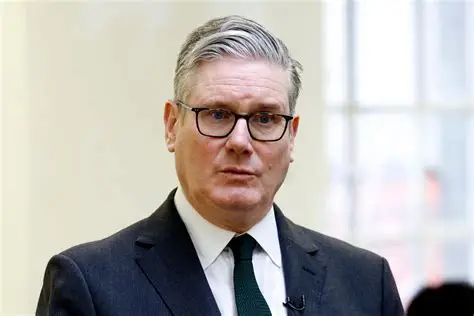
The UK economy is again facing the uncomfortable lesson that a war thousands of miles away can still reach British households through petrol pumps, gas markets, mortgage expectations, food prices and government borrowing costs. Keir Starmer warned that the longer the Iran conflict continues, the more likely it becomes that Britain will feel the economic damage at home.
The warning was not abstract. Oil and gas prices had already moved sharply after the conflict involving the United States, Israel and Iran intensified. Heating oil prices in Northern Ireland surged within days. Financial markets began pricing in higher inflation risks. The G7 discussed emergency action on energy supplies. Ministers came under pressure to explain whether the UK could avoid a repeat of the 2022 energy shock after Russia’s invasion of Ukraine.
Starmer’s central message was cautious but clear: the government believed Britain was better prepared than in 2022, but the UK economy was not immune. If energy costs remained high, the effect could spread from wholesale markets into household bills, transport costs, food prices, business margins and interest-rate decisions.
That is why this story should be read as more than a prime ministerial soundbite. It is a chain reaction. The Iran conflict raises oil and gas prices. Higher energy prices raise costs for households and companies. Those costs threaten inflation. Inflation affects interest-rate expectations. Interest-rate expectations affect mortgages, borrowing and public finances. The UK economy feels the pressure even without British forces being drawn directly into the war.
Starmer’s Warning Was About Duration
The key word in Starmer’s warning was “longer.” A short-lived oil-price spike can hurt markets for a few days and then fade. A prolonged conflict can reshape prices for months. That is the difference between volatility and a cost-of-living problem.
In March, Reuters reported that Starmer called a national emergency Cobra meeting to discuss the economic consequences of the Iran war. The meeting was expected to include senior ministers and the governor of the Bank of England, with energy security, industrial resilience and cost-of-living support among the issues under review. Reuters also reported that pressure was growing on the government because the war had pushed up petrol, energy and mortgage costs. (Reuters)
Starmer also addressed the public earlier in March, saying the conflict in Iran and the wider Middle East was entering its third week and that the government’s priority was the national interest. In official Downing Street remarks, he said the UK would protect people in the region, defend itself and allies where necessary, but would not be drawn into a wider war.
That political line mattered economically. Markets do not only respond to oil flows. They also respond to whether governments look stable, whether escalation seems likely and whether policy decisions appear predictable.
The News Ink has covered the military side of the crisis in its report on US and Israel strikes on Iran. Starmer’s warning belongs to the next layer of the same story: the domestic price that can follow foreign-policy shocks.
The Energy Shock Moves in Three Waves
The UK economy does not feel an Iran conflict all at once. It feels it in waves.
The first wave is market pricing. Oil, gas, shipping insurance, tanker routes and government bond yields move quickly. Traders respond within minutes to missile strikes, airspace closures, blockades or threats to the Strait of Hormuz.
The second wave is business cost. Fuel suppliers, hauliers, airlines, food distributors, manufacturers and chemical companies begin paying more for energy or protecting themselves against future price rises.
The third wave is household pressure. Petrol rises. Heating oil rises. Energy bills shift when price caps update. Food and transport prices become harder to contain. Mortgage expectations can change if markets think the Bank of England may keep rates higher for longer.
That is why the UK economy can appear calm one week and strained the next. A wholesale market shock does not always land instantly on families, but it often travels through the system if it lasts.
The News Ink’s report on global markets explains how quickly investors reacted to the Iran war, while our analysis of stock markets and oil prices shows why the same conflict affected equities, bonds and commodities together.
Why Britain Is Exposed
Britain produces some oil and gas, but it is still exposed to global energy prices. Even when fuel is sourced domestically or through European markets, prices are shaped by international benchmarks. If Brent crude jumps, UK petrol and diesel costs can follow. If European gas markets tighten, UK gas prices can rise too.
This is one reason Starmer compared the situation with 2022. The UK did not depend directly on Russian gas in the same way as some European economies, but British households still suffered because gas prices are set in international markets. The same logic applies to the Iran conflict. Britain does not need to be the main buyer of Iranian oil to feel the price effect.
The Strait of Hormuz is central to the risk. A major share of global oil and liquefied natural gas moves through that narrow passage. If shipping becomes slower, riskier or more expensive, global prices can rise even before a full supply stoppage occurs.
The News Ink’s article on the G7 oil response explains how finance ministers and the International Energy Agency weighed emergency stockpiles as the conflict threatened global supply.
Oil, Gas and the Price Cap: What Households Actually Feel
For many households, the most important protection is the Ofgem energy price cap. The cap limits the unit rates and standing charges suppliers can charge customers on default tariffs in England, Scotland and Wales. It does not make energy cheap, and it does not cap a household’s total bill if usage rises, but it does slow the immediate pass-through from wholesale markets into domestic bills.
Ofgem announced that from 1 April to 30 June 2026, the typical annual bill for a dual-fuel direct-debit household would fall by £117, or 7%, to £1,641. That gave many households temporary relief just as oil and gas markets were becoming more volatile. (Ofgem)
However, the protection was not permanent. Ofgem later set the July to September 2026 cap at £1,862 a year for a typical dual-fuel direct-debit household, a 13% rise from the previous cap period. (Ofgem)
That sequence matters for the UK economy. Starmer could point to short-term protection in March because many households would not immediately see higher direct-debit gas and electricity bills. But if wholesale energy costs stayed elevated, later cap reviews could pass more of the shock to consumers.
In simple terms: the price cap delays the pain. It does not erase it.
Heating Oil Shows the Weak Spot
The fastest household impact appeared outside the main gas-and-electricity cap system. Heating oil is used heavily by rural households and by many homes in Northern Ireland. It reacts more quickly to crude and wholesale fuel markets than capped gas and electricity bills.
ITV News, citing the Consumer Council for Northern Ireland, reported that the average cost of 500 litres of heating oil rose from about £307 to more than £550, an 81% increase in seven days. (ITV News)
That is why the government’s reassurance could not apply evenly across the country. A household on a standard gas tariff may have some protection until the next cap period. A rural household needing heating oil can face a price jump almost immediately.
By July, the issue had become serious enough for regulators. The Guardian reported that around 1,700 UK heating-oil customers were due compensation after suppliers cancelled deliveries during the Middle East price surge and offered new orders at much higher prices. The Competition and Markets Authority called for stronger protections for the roughly 1.5 million rural UK households that rely on heating oil. (The Guardian)
That story shows why the UK economy is unevenly exposed. Energy shocks do not hit every household at the same time or in the same way. Rural homes, drivers, hauliers and energy-intensive businesses can feel the first impact before the wider public sees it in official inflation data.
Petrol Prices Are the Political Flashpoint
Petrol and diesel are politically powerful because price changes are visible. Drivers see them on forecourts. Businesses feel them in delivery costs. Rural communities feel them because car use is harder to avoid.
That visibility is why fuel duty became part of the argument. The government had planned to phase out the temporary 5p cut in fuel duty in stages from September 2026. Full Fact reported that fuel duty was due to rise by 1p from 1 September, 2p from 1 December and 2p from 1 March 2027, returning the rate to 57.95p per litre for petrol and diesel. (Full Fact)
As pump prices rose, opposition pressure increased. Kemi Badenoch and the Conservatives pushed the government to reverse or delay the planned increase, while the SNP called for emergency support for households and stronger action on energy security.
The politics then shifted. Reuters reported in May that the UK government cancelled the planned fuel-duty rise and extended the 5p cut until the end of the year to ease rising living costs triggered by the Iran war. (Reuters)
That later decision is important for updating this article. The original draft said opponents were urging ministers to act before the September increase. The current version should say that pressure eventually helped push the government toward extending fuel-duty relief.
The News Ink’s article on oil prices past $100 gives more context on why pump-price politics became so sensitive.
Inflation Is the Real Test
The UK economy can absorb short-term oil volatility if inflation expectations remain stable. The danger comes if energy prices feed into transport, food, services and wages in a way that forces the Bank of England to keep interest rates higher.
The Office for National Statistics said CPI inflation was 2.8% in May 2026, unchanged from April, while CPIH inflation was 3.0%. That suggested inflation had not spiralled immediately despite earlier energy pressure. (ONS)
But the Bank of England warned in its April Monetary Policy Report that CPI inflation had risen to 3.3% and was likely to be higher later in the year as higher energy prices passed through. The report also set out scenarios in which the Iran war could push inflation significantly higher if oil prices remained elevated. (Bank of England)
By July, Bank of England governor Andrew Bailey said renewed Gulf clashes made the outlook more unstable, though the pass-through into UK inflation had so far been limited. Reuters reported that he stressed the need for strong fiscal and monetary frameworks as energy and market risks remained fragile. (Reuters)
That is the balancing act. Inflation data may look manageable for a while, but central bankers cannot ignore the possibility that repeated oil shocks will eventually show up in prices.
Why Borrowing Costs Matter
A cost-of-living shock is not only about household bills. It also affects government borrowing. If investors think inflation will rise, they may demand higher yields on UK government bonds. Higher yields make it more expensive for the government to borrow, leaving less room for support packages, tax cuts or public spending.
Reuters reported in March that the Iran war had already pushed Britain’s borrowing costs sharply higher, with 10-year borrowing costs moving above 5% as markets reacted to the risk of a prolonged shock. That matters because the UK entered the crisis with strained public finances and limited room for a large 2022-style intervention.
This is why Starmer’s government was more cautious than households might have wanted. A broad support package can protect people quickly, but it also costs money. If borrowing costs are already rising, ministers must decide whether support should be universal, targeted or delayed.
The News Ink’s coverage of China’s economy shows the same principle globally. Energy shocks do not remain inside one country’s borders. They change trade, investment, inflation and fiscal choices across major economies.
What Changed Since the First Warning
The original article was written around the moment Starmer was warning that the conflict could affect the UK economy. Since then, several things have changed.
The energy price cap fell in April but rose sharply in July.
The government announced targeted help for vulnerable heating-oil households and later extended fuel-duty relief.
The Bank of England kept warning that higher energy prices could pass into inflation.
The G7 and IEA moved from talking about emergency oil action to actually coordinating a major reserve release.
Heating-oil customers became a consumer-protection issue after cancelled orders and price spikes.
By July, renewed U.S.-Iran tensions again pushed oil, gas and UK borrowing costs higher.
That sequence makes the story more useful as an economic explainer than a simple political quote. Starmer’s warning was not a one-day line. It became a framework for understanding months of policy decisions.
The Political Pressure on Starmer
The political difficulty for Starmer was that he had to reassure the public without promising too much. If he said the UK economy was safe, he risked looking complacent. If he warned too strongly, he risked deepening anxiety and market concern.
Opposition parties pushed from different angles. Conservatives focused on fuel duty and cost-of-living pressure on drivers. The SNP focused on emergency support, energy security and household help. Consumer groups warned about heating oil. Businesses wanted clarity on energy costs and supply-chain pressures.
Starmer’s position was that the government would examine every available lever. The Guardian reported that he promised to look at “every lever that’s available to the government” to help people cope with cost-of-living pressures linked to the Iran conflict. (The Guardian)
That language gave ministers flexibility. It did not commit them to one specific package, but it allowed future measures such as fuel-duty relief and heating-oil support.
The risk was political timing. Households often judge governments not only by what they do, but by whether they act before the pain becomes unavoidable.
Why This Is Not a Repeat of 2022
Starmer argued that Britain was better prepared than during the 2022 energy crisis. There is some truth in that. The UK and Europe had learned from the Russia shock. Storage, sourcing, demand management and market monitoring had improved. The Ofgem cap system also meant many households would not immediately face uncapped gas and electricity spikes.
But the comparison has limits. In 2022, the shock was centred on Russia’s invasion of Ukraine and Europe’s dependence on Russian gas. In 2026, the risk is a broader Middle East energy shock involving oil, gas, tanker routes and the Strait of Hormuz.
The UK economy therefore faces a different kind of uncertainty. The danger is not only domestic energy bills. It is fuel costs, shipping costs, financial-market pressure, business uncertainty and a possible inflation rebound.
The News Ink’s report on depleting weapons stockpiles adds a further dimension: if the conflict becomes prolonged, the economic risks grow because markets start pricing duration, not only disruption.
How Businesses Feel the Pressure
Businesses experience the Iran conflict through costs and uncertainty. Hauliers face diesel prices. Airlines face jet-fuel costs. Food producers and supermarkets face transport and refrigeration costs. Chemical manufacturers rely on energy inputs. Small firms face higher delivery charges and weaker consumer spending.
Large firms can hedge some energy exposure. Smaller firms often cannot. That makes the shock uneven. A multinational may absorb or manage costs. A local delivery business, farm, manufacturer or rural retailer may have fewer options.
If businesses pass costs to customers, inflation rises. If they absorb costs, margins fall. If margins fall too far, hiring and investment slow. That is how an energy shock can become a growth problem.
The News Ink’s article on the Iran fuel crisis shows how similar pressures can move through Asian economies. The UK version is different, but the mechanism is familiar: energy uncertainty becomes business uncertainty.
A Household Risk Map
The UK economy risk is easier to understand by household type.
| Household or group | Main exposure | Speed of impact |
|---|---|---|
| Standard gas and electricity customers | Ofgem cap changes | Delayed until price-cap updates |
| Heating-oil households | Oil-market and supplier pricing | Fast |
| Drivers | Petrol and diesel prices | Fast |
| Renters and mortgage holders | Interest-rate expectations and landlord costs | Medium |
| Low-income households | Food, transport and energy share of income | Fast to medium |
| Rural households | Heating oil, fuel, limited transport alternatives | Fast |
| Small businesses | Fuel, delivery, energy and borrowing costs | Fast to medium |
This is why a single national figure can hide the real stress. Inflation may stay near 3%, but one rural household may see heating oil jump sharply. Petrol may rise before electricity bills do. A small business may face costs before consumers see them on shelves.
A good policy response has to notice those differences.
What the Government Can Do
The government has several tools, but none is perfect.
It can extend fuel-duty relief, which it later did. That helps drivers quickly but costs the Treasury money and is not targeted only at lower-income households.
It can provide targeted heating-oil support, which Reuters reported formed part of the early response for vulnerable households. That helps a specific exposed group but does not solve wider energy costs.
It can pressure suppliers and regulators to stop unfair cancellations or sudden price practices, as the CMA later examined in the heating-oil market.
It can work with the G7 and IEA on oil reserves, shipping security and global supply.
It can expand cost-of-living payments, though that raises fiscal questions.
It can accelerate energy-efficiency and domestic-energy plans, but those take time and cannot cut this week’s bill.
That is the policy trap. The fastest tools are expensive. The cheapest tools are slow. The fairest tools are administratively complex.
What Readers Should Watch Next
For readers following the UK economy, the key indicators are not only political statements. Watch the numbers and decisions.
The most important signals are:
- Brent crude prices;
- UK wholesale gas prices;
- Ofgem’s next price-cap announcement;
- petrol and diesel forecourt prices;
- heating-oil costs in Northern Ireland and rural Britain;
- CPI inflation and energy inflation;
- Bank of England rate decisions;
- 10-year gilt yields;
- any further G7 or IEA reserve action;
- government decisions on fuel duty and household support.
These indicators will show whether Starmer’s warning remains a manageable risk or becomes a deeper cost-of-living problem.
The News Ink’s coverage of Middle East flights is also relevant because travel disruption can add another cost layer through airline routes, insurance and passenger confidence.
The Human Side of the Economic Shock
It is easy to talk about the UK economy through oil prices, gilt yields and inflation curves. But the human side is simple. People want to know whether they can afford heat, fuel, food and rent. Businesses want to know whether they can keep prices stable. Workers want to know whether wages will be eaten by another inflation wave.
That anxiety is what Starmer was responding to. Even when official figures look manageable, households remember the last energy shock. They remember direct debits rising, government support schemes, winter anxiety and food bills climbing. A new Middle East conflict revives those fears quickly.
The wider war also has a civilian cost in the region itself. The News Ink’s report on Tehran under fire explains how Iranian residents have faced explosions, shortages, internet blackouts and security restrictions. Economic coverage should not erase that reality. Markets react to war, but civilians live inside it.
The Bottom Line
Keir Starmer’s warning that the Iran conflict could affect the UK economy was not political theatre. It described a real chain of risk: war threatens energy flows, energy prices rise, households and businesses face higher costs, inflation pressure returns, and borrowing costs can tighten the government’s room for action.
The UK is better prepared than it was in 2022 in some ways. The Ofgem price cap delays part of the household impact. The government has experience of energy-crisis response. The G7 and IEA have emergency tools. But Britain remains exposed to global oil and gas markets, especially when the Strait of Hormuz is under threat.
The warning has already proved partly justified. Heating oil prices spiked, fuel-duty politics shifted, energy-price-cap relief was followed by a July increase, and the Bank of England has continued to watch inflation risks from higher energy costs.
The UK economy does not need a full-scale energy collapse to feel pain. It only needs prolonged volatility, expensive fuel and enough uncertainty to keep businesses, households and markets cautious.
That is the real message behind Starmer’s warning: the longer the conflict lasts, the harder it becomes to keep a foreign war from becoming a domestic cost-of-living problem.
For more coverage of UK politics, global markets and the Iran conflict, readers can follow The News Ink on X.