Israeli Airstrikes on Lebanon: The Alarming February Attack and the Escalation That Followed
Israeli airstrikes on Lebanon killed at least 12 people on February 20, 2026, after attacks struck the eastern Bekaa Valley and the Ain al-Hilweh Palestinian refugee camp near Sidon. The strikes were not an isolated episode. They became another warning that the fragile ceasefire reached in late 2024 had failed to create lasting security for civilians or prevent a wider confrontation.
Lebanon’s Health Ministry said at least 10 people were killed and 24 wounded in the Bekaa Valley, including three children. In a separate strike earlier that day, two people were killed in Ain al-Hilweh. Hezbollah later said eight of its members died in the Bekaa attacks, including commander Hussein Mohammad Yaghi. The Israeli military said the Bekaa strikes targeted Hezbollah command centres connected to the group’s missile operations.
The February attack requires careful wording because the claims surrounding the targets were contested. Israel said its strike in Ain al-Hilweh hit a Hamas command centre. Hamas acknowledged that two of its members were killed but rejected the description of the building, saying it belonged to a joint Palestinian security force responsible for maintaining order inside the camp. Those competing accounts have not been independently reconciled.
The significance of the attack also became clearer over time. Israeli airstrikes on Lebanon continued after February, while regional tensions deepened. By early June 2026, Lebanon had been drawn into a much larger conflict involving Israel, Hezbollah and Iran, with renewed diplomatic efforts struggling to halt the violence.
Editor’s update — June 6, 2026: This article has been expanded to explain the February 20 Israeli airstrikes on Lebanon and the much wider escalation that followed.
What happened during the February 20 Israeli airstrikes on Lebanon?
The most serious part of the February 20 Israeli airstrikes on Lebanon unfolded in the Bekaa Valley, an eastern region that has repeatedly been targeted during the Israel-Hezbollah conflict. According to Reuters, security sources said the Bekaa strikes killed at least 10 people and wounded 50. The Associated Press, citing Lebanon’s Health Ministry, reported 24 wounded, including three children.
The difference between the injury figures reflects the information available from different sources as the aftermath was assessed. The death toll is clearer: at least 10 people were killed in the Bekaa Valley, while another two died in Ain al-Hilweh, taking the combined toll from Israeli airstrikes on Lebanon that day to at least 12.
Reuters reported that the Israeli military said it struck Hezbollah command centres in the Baalbek area. In a later statement, the military said several members of Hezbollah’s missile array had been killed at three command centres that were allegedly being used to accelerate the group’s readiness, rebuild its capabilities and plan attacks against Israel.
Hezbollah said eight of its members were killed, including Hussein Mohammad Yaghi. The original version of this article referred broadly to a senior Hezbollah official. The updated wording is more precise: Yaghi was identified by Hezbollah as a commander among the group’s fighters killed in the Bekaa strikes.
Quick facts from the February 20 attacks
| Location | Reported casualties | Israeli military statement | Disputed or confirmed details |
|---|---|---|---|
| Bekaa Valley and Baalbek area | At least 10 killed; injury figures varied between 24 and 50 | Israel said it targeted Hezbollah command centres linked to missile operations | Hezbollah said eight of its members were killed, including commander Hussein Mohammad Yaghi |
| Ain al-Hilweh camp near Sidon | Two killed | Israel said it hit a Hamas command centre | Hamas acknowledged two members were killed but said the building belonged to a joint Palestinian security force |
| Combined toll | At least 12 killed | Separate strikes were described as operations against Hezbollah and Hamas sites | The descriptions of the targets remained contested |
Why Israeli airstrikes on Lebanon made the Ain al-Hilweh attack especially sensitive
Ain al-Hilweh is a densely populated Palestinian refugee camp near the southern Lebanese city of Sidon. Israeli airstrikes on Lebanon have often raised concerns about civilian safety, but an attack inside a crowded camp carries an additional risk of casualties and displacement.
During the Israeli airstrikes on Lebanon, the Israeli military said the Ain al-Hilweh strike targeted a Hamas command centre. Hamas disputed that claim. It said the building belonged to a joint security force made up of multiple Palestinian factions and tasked with maintaining security inside the camp. The Associated Press reported that Hamas acknowledged the deaths of two of its members while rejecting Israel’s explanation for the strike.
That distinction matters. Reporting on armed conflict must separate a military’s stated justification from facts that have been independently established. It would be inaccurate to describe the building definitively as a Hamas command centre without noting the dispute. It would also be incomplete to omit that Hamas said two of its members were killed.
Lebanese President Joseph Aoun condemned the strikes in the Sidon area and the Bekaa Valley as a violation of Lebanon’s sovereignty and international obligations. His response reflected the wider Lebanese position that repeated Israeli airstrikes on Lebanon were undermining the ceasefire rather than enforcing it.
A ceasefire that never delivered lasting calm
The February Israeli airstrikes on Lebanon took place against the backdrop of the ceasefire that came into effect on November 27, 2024. The arrangement was intended to stop more than a year of hostilities between Israel and Hezbollah after the cross-border conflict intensified in the wake of the October 7, 2023 Hamas-led attack on Israel and the war in Gaza.
The 2024 ceasefire terms called for Israel to stop military operations against Lebanese territory and for armed groups in Lebanon, including Hezbollah and its allies, to stop operations against Israel. The agreement also sought the fuller implementation of United Nations Security Council Resolution 1701, the resolution adopted after the 2006 Israel-Hezbollah war.
Resolution 1701 remains central because it calls for a cessation of hostilities and for an area between the Blue Line and the Litani River to be free of armed personnel, assets and weapons other than those belonging to the Lebanese state and the United Nations Interim Force in Lebanon. The 2024 arrangement also envisaged a phased Israeli withdrawal from southern Lebanon and a Lebanese army deployment in the south.
The reality was more complicated. Israeli officials argued that Israel retained the right to act against threats, including attempts by Hezbollah to rebuild or move weapons. Lebanese officials rejected unilateral Israeli strikes as violations of sovereignty. These fundamentally different interpretations created an unstable environment in which Israeli airstrikes on Lebanon continued and accusations of ceasefire violations persisted.
Why Israeli airstrikes on Lebanon kept the Bekaa Valley in focus
The Bekaa Valley is far from the immediate border zone in southern Lebanon, but it has remained strategically important throughout the conflict. Israel has repeatedly said it targets Hezbollah facilities, fighters and weapons-related infrastructure in the region. Hezbollah has long had a strong presence in parts of eastern Lebanon, and the Bekaa’s geography makes it important for movement between Lebanon and Syria.
The February 20 Israeli airstrikes on Lebanon therefore had a wider message. They showed that Israeli airstrikes on Lebanon were not limited to border villages or areas close to the Blue Line. They could reach locations deep inside eastern Lebanon, including areas where civilians live alongside sites Israel alleges are linked to Hezbollah’s military network.
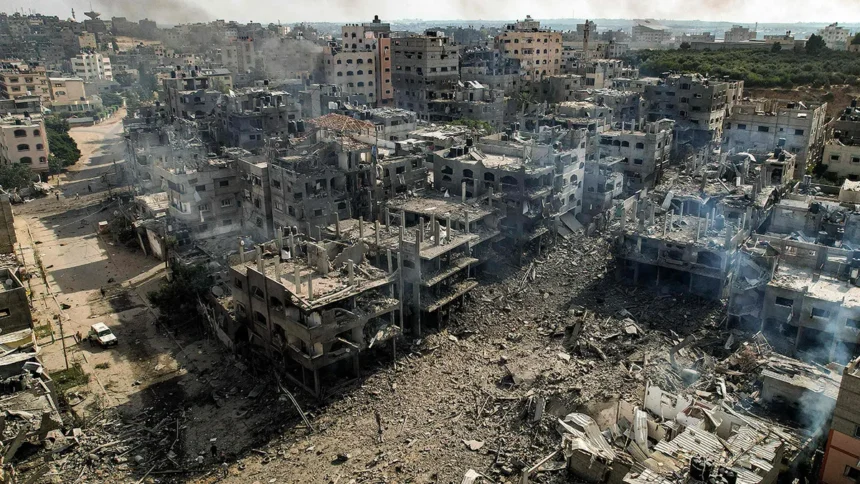
The human cost is important to keep visible. Footage described by the Associated Press showed emergency crews responding at a site that appeared to be an apartment building. Regardless of the intended target, attacks in populated areas increase the danger to civilians, emergency workers and families living nearby.
That issue became increasingly urgent as the conflict expanded. The scale of destruction and pressure on civilian infrastructure has made Lebanon’s crisis more than a military confrontation. It has also become a humanitarian emergency.
From February warning to a much larger conflict
The original report about Israeli airstrikes on Lebanon was written as a developing news story. It now needs an updated context because the regional situation changed dramatically after the February strikes.
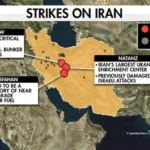
By March 2026, Lebanon had been pulled into renewed large-scale fighting. Hezbollah fired on Israel in support of Iran after US and Israeli attacks on Iran at the end of February, according to later Reuters reporting. Israel responded with a broader military campaign in Lebanon, including airstrikes and ground operations.
The February 20 attack did not cause the later war by itself. However, Israeli airstrikes on Lebanon during the earlier ceasefire period demonstrated how easily the truce could be tested. Each strike added pressure to a framework that was already weakened by competing claims, unresolved security questions and regional rivalries.
The wider Middle East context also matters. The conflict in Lebanon cannot be viewed entirely separately from the Iran conflict, debates over weapons stockpiles and the region’s hidden digital battlefield. These issues interact with diplomacy, military calculations and the risk of escalation across borders.
Lebanon’s humanitarian burden became far heavier
The humanitarian situation worsened substantially after the February Israeli airstrikes on Lebanon. In June, Reuters reported that the United Nations had doubled its Lebanon aid appeal to $639.9 million as needs surged during the renewed war.
Reuters reported that more than 3,500 people had been killed in Israeli strikes since March 2 and that almost 1.24 million people in Lebanon faced crisis-level food insecurity. The report also described damage to hospitals, clinics and farmland. These later figures do not replace the February casualty toll. Instead, they show how a series of Israeli airstrikes on Lebanon and the broader military campaign contributed to a rapidly deepening emergency.
The humanitarian burden includes more than the immediate number of people killed or wounded. Families have been displaced. Healthcare services have come under pressure. Farmers have struggled to access land. Schools, roads and local services have been disrupted in affected communities. Repeated attacks can also make it difficult for civilians to decide whether it is safe to return home.
How the situation evolved
| Date | Development | Why it mattered |
|---|---|---|
| October 8, 2023 | Hezbollah began firing from Lebanon after the Hamas-led October 7 attack on Israel and the start of the Gaza war | The Israel-Hezbollah border confrontation began |
| September 2024 | The conflict escalated into full-scale war | Large-scale strikes and displacement intensified |
| November 27, 2024 | A US-brokered ceasefire took effect | The deal reduced fighting but did not end repeated accusations of violations |
| February 20, 2026 | Israeli airstrikes on Lebanon killed at least 12 people in the Bekaa Valley and Ain al-Hilweh | The strikes became one of the deadliest episodes in eastern Lebanon in recent weeks |
| March 2, 2026 | Renewed conflict expanded after Hezbollah fired on Israel in support of Iran | Lebanon was drawn into a much larger war |
| June 2026 | New ceasefire proposals faced major obstacles while strikes continued | The path to lasting de-escalation remained uncertain |
Why the language of “ceasefire violations” remains contested
One of the most difficult questions is how to describe the repeated attacks after the November 2024 ceasefire. Israel has said it is acting against Hezbollah efforts to rebuild its capabilities and prepare attacks. Lebanese leaders have described Israeli airstrikes on Lebanon as breaches of sovereignty and violations of the ceasefire framework.
Both claims need to be presented accurately, but they are not interchangeable with independently verified conclusions. A responsible report should state what each party says, identify the evidence available and avoid presenting an allegation as a settled fact.
The dispute also reveals a deeper problem: a ceasefire cannot function effectively when the parties do not agree on how suspected violations should be handled. The 2024 arrangement included a monitoring mechanism involving the United States and France alongside existing coordination structures. Yet the continued violence showed that monitoring alone could not resolve the central disagreement over Hezbollah’s weapons, Israel’s security demands and Lebanon’s sovereignty.
Why new ceasefire efforts struggled after Israeli airstrikes on Lebanon
Diplomatic efforts continued as the conflict worsened. In early June 2026, Israel and Lebanon agreed to a US-mediated ceasefire framework intended to reduce hostilities and expand Lebanese state control in designated areas. However, Hezbollah rejected the proposal, while Israeli operations continued.
Reuters reported on June 4 that Hezbollah leader Naim Qassem rejected the plan and said resistance would continue while Israeli forces remained in Lebanon. Israeli Defence Minister Israel Katz said Israeli operations would continue and that Israel intended to maintain a security zone in the south.
The June developments underline the lasting relevance of the February strikes. Israeli airstrikes on Lebanon were already testing the earlier truce before the new war erupted. By the time later ceasefire proposals were discussed, the conflict had become more destructive and politically complex.
A durable arrangement would need to address several issues at once:
- the protection of civilians in Lebanon and Israel;
- an effective halt to attacks;
- the withdrawal and deployment questions in southern Lebanon;
- the role of the Lebanese army;
- the dispute over Hezbollah’s weapons;
- monitoring and enforcement;
- humanitarian access;
- the risk that wider regional tensions could reignite fighting.
What remains uncertain
Several details surrounding the February 20 strikes remain disputed or require cautious wording.
First, the injury toll in the Bekaa Valley varied across credible reports. The Associated Press cited Lebanon’s Health Ministry figure of 24 wounded, while Reuters cited two security sources who said 50 people were wounded. The discrepancy should be acknowledged rather than hidden.
Second, Israel and Hamas gave conflicting accounts of the Ain al-Hilweh target. Israel said it struck a Hamas command centre. Hamas said the site was used by a joint Palestinian security force. Independent verification of the building’s function was not established in the available reporting.
Third, the long-term impact of the latest ceasefire negotiations remains uncertain. The situation continued to change rapidly in June, and any claim that a durable peace had been achieved would be premature.
These uncertainties do not erase the established facts. At least 12 people were killed on February 20. Hezbollah said commander Hussein Mohammad Yaghi was among its members killed in the Bekaa Valley. Israeli airstrikes on Lebanon continued after the late-2024 ceasefire, and the country later suffered a much larger escalation.
The February attack remains a defining warning
The February 20 strikes were significant because they revealed how fragile the ceasefire had become. Israeli airstrikes on Lebanon hit both the Bekaa Valley and Ain al-Hilweh on the same day, killing at least 12 people and intensifying fears of a wider conflict.
Those fears were justified. Within weeks, Lebanon entered a far more destructive phase of fighting. The later war cannot be reduced to one attack or one dispute, but the February strikes showed that the structures meant to prevent escalation were already failing.
For readers following the region, the central lesson is straightforward: reports about Israeli airstrikes on Lebanon must be updated carefully, sourced precisely and written with clear distinctions between confirmed facts, official claims and contested accounts. The human consequences are too serious for vague or overstated language.
For continuing coverage of international developments, follow The News Ink on X or join our WhatsApp channel.