




5 Theories About How the Universe Could End
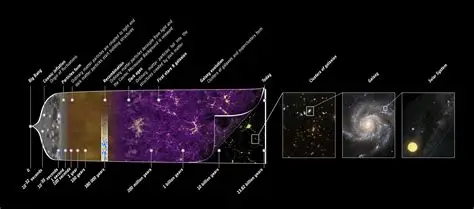
The universe began around 13.8 billion years ago with the Big Bang, a violent event that created space, matter, energy, and time itself. Since then, scientists have tried to answer one enormous question: How will the universe end?
Astronomers and physicists believe the answer depends on a cosmic battle between gravity and expansion. Gravity pulls matter together, while the expansion of space pushes galaxies apart. The outcome of this struggle will shape the ultimate fate of everything in existence.
Today, researchers have several scientifically accepted theories about the end of the universe. Some predict a slow and lonely death, while others describe dramatic destruction on a cosmic scale.
Below are the five leading theories scientists use to explain how the universe could end.
Key Points at a Glance
- The universe is currently expanding faster over time.
- Scientists believe dark energy plays a major role in cosmic expansion.
- The most accepted theory is the Big Freeze.
- Other theories include the Big Crunch, Big Rip, Big Bounce, and Vacuum Decay.
- No one knows with certainty which scenario will happen.
1. The Big Freeze — The Most Accepted Theory
The Big Freeze, also known as Heat Death, is currently the leading scientific theory about the fate of the universe.
Scientists discovered in 1998 that the universe is not just expanding — it is expanding faster over time. Researchers linked this acceleration to a mysterious force called dark energy.
H02=8πGρ3+Λc23H_0^2=\frac{8\pi G\rho}{3}+\frac{\Lambda c^2}{3}
This accelerated expansion means galaxies continue moving farther apart. Over billions and trillions of years, stars will run out of fuel, galaxies will fade, and black holes will eventually evaporate.
The universe will become:
- Cold
- Dark
- Empty
- Lifeless
In this scenario, temperatures approach absolute zero, and no usable energy remains. Eventually, all motion and activity stop.
Scientists support this theory because current observations show no signs that cosmic expansion is slowing down.
What Would Happen During the Big Freeze?
Stages of the Big Freeze
| Stage | What Happens |
|---|---|
| Expansion continues | Galaxies drift farther apart |
| Stars die out | No new stars form |
| Black holes dominate | Massive black holes consume matter |
| Black holes evaporate | Hawking radiation slowly destroys them |
| Heat death occurs | Universe becomes cold and inactive |
The Big Freeze may take trillions upon trillions of years, making it the slowest possible ending.
2. The Big Crunch — The Universe Collapses Back Inward
The Big Crunch is essentially the opposite of the Big Bang.
In this theory, gravity eventually becomes strong enough to stop expansion and reverse it. Galaxies would begin rushing toward one another, temperatures would rise dramatically, and the universe would shrink into a dense state.
a(t)→0a(t)\rightarrow0
Everything — stars, planets, and galaxies — would collapse into an extremely hot and compact point.
Some scientists once believed this was likely, but modern evidence showing accelerated expansion makes the Big Crunch less probable today.
Still, researchers continue studying dark energy because its behavior could change in the distant future.
Signs That Could Support the Big Crunch
Scientists would need evidence showing:
- Expansion slowing down
- Dark energy weakening
- Gravity overpowering cosmic expansion
At present, observations do not support this scenario strongly.
3. The Big Rip — Space Tears Everything Apart
The Big Rip is one of the most dramatic theories scientists have proposed.
This scenario assumes dark energy becomes increasingly powerful over time. Instead of merely expanding space, it eventually stretches the universe so aggressively that it tears apart galaxies, stars, planets, and even atoms.
a(t)→∞a(t)\rightarrow\infty
If this happens, destruction would occur in stages:
- Galaxy clusters separate
- Galaxies break apart
- Solar systems collapse
- Planets disintegrate
- Atoms are ripped apart
Eventually, space itself becomes unstable.
The Big Rip depends entirely on how dark energy behaves. Scientists still do not fully understand dark energy, making this theory possible but uncertain.
4. The Big Bounce — A Never-Ending Cosmic Cycle
The Big Bounce theory suggests the universe may not end permanently at all.
Instead, the universe could repeatedly expand and collapse in endless cycles. After shrinking during a Big Crunch, a new Big Bang would occur, creating another universe.
This idea creates a cosmic loop:
Big Bang → Expansion → Collapse → New Big Bang
Some physicists believe quantum mechanics may support this possibility.
The theory also raises fascinating questions:
- Did another universe exist before ours?
- Could time repeat infinitely?
- Are Big Bangs part of a larger cycle?
Although exciting, scientists still lack enough evidence to confirm the Big Bounce.
5. Vacuum Decay — Instant Cosmic Destruction
The most terrifying theory may be Vacuum Decay.
According to quantum physics, the universe may exist in a temporary or “false” vacuum state. If a more stable vacuum suddenly forms somewhere in space, it could expand outward at the speed of light.
E=mc2E=mc^2
This expanding bubble would instantly rewrite the laws of physics.
Atoms could no longer hold together. Matter might cease to exist as we know it.
The frightening part is that vacuum decay would happen without warning. Because the bubble would travel at light speed, no one could detect it before destruction arrived.
Fortunately, scientists consider this scenario highly theoretical and extremely unlikely.
Why Dark Energy Matters So Much
Dark energy remains the biggest mystery in modern cosmology.
Scientists estimate it makes up nearly 70% of the universe, yet nobody knows exactly what it is.
Its behavior determines whether the universe:
- Expands forever
- Slows down
- Tears apart
- Collapses inward
Modern telescopes and projects continue studying cosmic expansion to better understand dark energy’s influence.
Which Theory Do Scientists Currently Favor?
Right now, the Big Freeze has the strongest scientific support.
Observations from:
- Supernova studies
- Cosmic microwave background measurements
- Galaxy mapping
- Dark energy research
all suggest that the universe will likely continue expanding forever.
Still, science evolves constantly. New discoveries about dark energy, gravity, or quantum physics could completely reshape our understanding of the cosmos.
Why Scientists Study the End of the Universe
Understanding the fate of the universe helps researchers answer deeper questions about:
- The origin of time
- The nature of matter
- The behavior of gravity
- The future of galaxies
- The limits of physics
Studying cosmic endings also helps scientists improve models of the universe itself.
Final Thoughts
The universe remains one of the greatest mysteries ever explored. Scientists have developed multiple theories to explain how everything may eventually end, but no one knows which outcome is correct.
The leading idea today suggests the universe will slowly fade into darkness through the Big Freeze. However, possibilities like the Big Rip, Big Crunch, Big Bounce, and Vacuum Decay continue to challenge our understanding of physics and reality.
As technology improves and astronomers gather more data, humanity may move closer to answering one of the biggest questions ever asked:
What will happen to the universe in the end?