


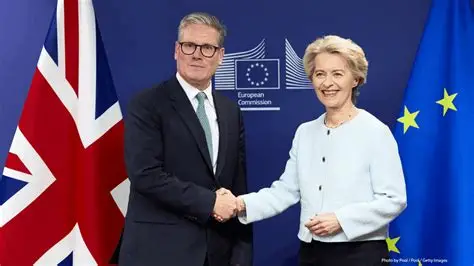
UK Could Eventually Return to EU, Treasury Minister Suggests Amid Economic Debate
(UK RETURNS TO EU) Britain’s relationship with the European Union has once again become a major topic of political discussion after a senior Treasury minister suggested that the country’s return to the bloc could be inevitable in the long run.
The comments have reignited debate about Brexit, economic growth, and the future direction of UK foreign and trade policy. While the government maintains that it has no plans to rejoin the European Union, the remarks highlight growing discussions within political circles about whether closer integration with Europe could eventually become necessary.
The statement comes at a time when the UK is attempting to strengthen cooperation with European partners while remaining outside the EU’s core institutions.
Treasury Minister Sparks Fresh Debate
Treasury minister Lord Spencer Livermore told members of the House of Lords that he personally believes Britain will eventually return to the European Union because doing so would be in the country’s economic interest.
Although he stressed that the government is currently focused on improving relations with Brussels rather than rejoining the bloc, his comments quickly attracted attention across the political spectrum.
The remarks are significant because they represent one of the strongest endorsements of eventual EU membership made by a serving government minister since Brexit.
Many political observers view the comments as evidence that debates over Britain’s long-term future relationship with Europe remain active behind the scenes.
Brexit Still Shapes Britain’s Economy
More than a decade after the Brexit referendum, its economic impact continues to divide economists, businesses, and politicians.
Supporters of Brexit argue that leaving the European Union restored national sovereignty and allowed Britain to negotiate its own trade agreements around the world.
Critics, however, point to increased trade barriers, additional bureaucracy, and slower economic growth compared with pre-Brexit expectations.
Lord Livermore argued that Brexit has imposed significant economic costs on the country. According to estimates frequently cited by economists, Brexit may have reduced economic output by several percentage points compared with what might otherwise have occurred.
Many businesses continue to report challenges when trading with European markets due to customs requirements and regulatory differences.
Government Pursues an EU Reset
Despite the minister’s personal opinion, the current government’s official position remains unchanged.
Prime Minister Keir Starmer has repeatedly stated that Britain will not:
- Rejoin the European Union
- Return to the Single Market
- Rejoin the Customs Union
- Restore freedom of movement
Instead, the government is pursuing what it describes as a practical reset in relations with European partners.
The objective is to improve cooperation in areas such as:
- Trade
- Security
- Defence
- Scientific research
- Energy policy
- Border management
Government officials believe stronger cooperation can deliver economic benefits without reopening the politically divisive debate over EU membership.
Why Economic Growth Is Central to the Debate
Economic growth remains one of the biggest challenges facing Britain.
The government has made growth a key priority as it seeks to improve public services, increase investment, and strengthen living standards.
Supporters of closer EU ties argue that reducing trade barriers could help businesses expand and attract greater levels of foreign investment.
Several industries continue to advocate for improved access to European markets, including:
- Manufacturing
- Financial services
- Agriculture
- Technology
- Pharmaceutical companies
Business groups frequently point out that the European Union remains Britain’s largest trading partner despite Brexit.
As a result, discussions about economic competitiveness often lead back to questions surrounding the UK’s relationship with Europe.
Political Challenges Remain Significant
Any future attempt to rejoin the European Union would face substantial political obstacles.
Brexit remains one of the most divisive issues in modern British politics. Millions of voters continue to support the decision to leave the bloc and would strongly oppose reversing the outcome of the 2016 referendum.
Political leaders are therefore cautious about proposing major constitutional changes.
Several challenges would need to be addressed before any future membership application could be considered.
Key Challenges Include:
- Public opinion remains divided.
- A future referendum might be required.
- EU member states would need to approve any application.
- Negotiations could take several years.
- Membership conditions may differ from those Britain previously enjoyed.
These factors make any immediate return highly unlikely.
Europe Faces a Changing Global Landscape
The debate also takes place against a backdrop of major international challenges.
European nations are increasingly cooperating on defence and security issues due to growing geopolitical tensions.
Key concerns include:
- The war in Ukraine
- Relations with Russia
- Global trade competition
- Energy security
- Technological development
Many policymakers believe closer coordination among European countries will become increasingly important in the coming years.
This broader context has encouraged renewed discussions about Britain’s place within Europe.
Labour Faces a Delicate Balancing Act
Labour faces the difficult task of balancing economic priorities with political realities.
Many voters who supported Labour in recent elections previously backed Brexit. At the same time, a large proportion of Labour supporters favour stronger ties with the European Union.
The party therefore continues to focus on practical cooperation rather than reopening the membership debate.
Political analysts believe Labour’s strategy aims to improve economic relations with Europe while avoiding the divisions that dominated British politics for years after the referendum.
What Happens Next?
For now, Britain’s official policy remains focused on strengthening cooperation rather than pursuing membership.
However, Lord Livermore’s comments demonstrate that discussions about the country’s long-term future remain active within political circles.
Economic performance, public opinion, and developments across Europe will likely determine whether the debate gains momentum in the coming years.
While rejoining the European Union is not currently government policy, the minister’s remarks suggest that some senior figures view closer integration as a possibility that cannot be ruled out forever.
Key Takeaways
- A Treasury minister said Britain’s return to the EU is inevitable in his personal view.
- The government still opposes rejoining the EU, Single Market, and Customs Union.
- Economic concerns remain central to the debate.
- Businesses continue to seek easier access to European markets.
- Political and legal obstacles would make any return a lengthy process.
- Discussions about Britain’s future relationship with Europe are likely to continue.
- Why the UK Return to EU Debate Has Returned
Conclusion
The UK return to EU discussion remains politically sensitive, but economic challenges and changing global conditions ensure that the UK return to EU debate will continue for years to come.
Economic pressures, changing geopolitical realities, and evolving public opinion could all shape the future of UK-EU relations. For now, Britain remains outside the bloc, but discussions about its long-term place in Europe continue to generate significant political interest.