Chagos Islands Deal: How Alarming US Pressure Stalled the UK-Mauritius Handover
The Chagos Islands deal has become one of the most sensitive foreign-policy disputes facing the UK government. What began as an attempt to resolve a long-running sovereignty dispute with Mauritius has turned into a difficult test of international law, UK-US defence cooperation, Indian Ocean strategy and domestic political trust.
Under the agreement signed in 2025, the UK would transfer sovereignty of the Chagos Archipelago to Mauritius while keeping long-term control over the Diego Garcia military base through a 99-year lease. The base is used jointly by the UK and the United States and is widely viewed as one of the most strategically important Western military sites in the Indian Ocean.
The Chagos Islands deal appeared to be moving toward ratification until political pressure from Washington changed the timeline. In February, Foreign Office minister Hamish Falconer told MPs that the UK was pausing the parliamentary process while it discussed US concerns. The government later clarified that there was no formal pause at that point. By April, however, the situation had shifted more seriously: UK legislation linked to the treaty was set aside after the US withdrew support.
Editor’s update — June 2026: This article has been rebuilt with the latest available context. The February “pause” was initially disputed by the UK government, but later reporting showed the legislation had effectively stalled after US support fell away.
What Is the Chagos Islands Deal?
The Chagos Islands deal is an agreement between the United Kingdom and Mauritius concerning the future of the Chagos Archipelago, a group of Indian Ocean islands governed by the UK as the British Indian Ocean Territory.
The official treaty text, published by the UK government, says Mauritius is sovereign over the entire Chagos Archipelago, including Diego Garcia. At the same time, Mauritius authorises the UK to exercise rights and authorities over Diego Garcia under the terms of the agreement. The official treaty can be read here: UK-Mauritius agreement on the Chagos Archipelago.
In practical terms, the Chagos Islands deal has two central goals:
- Sovereignty transfer: Mauritius would gain sovereignty over the Chagos Archipelago.
- Military continuity: The UK and US would continue using Diego Garcia through a long-term lease arrangement.
The UK government argues that the agreement settles a sovereignty dispute while protecting the military base. Critics argue that the UK is giving up territory, paying too much and taking a geopolitical risk.
Quick Facts About the Chagos Islands Deal
| Issue | Key detail |
|---|---|
| Parties | United Kingdom and Mauritius |
| Treaty signed | May 22, 2025 |
| Main territory | Chagos Archipelago, including Diego Garcia |
| Current UK status | British Indian Ocean Territory |
| Proposed sovereignty | Mauritius |
| Base arrangement | UK rights over Diego Garcia through a 99-year lease |
| Annual average payment | £101 million in 2025/26 prices |
| Net present value estimate | Around £3.4 billion |
| Main obstacle | Loss of US political support and stalled UK legislation |
| Latest Mauritius position | Mauritius said it would wait until the end of July 2026 for the UK to finalise the deal |
Why Diego Garcia Matters So Much
The Chagos Islands deal is controversial mainly because of Diego Garcia. The island hosts a major UK-US military base that has supported air, naval, intelligence and logistics operations for decades.
Its location matters. Diego Garcia sits in the central Indian Ocean, between Africa, the Middle East and Asia. That gives the base strategic value for military operations, surveillance, refuelling, communications and maritime security.
For the UK, the Chagos Islands deal is meant to secure that base for the long term. The government’s argument is that continued legal uncertainty over sovereignty could eventually threaten military operations. By reaching a settlement with Mauritius, ministers say the UK can protect the base through a clear lease.
For critics, that argument raises a different question: if Diego Garcia is so important, why transfer sovereignty at all? Conservative opponents have argued that the UK should retain full control, especially when Washington’s position is uncertain.
The whole dispute turns on that tension. The Chagos Islands deal tries to combine decolonisation and military continuity. Whether that balance works depends heavily on US support.
The Legal Background: Why Mauritius Claims the Islands
The Chagos Islands dispute did not begin with the 2025 treaty. It goes back to the final years of British rule in Mauritius.
In 1965, the UK separated the Chagos Archipelago from Mauritius before Mauritius became independent in 1968. The islands later became part of the British Indian Ocean Territory. Chagossians were removed from the islands between the late 1960s and early 1970s as the Diego Garcia base developed.
Mauritius has long argued that the separation was unlawful and that decolonisation was incomplete. In 2019, the International Court of Justice issued an advisory opinion concluding that the process of decolonisation of Mauritius had not been lawfully completed when Mauritius gained independence. The ICJ case page can be read here: Legal consequences of the separation of the Chagos Archipelago from Mauritius.
The advisory opinion was not the same as a binding judgment in a dispute between two states, but it carried major diplomatic weight. The UN General Assembly later backed a resolution calling for the completion of Mauritius’s decolonisation.
That legal pressure is one reason the UK pursued the Chagos Islands deal. London wanted to end the dispute while protecting Diego Garcia.
What Happened in February?
The February story created confusion. Falconer told MPs that the ratification process was being paused while the UK held discussions with the United States. His comments suggested that US concerns had become serious enough to slow the process.
Reuters later reported that the UK government rowed back from the idea of a formal pause. A government spokesperson said there was “no pause” and that no deadline had been set, while also saying the UK would not proceed without US support. Reuters’ report can be read here: Britain has not paused Chagos Island deal ratification after US criticism.
That distinction is important for accuracy. The original article described the process as paused. At the time, the government disputed that wording. But the broader point remained true: US concerns had become central to the future of the treaty.
The Chagos Islands deal was no longer only a UK-Mauritius matter. Washington had effectively become a decisive third actor.
Why US Support Became Essential
The UK has repeatedly said it would not move forward without US support. That is because Diego Garcia is not just a UK facility. It is a joint UK-US base and a key part of US military posture in the Indian Ocean.
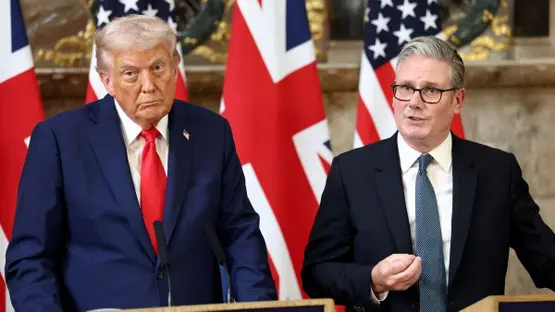
Earlier in the process, US officials had welcomed the agreement. Reuters reported that Washington initially supported the historic treaty. Later, however, President Donald Trump criticised the plan and called it a mistake.
That reversal placed the UK government in a difficult position. If the Chagos Islands deal depends on US confidence, then losing that confidence makes parliamentary ratification much harder.
The issue also touched US domestic politics. Some Republicans objected to the UK transferring sovereignty to Mauritius, partly because of concerns about China’s influence in the Indian Ocean. Supporters of the deal argued that a lease arrangement would preserve the base more securely than continued legal uncertainty.
The April Shift: Legislation Stalled
By April, the situation had become more serious than February’s disputed pause. The Guardian reported that the UK government was forced to shelve legislation linked to returning the Chagos Islands to Mauritius after the US dropped support for the agreement. The report said the proposed legislation could not complete its passage without US backing. Read the report here: UK forced to shelve legislation to return Chagos Islands to Mauritius.
Al Jazeera also reported that Britain was setting aside the bill amid a lack of support from Trump, while Mauritius said it would keep pushing to reclaim the archipelago. Its report can be read here: UK to hold off on deal ceding Chagos Islands amid US opposition.
This is the key update for the Chagos Islands deal. The February position was uncertain. The April position was clearer: the treaty process had stalled politically.
Mauritius Sets a Deadline
Mauritius did not abandon the issue after the UK delay. Reuters reported on April 23 that Mauritius would wait until the end of July 2026 for Britain to finalise the Chagos Islands deal. Mauritian officials said they still lacked clarity on whether the US would approve the agreement. Read the Reuters report here: Mauritius tells UK it will wait until end-July for Chagos deal.
That deadline matters. It signals that Mauritius is not prepared to let the agreement drift indefinitely. If the UK cannot complete ratification, Mauritius may consider other diplomatic or legal routes.
The Chagos Islands deal was supposed to close a long-running dispute. Instead, it risks opening a new period of uncertainty if either side concludes that the agreement can no longer be delivered.
The Cost Question: £101 Million a Year
The Chagos Islands deal also carries a major financial component. The House of Commons Library says the UK would pay Mauritius an average of £101 million per year for 99 years in 2025/26 prices, with the government describing the net present value as around £3.4 billion. The Library briefing can be read here: 2025 treaty on the British Indian Ocean Territory/Chagos Archipelago.
This figure has caused political argument because long-term costs can be presented in different ways. The government’s £3.4 billion figure uses a net-present-value method. Critics have cited much larger cash totals across the full 99 years. Full Fact explained that different totals are produced by different accounting methods and that both can describe the same commitment in different ways. Read the explanation here: How much is the UK spending on the Chagos deal?.
The News Ink’s economy guide explains why long-term public spending, inflation and present-value calculations can make government costs difficult to compare. In simple terms, the Chagos Islands deal is not only a sovereignty question. It is also a public-finance question.
Why Critics Oppose the Chagos Islands Deal
Opposition to the Chagos Islands deal comes from several directions.
Some UK Conservatives argue that Britain should not surrender sovereignty over strategically important territory. They say Diego Garcia is too valuable to be placed under another state’s sovereignty, even if the lease is designed to preserve UK-US access.
Others focus on cost. They argue that paying Mauritius for a long-term lease after transferring sovereignty is poor value for UK taxpayers.
Some critics point to China. Mauritius has relations with Beijing, and opponents fear that geopolitical rivals could gain influence in the region. Supporters of the treaty respond that the agreement includes protections around Diego Garcia and the outer islands.
Chagossian opinion is also not unified. Some Chagossians support Mauritius’s sovereignty claim and see the deal as a decolonisation step. Others oppose being transferred under an agreement they feel did not properly include them. This makes the moral picture more complicated than a simple UK-versus-Mauritius dispute.
Why Supporters Defend the Deal
Supporters of the Chagos Islands deal argue that the UK’s position had become legally and diplomatically vulnerable. International legal opinion had shifted strongly towards Mauritius. Continuing to resist that pressure could weaken the UK’s credibility and create more risk around Diego Garcia.
They also argue that the agreement does not end Western use of the base. On the contrary, the lease is meant to secure the base for at least 99 years.
Chatham House argued in January that UK ratification of the treaty would not violate international law and that the agreement would allow continued operation of the Diego Garcia base while resolving the sovereignty dispute. Read the analysis here: UK ratification of the Chagos Archipelago treaty will not violate international law.
For supporters, the Chagos Islands deal is therefore a strategic compromise: Mauritius gains sovereignty, the UK and US retain operational control of Diego Garcia, and the legal dispute is reduced.
Why the US Reversal Was So Damaging
The Chagos Islands deal was designed around defence continuity. If the US no longer supports it, the entire strategic logic weakens.
The UK can make a legal and diplomatic case for the treaty, but Diego Garcia’s importance depends heavily on American use. If Washington is uncomfortable with the arrangement, British ministers cannot easily argue that the deal guarantees long-term security.
That does not mean the treaty is impossible forever. US positions can change. Technical assurances can be negotiated. Parliamentary timetables can reopen. Mauritius can accept clarifications if the core sovereignty transfer remains intact.
But the reversal has already done damage. It delayed ratification, encouraged domestic opponents and created uncertainty for Mauritius and Chagossian communities.
What Happens to the Chagossians?
Any serious article on the Chagos Islands deal must mention the Chagossians. Their removal from the islands is central to the moral history of the dispute.
The treaty includes provisions related to Chagossians, including a trust fund and resettlement possibilities on islands other than Diego Garcia. But many Chagossians have argued that their voices have not been given enough weight in negotiations.
That criticism matters. A sovereignty settlement can answer questions between states while still leaving individuals and displaced communities feeling excluded. The Chagos Islands deal is supposed to address decolonisation, but decolonisation cannot be complete if affected people feel ignored.
This is one reason the treaty is politically sensitive. It is about territory, military power and international law, but also about people who lost their homes.
Timeline of the Chagos Islands Deal
| Date | Development |
|---|---|
| 1965 | UK separated the Chagos Archipelago from Mauritius before Mauritian independence |
| 1968–1973 | Chagossians were removed from the islands as Diego Garcia became a military base |
| 2019 | ICJ advisory opinion said Mauritius’s decolonisation had not been lawfully completed |
| May 22, 2025 | UK and Mauritius signed the Chagos Islands agreement |
| February 2026 | UK comments created confusion over whether ratification was paused during US talks |
| April 2026 | UK legislation linked to the treaty was shelved after US support fell away |
| April 23, 2026 | Mauritius said it would wait until the end of July for Britain to finalise the deal |
| June 2026 | The treaty remained politically stalled, with US support still decisive |
What Could Happen Next?
The Chagos Islands deal now faces several possible paths.
First, the UK could revive the treaty if it obtains renewed US support. That would likely require stronger assurances about Diego Garcia, regional security and US legal concerns.
Second, the deal could remain stalled until the political environment changes. That would satisfy some critics but frustrate Mauritius and increase the risk of renewed diplomatic or legal action.
Third, the UK and Mauritius could attempt to renegotiate terms. That might address US concerns but could also reopen difficult issues around cost, sovereignty, Chagossian rights and base access.
Fourth, Mauritius could pursue further international pressure if the UK fails to complete the agreement by the deadline it has indicated.
None of these outcomes is simple. The Chagos Islands deal sits at the intersection of law, strategy, history and domestic politics.
Final Takeaway
The Chagos Islands deal was meant to settle a historic dispute while protecting the UK-US military base on Diego Garcia. Instead, it has become a diplomatic test of whether London can balance decolonisation, alliance management and national-security concerns.
The February story was confusing because the UK government denied that ratification had formally paused. The April update is clearer: the legislation was stalled after US support fell away. Mauritius is now waiting for the UK to deliver by the end of July 2026.
The deal is not dead, but it is in serious trouble. If the UK can restore US support, the treaty may return to Parliament. If not, the Chagos Islands deal may become another example of how unresolved colonial history can collide with modern military strategy.
For more current-affairs updates, follow The News Ink on X.