




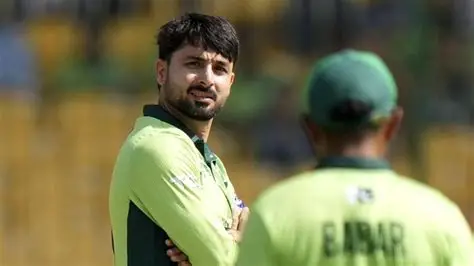
Abrar Ahmed Signing: Why Sunil Gavaskar’s Sunrisers Leeds Criticism Became a Major Cricket Debate
Abrar Ahmed became the centre of one of the most politically charged cricket debates of 2026 after Sunrisers Leeds signed the Pakistan spinner at The Hundred men’s auction. The £190,000 deal was notable on cricketing grounds, but it quickly became far bigger than a squad-building decision because Sunrisers Leeds are owned by India’s Sun Group, the same business group behind Sunrisers Hyderabad in the Indian Premier League.
Former India captain Sunil Gavaskar then turned the signing into a national debate. Writing in his Mid-Day column, Gavaskar argued that Indian-owned sporting businesses should not pay Pakistani players because, in his view, taxes paid on those earnings ultimately benefit the Pakistani state. He went further, saying such payments could “indirectly contribute” to the deaths of Indian soldiers and civilians.
Those remarks immediately intensified discussion around Abrar Ahmed, Sunrisers Leeds and the wider place of Pakistani cricketers in leagues linked to Indian ownership. They also reopened a familiar question: where should professional sport end and national politics begin?
Months later, the controversy can be assessed with more perspective. Abrar Ahmed did play for Sunrisers Leeds in the 2026 Hundred, the franchise reached the eliminator, and the signing was not reversed. That makes the story more useful today as an updated analysis of how cricket’s commercial expansion is colliding with one of the sport’s most sensitive political rivalries.
Why Sunrisers Leeds Signing Abrar Ahmed Was So Significant
The immediate sporting fact was straightforward. Abrar Ahmed, Pakistan’s leg-spinner, was bought by Sunrisers Leeds for £190,000 during the men’s Hundred auction in March 2026.
The England and Wales Cricket Board said 169 players were signed across the two-day auction for a combined £11.9 million. Abrar Ahmed was among the most eye-catching overseas purchases, while Pakistan spinner Usman Tariq was signed by Birmingham Phoenix for £140,000.
The important political detail was the ownership.
Sunrisers Leeds had previously been known as Northern Superchargers. Following investment changes in The Hundred, the Sun Group took full ownership of the Headingley-based franchise. The same ownership group operates Sunrisers Hyderabad in the IPL and Sunrisers Eastern Cape in South Africa.
That meant Abrar Ahmed was not merely joining an English franchise. He was becoming a Pakistani player contracted by a team controlled by an Indian company with a major IPL connection.
Before the auction, there had already been speculation that Indian-linked Hundred teams might avoid Pakistani players. The ECB and the franchises publicly stressed that nationality should not be used as a basis for excluding players from selection. Reuters reported that Sunrisers Leeds ultimately outbid Trent Rockets to secure Abrar Ahmed.
When Sunrisers Leeds successfully bid for Abrar Ahmed, the deal appeared to cut directly against the idea of an unofficial exclusion policy.
The News Ink had also covered the wider concern surrounding Pakistani players in the competition, including the report on Abrar Ahmed’s signing easing Pakistan player concerns in The Hundred.
What Sunil Gavaskar Said About Abrar Ahmed
The controversy escalated after Sunil Gavaskar addressed the transfer in his Mid-Day column.
Gavaskar’s argument was not primarily about Abrar Ahmed as a cricketer. It was about whether an Indian-owned business should financially employ a Pakistani athlete at a time of severe political tension between India and Pakistan.
He referred to the long absence of Pakistani players from the IPL and argued that Indian franchise owners had increasingly avoided Pakistani athletes after the 2008 Mumbai attacks.
His most controversial point concerned taxation. Gavaskar reasoned that a Pakistani player earning money from an Indian-owned franchise would pay taxes to the Pakistani government, and he linked that revenue to state spending on weapons and military activity.
That is the basis on which he said such payments indirectly contributed to Indian casualties.
The statement was unusually strong even by the standards of India-Pakistan sporting debate. It shifted attention from whether Abrar Ahmed deserved the contract on cricketing merit to whether the contract itself could be viewed as politically or morally unacceptable.
Gavaskar later defended his position and argued that Indian-owned franchises operating outside India should also consider national sensitivities when deciding whether to employ Pakistani players.
His intervention mattered because he is not simply another commentator. Gavaskar is one of India’s most important former cricketers, a member of the country’s 1983 World Cup-winning side and one of the most influential voices in Indian cricket media.
Why Pakistani Players Have Been Absent From the IPL Since 2009
To understand the reaction to Abrar Ahmed, it is necessary to separate several different facts that are often mixed together.
Pakistani players participated in the inaugural IPL season in 2008. However, players from Pakistan have not been part of the league since 2009 amid deteriorating political relations between the countries following the Mumbai attacks.
That absence is not the same thing as saying Pakistan and India stopped playing all bilateral cricket against each other in 2007.
The two national teams met in a bilateral limited-overs series in India in 2012-13. Pakistan played two T20 internationals and three one-day internationals between December 25, 2012 and January 6, 2013.
Pakistan won the ODI series 2-1, while the T20 series finished 1-1.
Since then, bilateral cricket has effectively disappeared. India and Pakistan have continued to meet in ICC events and regional tournaments, but the normal home-and-away relationship that exists between most major cricket nations has not resumed.
That distinction is important because an earlier version of this story incorrectly stated that the countries last played a bilateral series in 2007. The 2007 contest was their last full bilateral Test tour, but it was not the final bilateral cricket series of any kind.
The 2025 India-Pakistan Conflict Changed the Context Again
The political climate surrounding Abrar Ahmed became even more sensitive after the events of 2025.
Tensions rose sharply following the April 2025 attack on tourists in Pahalgam in Indian-administered Kashmir. India accused Pakistan of supporting cross-border militancy, while Pakistan rejected responsibility. The crisis escalated into several days of direct military confrontation in May 2025, including missile and drone attacks.
That confrontation had consequences well beyond diplomacy and defence.
When India and Pakistan later met in the 2025 Asia Cup, their cricket rivalry reflected the political atmosphere. Indian and Pakistani players did not exchange the customary handshakes around some matches, and the issue itself became an international cricket controversy.
This matters to the Abrar Ahmed story because Gavaskar’s comments were made in a climate where the India-Pakistan relationship had already moved from long-term political hostility to a recent military confrontation.
Supporters of his position therefore saw the Sunrisers Leeds decision through a national-security lens.
Critics saw the matter differently. They argued that Abrar Ahmed was being signed as a professional athlete in a British competition and that holding an individual cricketer responsible for the policies of his national government risks turning sport into collective punishment.
Those two positions explain why the debate became so intense so quickly.
Sunrisers Leeds Said the Decision Was About Cricket
The sporting case for Abrar Ahmed was also important.
Sunrisers Leeds head coach Daniel Vettori indicated after the auction that the franchise’s decision was based on cricketing needs. Leeds had missed out on England leg-spinner Adil Rashid and still wanted a high-quality spin option, particularly from the overseas market.
Vettori said the recruitment process centred on finding the best available cricket option rather than the player’s nationality.
Abrar Ahmed fitted that requirement.
By early 2026, he had established himself as one of Pakistan’s leading short-format spin options. His variations and googly made him an attractive option in a competition where bowlers operate in short sets and captains regularly search for wicket-taking options through the middle phase.
That is why the signing could be interpreted in two very different ways.
From the franchise’s perspective, Abrar Ahmed was an available international spinner who matched a squad requirement.
From Gavaskar’s perspective, the nationality of the player and nationality of the owner could not be separated from the political relationship between the two countries.
The disagreement was therefore not really about whether Abrar Ahmed could play. It was about whether franchise cricket should operate according to sporting merit when political relations between countries are severely damaged.
The Debate Over a Possible “Shadow Ban”
The Hundred auction had already been surrounded by reports that Pakistani players might struggle to attract bids from teams with Indian ownership links.
That created a difficult issue for the competition.
The Hundred was entering a new commercial era after private investors took stakes in its teams. Several ownership groups were also connected to IPL franchises, creating a more global network of cricket brands.
At the same time, Pakistan remains one of the largest cricket markets in the world.
If players were excluded because of nationality rather than sporting reasons, the competition risked criticism over fairness and discrimination.
The ECB responded to the speculation by stressing that teams should not exclude players on the basis of nationality.
The eventual purchase of Abrar Ahmed by Sunrisers Leeds became highly symbolic because it showed that at least one Indian-owned franchise was prepared to sign a Pakistani international.
The News Ink’s coverage of the auction also documented the broader Pakistani presence. Before the event, 67 Pakistan players registered for The Hundred auction.
Another report examined how Haris Rauf led Pakistan players into The Hundred auction.
Not all of those players were signed. Abrar Ahmed and Usman Tariq were among the Pakistani players who did secure deals, while several other high-profile names went unsold.
Why the Social Media Backlash Became Part of the Story
The reaction did not remain confined to newspaper columns.
Sunrisers Leeds faced significant criticism on social media after announcing Abrar Ahmed. Some users directed anger at the franchise because of its Indian ownership connection, while others defended the club and argued that player recruitment should remain separate from state politics.
The club’s account on X was temporarily unavailable during the backlash before returning. Contemporary reporting linked the interruption to the period of intense reaction, but without a definitive platform explanation it would be too strong to state as fact that either a technical failure or political complaints caused the suspension.
That distinction matters in a story already shaped by emotionally charged claims.
Abrar Ahmed also carried an existing social-media controversy among some Indian cricket fans because of an older post widely interpreted as referring to Indian pilot Abhinandan Varthaman, who was captured by Pakistan after an aerial clash in 2019.
That history gave the backlash another layer. However, interpretations of an old social-media post should not automatically be presented as proof of a player’s intentions unless the player has clearly explained them.
Abrar Ahmed Ultimately Played for Sunrisers Leeds
The biggest update since the original controversy is simple: Sunrisers Leeds did not reverse the deal.
Abrar Ahmed went on to represent the franchise in The Hundred during the 2026 season. Match records show him in the Sunrisers Leeds XI during the tournament, including the August 4 victory against London Spirit at Headingley.
That makes Gavaskar’s suggestion that there was still time to reverse the signing an important part of the historical controversy, but not the eventual outcome.
Sunrisers Leeds had a competitive season and reached the eliminator. Their campaign ended on August 14, 2026, when Manchester Super Giants beat them by 20 runs at The Oval.
Manchester Super Giants then defeated Trent Rockets in the final at Lord’s to win the 2026 men’s Hundred title.
For Abrar Ahmed, the fact that he actually played is significant because it turned what had initially looked like a test case about recruitment into a real example of an Indian-owned cricket business employing a Pakistan international despite considerable political pressure.
The controversy did not disappear entirely, but the season proceeded.
What the Abrar Ahmed Case Says About Global Franchise Cricket
The larger issue extends beyond one player and one former captain.
Franchise cricket is becoming increasingly international at the ownership level. The same business groups now operate teams in multiple competitions across different countries.
That model is commercially attractive because a successful sports brand can be expanded across markets. It also means political disputes from one country can follow a franchise into another.
Sunrisers Leeds compete in England. Their owner is Indian. Abrar Ahmed is Pakistani. The competition is governed by the England and Wales Cricket Board. Fans come from many countries, while commercial partners can have completely different political and economic interests.
That is exactly the kind of cross-border structure that makes modern franchise cricket powerful, but also complicated.
If an owner applies domestic political restrictions to every overseas franchise it controls, those restrictions can effectively travel across borders.
If the same owner ignores domestic political pressure when operating abroad, it may face accusations at home that it is putting business or sporting success ahead of national sentiment.
There is no simple rule that resolves that tension.
Sport and Politics Have Never Been Completely Separate
The phrase “keep politics out of sport” is attractive, but history shows that sport and politics are frequently connected.
Governments decide whether national teams can travel. Sporting bodies impose suspensions. Countries boycott events. Visa policies determine whether players can enter. Security concerns affect venues. Broadcasters and sponsors respond to diplomatic crises.
India-Pakistan cricket is one of the clearest examples.
Matches between the two countries attract enormous audiences, yet bilateral cricket has remained frozen for more than a decade. Tournament fixtures take place under carefully managed conditions, and political developments can immediately influence everything from scheduling to ceremonies.
The Abrar Ahmed debate therefore did not create the connection between cricket and politics. It exposed how that connection is changing as franchise ownership becomes increasingly global.
Was Gavaskar Criticising Abrar Ahmed Personally?
This point needs careful wording.
Gavaskar’s argument focused mainly on the act of Indian owners paying Pakistani players, rather than accusing Abrar Ahmed of personal involvement in violence.
That distinction does not make the remarks uncontroversial. His logic connected a Pakistani player’s salary and tax payments to military spending and Indian deaths, which critics considered an unfair burden to place on an individual athlete.
But it remains important not to misstate what was said.
The debate was about nationality, taxation, ownership and political responsibility.
It was not based on evidence that Abrar Ahmed himself had funded or supported attacks against India.
That separation between an individual athlete and a state is central to understanding why Gavaskar’s comments produced such sharply divided reactions.
Why This Controversy Could Matter Again
The issues raised by this case are unlikely to disappear.
Indian companies are deeply involved in global franchise cricket. Pakistani players remain highly sought after in competitions outside the IPL. The Hundred and other major franchise leagues increasingly share owners, coaches, players and commercial partners.
That creates more opportunities for the same question to return.
Should an Indian-owned franchise abroad sign a Pakistani player when that player is considered the best sporting option?
Should political tensions between two states determine employment decisions in a competition being played in a third country?
Should cricket authorities intervene if ownership politics begins influencing selection?
And where should leagues draw the line between a private owner’s recruitment choices and discrimination based on nationality?
The Abrar Ahmed case does not settle those questions. It shows why cricket authorities, franchise owners and players are increasingly likely to confront them.
The Most Important Facts in the Abrar Ahmed Controversy
| Issue | Verified position |
|---|---|
| Player | Abrar Ahmed, Pakistan leg-spinner |
| Franchise | Sunrisers Leeds |
| Competition | The Hundred 2026 |
| Auction price | £190,000 |
| Ownership | Sun Group, also behind Sunrisers Hyderabad |
| Gavaskar’s position | Indian-owned teams should avoid paying Pakistani players |
| IPL context | Pakistani players have not participated since 2009 |
| Last India-Pakistan bilateral series | 2012-13 limited-overs series in India |
| 2026 outcome | Abrar Ahmed played for Sunrisers Leeds |
| Sunrisers Leeds season | Reached the men’s eliminator |
A Cricket Signing That Became Much Bigger Than Cricket
Abrar Ahmed was initially one name on an auction list, but his move to Sunrisers Leeds became a test of how modern cricket handles nationality, ownership and political conflict.
Sunil Gavaskar’s criticism gave the controversy its most prominent intervention. His argument reflected the depth of anger that exists in India over security and military tensions with Pakistan. The response to him reflected another principle: individual athletes should not automatically be treated as personally responsible for every action taken by their governments.
Both realities now exist inside a rapidly globalising franchise system.
What happened next is also important. Abrar Ahmed remained a Sunrisers Leeds player, appeared during the 2026 competition and was part of a team that reached the knockout stage.
The signing therefore became more than a short-lived auction controversy.
It became a real-world example of the pressures cricket will face as ownership networks cross borders that politics still keeps divided.
For continuing cricket news, analysis and major sports stories, follow The News Ink on X.