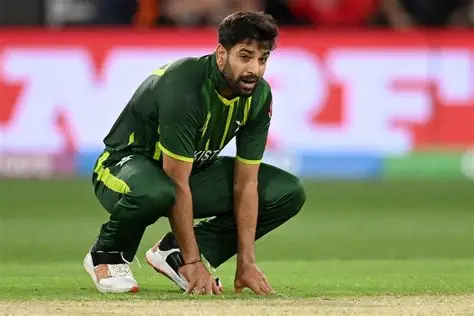
Haris Rauf: Why His Shocking Hundred Auction Snub Still Matters
Haris Rauf entered The Hundred 2026 auction as the biggest Pakistan name on the men’s shortlist. He had the marquee label, the top £100,000 reserve price and the reputation of a fast bowler built for short-format drama. Yet when the bidding ended, the most striking detail was not that he led Pakistan’s auction list. It was that he went unsold.
That twist changed the whole story.
The original report correctly captured the pre-auction tension. Haris Rauf was one of 14 Pakistani men on the final auction list, while Sadia Iqbal and Fatima Sana were Pakistan’s two women’s representatives. There had been concern that IPL-linked Hundred teams might avoid Pakistani players because of India-Pakistan political tensions. The ECB and all eight teams responded by insisting that selection must be based on cricketing performance, availability and squad needs, not nationality.
The completed auction gave a mixed answer. Haris Rauf, Shadab Khan and Saim Ayub went unsold despite their profiles. But Pakistan was not shut out. Abrar Ahmed was bought by SunRisers Leeds for £190,000, becoming the headline Pakistan deal of the men’s auction. Usman Tariq joined Birmingham Phoenix for £140,000. Later, Fatima Sana earned a wildcard deal with Birmingham Phoenix, becoming the first Pakistani woman cricketer to secure a Hundred contract.
That makes the Haris Rauf story more layered than a simple snub. It is about price, availability, team balance, politics, franchise ownership and the changing commercial structure of English cricket. It is also about how Pakistani players are being valued in one of the sport’s most visible franchise competitions.
For readers following The News Ink’s wider cricket coverage, the lesson is clear: The Hundred 2026 auction did not produce a full Pakistan exclusion, but it did show how complicated Pakistani participation in global franchise cricket remains.
Why Haris Rauf was expected to attract interest
Haris Rauf looked like an obvious auction attraction on paper. He has pace, experience, death-overs skills and a global T20 reputation. He has played in different leagues, understands English conditions better than many overseas fast bowlers, and had previously represented Welsh Fire in The Hundred.
That background explains why his name was placed among the marquee international players. The category included high-profile overseas names such as Aiden Markram, David Miller, Daryl Mitchell and Sunil Narine. Haris Rauf carried the maximum £100,000 reserve price, signalling that he was not entering as a bargain option.
There was a cricketing logic behind that valuation. The Hundred’s 100-ball format rewards bowlers who can handle pressure in short bursts. A fast bowler who can attack the stumps, bowl hard lengths and close innings should have value. Haris Rauf has built much of his career around that kind of role.
But auctions do not reward reputation alone. They reward fit. Teams look at budgets, local-player priorities, overseas slots, availability windows, tactical balance and coach preference. A player can be good and still be passed over if the auction room believes the price, role or timing does not fit.
That appears to be what happened with Haris Rauf.
Why the unsold result was still surprising
Haris Rauf going unsold was surprising because he was not a fringe name. He was the first Pakistan player to go under the hammer and one of the top 50 “hero” players listed before the auction. His unsold status immediately became a talking point because it followed weeks of debate over whether Pakistani players would be treated fairly.
It is important not to jump to one explanation. Some teams may have had concerns about recent form. Some may have preferred spinners or all-rounders. Some may have wanted cheaper options. Some may have worried about Pakistan’s international schedule. Some may simply have used their budgets elsewhere early in the auction.
But perception matters in sport. When Haris Rauf, Shadab Khan and Saim Ayub all went unsold, many Pakistani fans saw more than a cricketing decision. They saw another example of Pakistani players struggling to access leagues connected to Indian investment.
That perception is exactly why the ECB’s pre-auction statement mattered. The governing body knew the optics could become difficult. The final outcome softened the issue because Abrar Ahmed and Usman Tariq were picked. But the Haris Rauf snub still kept the debate alive.
Abrar Ahmed became the real headline
The most important Pakistan deal was Abrar Ahmed’s move to SunRisers Leeds. That signing carried significance beyond the £190,000 fee because SunRisers Leeds are owned by the same group behind Sunrisers Hyderabad in the Indian Premier League.
That mattered because Pakistani players have effectively been absent from the IPL since 2009. The arrival of IPL-linked ownership in The Hundred created concern that the same political barrier could influence selection in England. Abrar’s signing directly challenged that fear.
SunRisers Leeds did not merely take him as a late token pick. They paid serious money and had to fight off interest from Trent Rockets. That made the move look like a genuine cricket decision. Abrar’s value was clear: a wicket-taking leg-spinner with international T20 pedigree and strong economy numbers.
For Pakistan cricket, Abrar’s deal was more symbolically powerful than a Haris Rauf contract would have been. A non-Indian-owned team signing Rauf would have mattered less politically. An Indian-owned team paying £190,000 for Abrar became a statement, whether the franchise intended it that way or not.
It proved that the door was not fully closed.
Usman Tariq’s Birmingham Phoenix move showed selection depth
Usman Tariq’s £140,000 deal with Birmingham Phoenix was the second major Pakistan men’s success. His selection showed that teams were not looking only at famous names. They were also willing to invest in unusual skill sets.
Tariq’s bowling action and mystery-spin style make him different. In short-format cricket, difference can be valuable. Batters have limited time to adjust, especially in a 100-ball game where every set of five balls matters. A spinner who disrupts rhythm can be worth more than a more familiar name.
That is what makes his deal interesting beside Haris Rauf. The marquee fast bowler went unsold. The less globally famous mystery spinner earned a major contract. That tells us something about The Hundred’s auction logic. Teams were not simply buying Pakistan reputation. They were buying specific tactical roles.
Birmingham Phoenix saw a role for Tariq. SunRisers Leeds saw a role for Abrar. No team saw a role for Haris Rauf at the price and moment he entered the auction.
That does not mean Rauf is finished as a franchise player. It means this auction moved in a different direction.
The women’s auction changed after the wildcard draft
The women’s side initially looked disappointing for Pakistan. Sadia Iqbal and Fatima Sana both made the final women’s auction list but went unsold in the main auction. Given their international standing, that was a setback.
The story changed later when Fatima Sana joined Birmingham Phoenix through the wildcard draft. That made her the first Pakistani woman cricketer to earn a contract in The Hundred. The move also carried scheduling consequences. The PCB granted her a No Objection Certificate to miss Pakistan’s T20I series in Sri Lanka so she could join the competition after completing ODI duties.
Fatima’s deal matters because Pakistani women’s players have historically had fewer franchise opportunities than their male counterparts. A Hundred contract gives exposure, experience and visibility in one of the highest-profile women’s short-format competitions.
It also shows why auction stories should not always end on auction day. A player can go unsold, then enter through a replacement or wildcard route. For Fatima Sana, the later path became historic.
Why the ECB statement mattered
Before the auction, the ECB and all eight Hundred teams issued a clear statement. They said players must not be excluded because of nationality and that selection would be based on cricketing performance, availability and team needs.
That statement was necessary because reports had suggested IPL-linked teams might avoid Pakistani players. The four teams under the spotlight were MI London, Manchester Super Giants, SunRisers Leeds and Southern Brave. Those concerns came from the wider political reality that Pakistani players have not played in the IPL since 2009.
The ECB’s position was important for two reasons.
First, The Hundred is an English competition. It cannot allow another country’s political sporting exclusions to define its own employment practices. Second, the tournament has marketed itself as inclusive and global. A perceived nationality-based exclusion would damage that image.
The final auction outcome gave the ECB some relief. Abrar Ahmed’s signing by SunRisers Leeds allowed the governing body to say the process had not shut out Pakistani players. Still, the Haris Rauf result showed that suspicion does not disappear overnight.
Trust will depend on repeated evidence over multiple seasons.
The new private era changed the auction
The Hundred 2026 auction was not business as usual. It came after the competition opened itself to private investment, with several teams linked to major global ownership groups. That changed budgets, branding, strategy and scrutiny.
Sky Sports reported that James Coles became the most expensive player sold on the day at £390,000, while Jordan Cox went to Welsh Fire for £300,000, Tom Curran to MI London for £260,000, Adil Rashid to Southern Brave for £250,000 and Joe Root to Welsh Fire for £240,000. Those numbers showed how quickly the market had changed.
In that environment, Haris Rauf’s £100,000 reserve did not look excessive in isolation. But auctions are not isolated. Teams may have preferred to spend big on domestic players because they can be retained and built around over future seasons. They may have seen English all-rounders, spinners and top-order batters as more valuable than overseas pace.
That is another reason the Haris Rauf result needs a broader reading. His unsold status was not only about Pakistan. It was also about how franchises valued roles in the first auction of The Hundred’s new private era.
Why availability still matters
Availability is one of the least glamorous but most decisive auction factors. Sky reported before the auction that The Hundred would clash with a Pakistan Test series. Even for players not involved in every format, international scheduling can make franchises cautious.
Teams want clarity. If an overseas player may miss matches, arrive late, leave early or need board approval, his value changes. This is especially true in The Hundred, where the group stage is short. Missing two or three games can mean missing a large part of the season.
Haris Rauf’s availability may not have been the only issue, but availability questions affect all Pakistani players in such auctions. The PCB’s NOC decisions, national-team priorities and overlapping tours can all shape franchise interest.
Fatima Sana’s case showed this clearly. She received permission to miss Pakistan’s T20I series in Sri Lanka, but she was still expected to complete ODI duties first and miss Birmingham Phoenix’s opening matches before joining the squad. Even a historic deal came with logistical complications.
In franchise cricket, talent opens the door. Availability often decides whether a team walks through it.
Why Haris Rauf’s recent Pakistan role mattered
Haris Rauf’s auction standing also needs to be seen against his recent Pakistan position. He had been left out of Pakistan’s T20 World Cup squad, which weakened the aura around him before the Hundred auction. Franchise teams often track selection signals closely. If a national side moves away from a player, auction rooms notice.
That does not mean national selection always predicts franchise value. Many players thrive in leagues despite missing international squads. But when an overseas player carries a high reserve price, any doubt around form, fitness or current role can become decisive.
Haris Rauf remains a dangerous T20 bowler, especially when conditions suit pace and reverse-swing-style late movement. But the Hundred auction showed that his market value is not automatic. He may need strong performances in other leagues or domestic cricket to reset perceptions.
That is not unusual for fast bowlers. Their value can rise and fall quickly because teams worry about injuries, economy rates and death-overs volatility. One strong season can revive demand. One expensive spell can damage it.
Pakistan’s auction outcome was mixed, not disastrous
The fair conclusion is that Pakistan’s Hundred auction was mixed. It was not the complete snub some feared. It was not the full success Pakistani fans hoped for either.
Abrar Ahmed and Usman Tariq won men’s contracts. Fatima Sana later made history in the women’s competition. But Haris Rauf, Shadab Khan, Saim Ayub and other known names went unsold. Sadia Iqbal did not get picked despite being one of Pakistan’s most important women’s bowlers.
That mixed outcome reflects cricket’s modern reality. Reputation matters, but role fit matters more. Political optics matter, but so do budgets. Nationality should not be a barrier, but availability and team construction can still shape decisions.
For Pakistan, the positive is that the market was open enough for real deals. For players who missed out, the challenge is to keep producing performances that force franchises to return.
Haris Rauf may have been the headline before the auction. Abrar Ahmed became the headline after it.
What Abrar’s SunRisers Leeds deal means politically
Abrar’s deal was described by many as a relief because it weakened the idea of a “shadow ban.” But it should not be treated as the final proof that all political barriers have disappeared.
One signing can challenge a narrative. It cannot erase years of exclusion from the IPL or the wider India-Pakistan sporting freeze. Pakistani players still face a different franchise landscape from players from Australia, England, South Africa or the West Indies. Their availability, visa processing, NOC environment and political baggage can all affect opportunities.
Still, Abrar’s deal matters. It creates precedent. If SunRisers Leeds can sign a Pakistan player, other IPL-linked Hundred teams cannot easily argue that it is impossible. If Abrar performs well, the cricketing case for more Pakistani signings becomes stronger.
The same applies to Usman Tariq and Fatima Sana. Performance is the best argument for future access. A strong Hundred season by Pakistani players would be more powerful than any pre-auction statement.
Why The Hundred needs Pakistani players
The Hundred wants global relevance. Pakistani players help with that. Pakistan has one of the world’s biggest cricket audiences, a strong fast-bowling culture, emerging spin talent and a fanbase that follows overseas leagues closely.
Ignoring Pakistani players would not only be unfair if based on nationality. It would also be commercially short-sighted. Players such as Haris Rauf, Shaheen Shah Afridi, Shadab Khan, Naseem Shah, Saim Ayub, Abrar Ahmed, Fatima Sana and Sadia Iqbal bring skill and audience interest.
The competition’s private-investment model makes that even more important. Owners want growth, digital reach and global relevance. Pakistan is too important a cricket market to treat as optional.
The Hundred also benefits from variety. Pakistani fast bowlers, mystery spinners and all-rounders bring styles that can improve the product. Short-format leagues thrive on contrast: left-arm pace, wrist spin, death bowling, power hitting and tactical matchups.
The Haris Rauf snub should not distract from the larger point. Pakistani talent belongs in global franchise competitions.
What Haris Rauf must do next
Haris Rauf’s next step is simple but difficult: make the snub look wrong. That means returning to high-impact short-format performances, controlling economy rates, staying fit and reminding franchises why he was considered a marquee player in the first place.
Fast bowlers often live in cycles. Their reputation can rise quickly after a tournament and fall after a poor run. Rauf’s pace gives him a permanent advantage, but pace alone is not enough in modern franchise cricket. Teams want accuracy, role clarity and adaptability.
He must show he can bowl in different phases: new ball, middle overs and death. He must also show he can adjust to surfaces where raw speed is not enough. The Hundred’s short format demands precision because a bowler has fewer balls to correct mistakes.
Haris Rauf has the experience to respond. The question is whether he can rebuild market confidence before the next major franchise window.
Key facts at a glance
| Issue | Detail |
|---|---|
| Main pre-auction Pakistan name | Haris Rauf |
| Rauf reserve price | £100,000 |
| Pakistan men on final list | 14 |
| Pakistan women on final list | Sadia Iqbal, Fatima Sana |
| Men’s auction date | 12 March 2026 |
| Women’s auction date | 11 March 2026 |
| Rauf auction result | Unsold |
| Abrar Ahmed deal | SunRisers Leeds, £190,000 |
| Usman Tariq deal | Birmingham Phoenix, £140,000 |
| Fatima Sana update | Birmingham Phoenix wildcard signing |
| Hundred dates | 21 July–16 August 2026 |
| Main controversy | Concerns over possible Pakistan player exclusion by IPL-linked teams |
The careful takeaway
Haris Rauf entered The Hundred 2026 auction as Pakistan’s marquee name, but he left without a contract. That was a surprising outcome for a fast bowler with his T20 profile, especially after so much pre-auction attention around Pakistani players and franchise selection.
But the wider Pakistan story was not only negative. Abrar Ahmed’s £190,000 signing by SunRisers Leeds became a landmark moment because it involved an Indian-owned franchise. Usman Tariq’s £140,000 Birmingham Phoenix deal showed that teams were willing to invest in Pakistan’s spin options. Fatima Sana’s later wildcard contract gave Pakistan women’s cricket a historic first in The Hundred.
That is why the auction should be read carefully. It did not prove that Pakistani players were fully unwanted. It did not prove that politics had disappeared. It proved that selection is now shaped by a complicated mix of cricketing role, price, availability, ownership optics and tournament strategy.
For Haris Rauf, the result was a personal setback. For Pakistan cricket, the auction was a partial breakthrough. For The Hundred, it was a test of whether an English competition with Indian-linked investors can remain genuinely open to players from all cricket nations.
The next proof will come on the field. If Abrar Ahmed, Usman Tariq and Fatima Sana perform, future auction rooms may have fewer reasons to hesitate. Haris Rauf will also have another chance to remind teams why his name carried marquee status in the first place.
For more cricket analysis, franchise-league coverage and Pakistan cricket updates, follow The News Ink on Medium.