


Who Qualifies for Social Security Payout May 13, 2026?
The Social Security payout May 13, 2026 targets specific beneficiaries meeting three critical criteria. Understanding eligibility prevents confusion about payment timing and ensures you know exactly when funds arrive in your account.investopedia+1
3 Eligibility Requirements for Social Security Payout May 13, 2026
Birth Date Requirement
Your birth date must fall between the 1st and 10th of any month. Whether you were born January 5, March 10, or December 1, you qualify for the Social Security payout May 13, 2026 distribution.facebook+1
Benefit Type Coverage
The Social Security payout May 13, 2026 covers three primary benefit categories:economictimes.indiatimes
-
Retirement benefits: Monthly payments for workers who reached retirement age
-
Disability benefits: Support for Americans unable to work due to qualifying disabilities
-
Survivor benefits: Payments to spouses, children, or dependents of deceased workers
Enrollment Date Threshold
You must have started receiving Social Security benefits after May 1997. Those who began collecting before May 1997 receive payments on a different schedule—the third of each month rather than birth-date-based Wednesdays.ssa+1
Average Payment Amounts for Social Security Payout May 13, 2026
The Social Security payout May 13, 2026 delivers varying amounts based on benefit type and individual work history. SSA data reveals current average monthly benefits across the three main categories:
These figures reflect the 2.8% Cost of Living Adjustment (COLA) implemented in January 2026. Actual individual payments vary significantly based on lifetime earnings, retirement age, and specific circumstances.economictimes.indiatimes
Maximum Social Security Benefits in 2026
While averages hover around $2,000 monthly, maximum benefits reach substantially higher levels. Workers who delayed retirement until age 70 and maintained strong earnings throughout their careers can receive up to $5,181 monthly in 2026. This maximum applies to a small percentage of beneficiaries who optimized their Social Security strategy.economictimes.indiatimes
Complete Social Security Payment Schedule May 2026
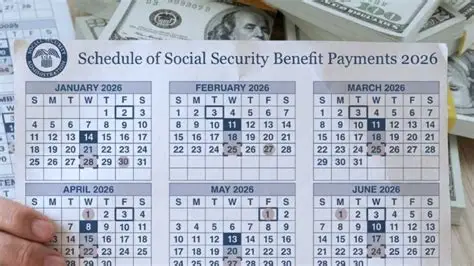
The Social Security payout May 13, 2026 represents the first of three Wednesday distributions this month. The SSA structures payments around birth dates to spread processing loads and ensure timely delivery.newsweekyoutube
Full May 2026 Payment Calendar
May 1, 2026 (Thursday)
-
Supplemental Security Income (SSI) recipients
-
Those receiving both SSI and Social Security
-
Beneficiaries who started collecting before May 1997newsweek+1
May 13, 2026 (Wednesday) – Social Security Payout May 13, 2026
-
Birth dates from 1st through 10th of any month
-
First Wednesday payment roundfacebook+1
May 20, 2026 (Wednesday)
-
Birth dates from 11th through 20th of any month
-
Second Wednesday payment roundwashingtonexaminer+1
May 27, 2026 (Wednesday)
-
Birth dates from 21st through 31st of any month
-
Third and final Wednesday payment roundwashingtonexaminer+1
This structured approach ensures approximately one-third of beneficiaries receive payments each Wednesday throughout May.
When Will Social Security Payout May 13, 2026 Hit Your Account?
Banks typically process the Social Security payout May 13, 2026 by midnight on the scheduled date. Most beneficiaries see funds available in their accounts first thing Wednesday morning, though exact timing depends on individual financial institutions.ssa
What If Your Payment Doesn’t Arrive?
The SSA recommends waiting three additional mailing days before contacting them if your Social Security payout May 13, 2026 doesn’t appear as expected. This grace period accounts for potential banking delays or processing variations.ssa+1
If May 16, 2026 arrives without your payment, contact the Social Security Administration through:
-
SSA.gov online portal
-
Local Social Security office
-
National helpline: 1-800-772-1213
Have your Social Security number and account information ready when reaching out.
2032 Funding Crisis Threatens Future Social Security Payouts
While the Social Security payout May 13, 2026 proceeds normally, ominous warnings cloud the program’s long-term sustainability. Social Security faces severe financial challenges that could dramatically impact future beneficiaries.
Trust Fund Depletion Timeline
Current projections indicate Social Security will encounter critical difficulties by 2032. Without congressional intervention, the combined Old-Age and Survivors Insurance (OASI) and Disability Insurance (DI) Trust Funds will deplete their reserves within six years.
Potential Benefit Reductions
Analysts warn that absent legislative action, retirees could face benefit cuts reaching 28% of their monthly payments. For someone currently receiving the $2,081 average retirement benefit, this reduction would slash payments to approximately $1,498 monthly—a devastating $583 decrease.economictimes.indiatimes
Why Social Security Faces Financial Pressure
Multiple demographic and economic factors strain the system:
-
Aging population: Baby Boomers retiring in massive numbers
-
Longer lifespans: Beneficiaries collecting payments for extended periods
-
Declining birth rates: Fewer workers supporting more retirees
-
Wage stagnation: Slower growth in payroll tax revenues
-
Rising costs: Healthcare and living expenses outpacing revenue growth
These converging trends create unsustainable math threatening the program millions of Americans depend upon.
Legislative Options to Preserve Social Security
Congress faces difficult choices to prevent the 28% benefit reduction looming in 2032. Potential solutions include:
Revenue Increases
-
Raising payroll tax rates above the current 6.2% employee/employer contributions
-
Eliminating or raising the wage cap (currently $168,600 in 2026)
-
Introducing supplemental taxes on high earners
Benefit Adjustments
-
Gradually increasing the full retirement age beyond 67
-
Modifying COLA calculations to reduce annual increases
-
Means-testing benefits for wealthy recipients
-
Adjusting benefit formulas for future retirees
Combination Approaches
Most experts suggest balanced reforms combining modest revenue increases with targeted benefit adjustments to distribute the burden fairly across generations.
How to Maximize Your Social Security Benefits
While waiting for your Social Security payout May 13, 2026, consider strategies to optimize lifetime benefits:
Delay Claiming When Possible
Each year you delay claiming between age 62 and 70 increases your monthly benefit by approximately 8%. Someone entitled to $2,000 monthly at full retirement age (67) would receive:
-
Age 62: $1,400 (30% reduction)
-
Age 67: $2,000 (full benefit)
-
Age 70: $2,480 (24% increase)
This permanent boost applies to every future payment, including COLA adjustments.
Coordinate Spousal Benefits
Married couples should coordinate claiming strategies to maximize household lifetime benefits. Spousal benefits allow the lower-earning spouse to claim up to 50% of the higher earner’s full retirement age benefit.
Continue Working While Collecting
For those below full retirement age, earnings limits apply. In 2026, beneficiaries under full retirement age lose $1 in benefits for every $2 earned above $22,320 annually. However, once you reach full retirement age, these earnings restrictions disappear completely.
Review Your Earnings Record
Errors in your Social Security earnings record can reduce your benefits. Create a my Social Security account at SSA.gov to review your work history and ensure all wages appear correctly. Report discrepancies immediately to maximize your eventual benefit calculation.
Direct Deposit: The Safest Payment Method
The SSA strongly encourages direct deposit for the Social Security payout May 13, 2026 and all future payments. Direct deposit offers multiple advantages:
-
Faster access: Funds available by midnight on payment day
-
Enhanced security: Eliminates risk of stolen or lost checks
-
Reliability: No weather delays or mail service disruptions
-
Convenience: No trips to the bank for deposits
-
Environmental benefits: Reduces paper waste
Set up direct deposit through your my Social Security account or by contacting the SSA directly.
State Taxation of Social Security Benefits
While federal taxation of Social Security benefits depends on your total income, state taxation varies dramatically. Some states that tax Social Security benefits include:
-
Colorado, Connecticut, Kansas, Minnesota, Missouri, Montana, Nebraska, New Mexico, Rhode Island, Utah, Vermont, and West Virginia
Most states don’t tax Social Security benefits, providing tax relief for retirees. Check your specific state’s rules to understand your tax obligations on the Social Security payout May 13, 2026 and future payments.