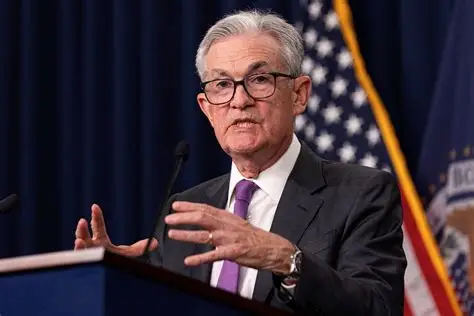
Powell’s Eight-Year Journey Concludes
Jerome Powell’s tenure as Federal Reserve Chair officially ends Friday, May 16, 2026, capping eight tumultuous years navigating economic crises, soaring inflation, and unprecedented political pressure. Unlike his predecessors who left with clear victories or defeats, Powell departs with his most important battles still raging.
Economists warn that Powell’s true legacy remains unwritten. The verdict depends entirely on whether inflation returns to the Fed’s 2% target and whether the central bank maintains its independence from political interference under incoming Chair Kevin Warsh, President Trump’s handpicked successor.
The Jackson Hole Moment That Didn’t Age Well
In late summer 2024, Powell strode confidently to the podium at the Federal Reserve’s prestigious Jackson Hole, Wyoming conference. He declared victory was near in the inflation fight. After battling the highest price increases in a generation since 2021, “the time has come” for interest-rate cuts, Powell announced.
He projected optimism: “good reason to think the economy will get back to 2% inflation while maintaining a strong labor market.”
That hopeful forecast crumbled quickly. Inflation briefly touched 2.3% shortly after his speech—the lowest it would reach. Since then, prices resumed climbing. Six consecutive years have now passed with inflation exceeding the Fed’s 2% target, with no clear endpoint visible.
Two years before Jackson Hole, Powell had pledged aggressive action. With inflation surging at 6.6%, he vowed to bring it down to 2%, warning of “some pain” for households and businesses. That pain arrived through rapid interest-rate hikes, yet inflation persists stubbornly above target.
Three Pillars of Powell’s Legacy
Historians and economists identify three defining elements that will shape how future generations remember Powell:
The “Transitory” Blunder
Powell’s most damaging mistake came during the COVID-19 pandemic’s aftermath. In 2021, as prices spiked, Powell and his Federal Reserve team repeatedly insisted inflation was “transitory”—temporary disruptions that would self-correct without intervention.
They were catastrophically wrong. This misdiagnosis delayed interest-rate increases until March 2022, allowing inflation to accelerate to 40-year highs. By the time the Fed acted decisively, prices had already spiraled out of control.
In a 2024 interview, Powell admitted the error. “In hindsight, it would’ve been better to have tightened policy earlier,” he acknowledged candidly.
Powell explained their reasoning: Inflation seemed concentrated in goods sectors, suggesting supply-chain bottlenecks from COVID closures caused the problem. “We thought the economy was so dynamic that it would fix itself fairly quickly. We thought inflation would go away fairly quickly without intervention by us,” he said.
This miscalculation haunts his tenure. Critics argue the delay embedded inflation expectations into the economy, making price stability harder to achieve.
The Ongoing Inflation Battle
Six years of above-target inflation represents Powell’s most visible struggle. The Federal Reserve’s dual mandate requires keeping unemployment low while maintaining price stability. Powell succeeded at the first—unemployment remained historically low—but failed at the second.
Americans feel inflation’s impact daily:
-
Grocery bills stretch household budgets thin
-
Gas pump prices fluctuate but remain elevated
-
Monthly expenses for housing, utilities, and services climb relentlessly
-
Real wages fail to keep pace with price increases
Vincent Reinhart, former top Fed staffer and current chief economist at BYN Investments, emphasizes the unfinished nature of Powell’s record. “Powell’s greatest legacy will be determined after he leaves,” Reinhart explains. “The big question will be, ‘is inflation back at 2%?'”
The stakes couldn’t be higher. “If inflation stays high we’re going to look back at Powell and say ‘that’s where the slippery slope began,'” Reinhart warns.
The Independence War With Trump
President Trump launched unprecedented attacks on Federal Reserve independence throughout Powell’s tenure. Trump publicly criticized interest-rate decisions, demanded Powell cut rates to boost economic growth, and questioned whether he could fire the Fed Chair.
These attacks threatened a cornerstone principle: The U.S. central bank sets monetary policy based on economic data, not political pressure from Washington. Derek Tang, co-founder of LH Meyer/Monetary Policy Analytics, believes this battle barely started.
“The story over the Fed’s independence might still be in the first chapter,” Tang observes. Central banks worldwide “have enjoyed independence and respect from their governments and citizens and gotten used to this.”
Now structural economic changes and rising populism shift power dynamics. “That power dynamic is going to shift,” Tang predicts.
Kevin Warsh, Trump’s nominee to replace Powell, faces immediate scrutiny. Will he defend Fed independence or bend to White House pressure? His answer shapes not just Powell’s legacy but the institution’s future credibility.
How Fed Chair Legacies Evolve
Federal Reserve Chair reputations rarely solidify immediately. Time reveals consequences that weren’t apparent during their tenure.
Reinhart refuses to grade Fed Chairs prematurely. “I never grade a Fed chair until maybe five or 10 years later,” he states.
Alan Greenspan’s dramatic reversal illustrates this perfectly. When Greenspan departed in 2005, admirers crowned him the “maestro”—the greatest central banker of the century. He received universal acclaim for navigating the economy through multiple crises.
Years later, “it didn’t look so good for him,” Reinhart notes dryly. Historians now blame Greenspan for ignoring warning signs as banks and brokerages accumulated catastrophic amounts of risky mortgage debt. His inaction contributed directly to the devastating 2008 global financial crisis.
Could Powell suffer similar reappraisal? If inflation remains elevated or Fed independence erodes under Warsh, Powell’s reputation will darken considerably.
Powell’s Evolution as Communicator
Powell’s press conference style transformed dramatically across eight years. He initially adopted a conversational, accessible tone—breaking from his more formal predecessors.
Over time, Powell’s briefings grew increasingly scripted and cautious. Each word received careful calibration to avoid market disruptions or political backlash. This evolution reflected the mounting pressures he faced.
The COVID Miscalculation Explained
The pandemic created unprecedented economic chaos. Lockdowns froze production, disrupted global supply chains, and triggered massive government spending programs.
Powell’s team saw inflation concentrated in goods sectors—cars, appliances, furniture. This pattern suggested temporary supply bottlenecks, not sustained price pressures. Once factories reopened and shipping normalized, they expected prices to retreat naturally.
The dynamic economy argument made sense historically. American capitalism typically self-corrects quickly. The Fed assumed market forces would restore equilibrium without aggressive interest-rate interventions.
Both assumptions proved disastrously wrong. Supply disruptions persisted far longer than expected. Simultaneously, massive fiscal stimulus pumped unprecedented money into the economy, fueling demand. The collision of constrained supply and supercharged demand ignited inflation that wouldn’t extinguish easily.
What Comes Next for the Federal Reserve
Kevin Warsh inherits a challenging situation:
-
Inflation remains stubbornly above the 2% target despite years of elevated interest rates
-
Political pressure from Trump to prioritize growth over price stability intensifies
-
Global economic uncertainty from trade tensions and geopolitical conflicts complicates policy decisions
-
Public trust in institutions, including the Fed, faces erosion
Warsh’s first decisions will signal his priorities. Will he maintain Powell’s inflation-fighting stance? Will he resist White House pressure? Will he communicate transparently with markets and the public?
The Broader Economic Picture
Powell navigated multiple crises beyond inflation:
-
COVID-19 pandemic emergency lending programs
-
Banking sector stress, including Silicon Valley Bank’s collapse
-
Labor market transformations with remote work and wage pressures
-
Asset bubble concerns in stocks and real estate
-
International coordination challenges as global central banks diverged
Some initiatives succeeded brilliantly. The Fed’s pandemic lending facilities prevented financial system collapse. Unemployment recovered faster than most economists predicted.
Other challenges remain unresolved, leaving Powell’s successor difficult problems.
Measuring Success and Failure
How should we evaluate Powell’s eight years? Traditional metrics offer mixed results:
Successes:
-
Prevented complete economic collapse during COVID-19
-
Maintained low unemployment rates
-
Preserved financial system stability despite regional bank failures
-
Enhanced Fed communication and transparency
Failures:
-
Persistent inflation above the 2% target for six consecutive years
-
The “transitory” misjudgment that delayed rate increases
-
Inability to anchor inflation expectations firmly
-
Erosion of Fed independence norms under political attacks
Incomplete:
-
Ultimate trajectory of inflation remains uncertain
-
Fed independence battles continue under new leadership
-
Long-term economic impacts of pandemic-era policies still unfolding
The Verdict Awaits
Jerome Powell leaves office Friday with his legacy fundamentally unresolved. Unlike predecessors whose accomplishments or failures became clear during their tenure, Powell’s most important battles continue beyond his departure.
If Kevin Warsh successfully brings inflation back to 2% while maintaining Fed independence, Powell might ultimately receive credit for laying groundwork despite facing unprecedented challenges.
If inflation persists and Fed independence crumbles, history will judge Powell harshly for the “transitory” mistake and failing to protect the institution from political interference.
Vincent Reinhart’s five-to-ten-year waiting period seems wise. Only time reveals whether Powell navigated impossible circumstances as well as anyone could, or whether different choices might have produced better outcomes.