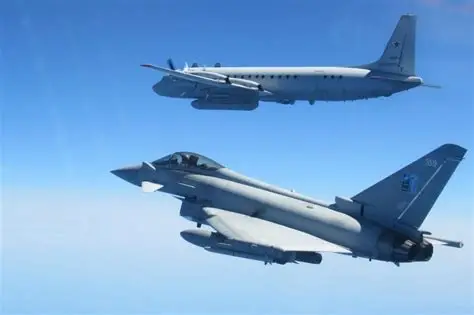
Russian jets intercept RAF spy plane in one of the most dangerous aerial confrontations since 2022 — here is a full breakdown of what happened, who was involved, and what it means for international security.
A tense and dangerous incident unfolded over the Black Sea last month when two Russian warplanes aggressively intercepted an unarmed British military surveillance aircraft operating in international airspace. The encounter has been described by defence officials as one of the most serious aerial provocations seen in years — and it is raising urgent questions about Russian military conduct and the safety of NATO operations in the region.
The UK’s Ministry of Defence confirmed the incident publicly, with senior officials condemning the behaviour of the Russian pilots in the strongest possible terms. The crew of the British aircraft responded with remarkable composure, maintaining control in extremely dangerous conditions.
Russian Jets Intercept RAF Spy Plane: What Exactly Happened?
The aircraft at the centre of this incident was an RAF RC-135W Rivet Joint — a highly sophisticated surveillance plane operated by No. 51 Squadron, typically based at a facility in Lincolnshire. The aircraft was conducting what officials described as a routine international flight in support of securing NATO’s eastern flank.
During the mission, two separate Russian military jets approached the British aircraft in an aggressive and reckless manner:
A Russian Su-35 fighter jet flew close enough to the RAF plane to trigger its emergency systems, directly disabling the aircraft’s autopilot function
A Russian Su-27 jet conducted six separate passes in front of the RAF aircraft, coming within just 6 metres (19 feet) of its nose
Both of these actions represent an extreme and deliberate breach of international airspace safety standards. At those distances and speeds, any miscalculation could have resulted in a catastrophic midair collision.
6 Alarming Facts About the Incident
1. The Russian Su-35 Disabled the RAF Plane’s Autopilot
The Su-35 approached the Rivet Joint at such a dangerously close distance that it triggered the British aircraft’s onboard emergency systems. As a direct result, the autopilot was disabled — forcing the crew to take immediate manual control of the aircraft in a highly pressured and potentially life-threatening situation.
2. A Second Russian Jet Made 6 Passes Within 19 Feet
A separate Su-27 fighter jet conducted not one, but six aggressive passes directly in front of the unarmed RAF aircraft. At its closest, the Russian jet came within just 6 metres — roughly 19 feet — of the British plane’s nose. At operational speeds, this margin is razor-thin and extraordinarily dangerous.
3. The Ministry of Defence Calls It the Most Dangerous Russian Action Since 2022
Officials have formally classified this as the most serious and dangerous Russian action targeting British military assets since a separate incident in September 2022. That prior incident involved a different Russian pilot who fired two missiles at an RAF Rivet Joint over the same stretch of the Black Sea.
4. The RAF Crew Acted With Exceptional Professionalism
Despite the extreme danger, the RAF crew maintained control and continued their mission with composure. Defence Secretary John Healey publicly praised their conduct, describing it as a demonstration of “outstanding professionalism” under deeply hostile conditions.
5. The UK Has Summoned the Russian Ambassador
Following the incident, both the Ministry of Defence and the Foreign Office formally called on the Russian embassy to account for the behaviour of its pilots. The diplomatic response signals that the UK government views this not as an isolated mistake but as a pattern of deliberate provocation.
6. This Mirrors a 2022 Missile Attack by a Russian Pilot
The current incident echoes a deeply troubling episode from September 2022, when a Russian pilot fired two missiles at a Rivet Joint over the Black Sea. The first missile missed. Russia initially claimed the incident was the result of a technical malfunction — a claim the Ministry of Defence publicly accepted at the time. However, multiple senior Western defence sources later revealed that the pilot had fired the missile after receiving an ambiguous command from a Russian ground station. The truth of that incident only deepened concerns about the intent behind Russian actions in the region.
What Is the RAF RC-135W Rivet Joint?
To fully understand the significance of this incident, it helps to know what kind of aircraft was targeted.
The RAF RC-135W Rivet Joint is one of the most advanced intelligence-gathering aircraft in the British military’s fleet. Operated by No. 51 Squadron and based in Lincolnshire, the aircraft carries sophisticated sensors designed to intercept and analyse signals across the electromagnetic spectrum. In real terms, this means the Rivet Joint gathers critical strategic and tactical intelligence that supports NATO operations across Europe and beyond.
Key facts about the RC-135W Rivet Joint:
Operated by the RAF’s No. 51 Squadron
Based at a facility in Lincolnshire, England
Equipped with advanced signals intelligence (SIGINT) sensors
Conducts routine surveillance flights in international airspace
Plays a direct role in supporting NATO’s eastern flank security
Unarmed — it carries no weapons of any kind
The aircraft is not a combat plane. It poses no offensive threat. That makes the Russian decision to intercept it aggressively, and to come within metres of causing a collision, all the more troubling.
Defence Secretary Condemns “Unacceptable” Russian Behaviour
Speaking publicly following the incident, Defence Secretary John Healey delivered a firm and direct condemnation of the Russian military’s actions.
He stated:
“This incident is another example of dangerous and unacceptable behaviour by Russian pilots, towards an unarmed aircraft operating in international airspace. These actions create a serious risk of accidents and potential escalation.”
Healey also made clear that incidents like this will not weaken British resolve:
“This incident will not deter the UK’s commitment to defend NATO, our allies and our interests from Russian aggression.”
His words reflect a broader message from the UK government — that provocations in international airspace will be called out publicly, responded to diplomatically, and will not succeed in their apparent goal of intimidating NATO operations.
A Pattern of Escalating Russian Aggression
This interception does not exist in isolation. Defence officials have pointed to a broader and deeply concerning pattern of escalating Russian military activity targeting British and NATO assets:
September 2022: A Russian pilot fired two missiles at a Rivet Joint over the Black Sea
Recent months: Russian submarine activity near critical underwater British infrastructure in the North Sea has raised significant alarm
Now: Two Russian jets conduct dangerous interceptions of an unarmed RAF surveillance aircraft in international airspace
Each incident, taken individually, may appear contained. Together, they paint a picture of a deliberate strategy to test, intimidate, and destabilise NATO operations without crossing the threshold into open armed conflict.
Why This Incident Matters for NATO Security
The Black Sea remains one of the most contested and strategically sensitive bodies of water in Europe. NATO’s eastern flank — the alliance’s border with Russia and Russian-influenced territory — depends on consistent, reliable intelligence gathering to stay secure.
When Russian jets intercept RAF spy planes in international airspace, they are not merely conducting reckless manoeuvres. They are sending a message. They are testing NATO’s response. And they are creating genuine risk — not just for the crew members aboard those aircraft, but for the broader stability of the region.
Why this matters beyond the immediate incident:
It establishes a precedent for dangerous behaviour in international airspace
It creates real risk of an accidental collision that could trigger a larger crisis
It threatens the safety of NATO intelligence operations in a critical region
It undermines international norms governing military conduct in shared airspace
It follows a pattern that suggests deliberate, coordinated provocation rather than isolated recklessness
Final Thoughts
The story of how Russian jets intercept RAF spy planes over the Black Sea is not just a military story — it is a story about the fragile rules that keep nations from sliding into open conflict. When those rules are ignored, when unarmed aircraft are buzzed at distances of 6 metres by armed fighter jets, the world moves closer to the kind of accident that no one wants but everyone fears.
The RAF crew handled the situation with extraordinary skill and professionalism. British officials have responded with appropriate firmness. But the international community must continue to hold Russia accountable for behaviour that, if left unchecked, will only grow bolder.
Contents
Russian Jets Intercept RAF Spy Plane: What Exactly Happened?6 Alarming Facts About the Incident1. The Russian Su-35 Disabled the RAF Plane’s Autopilot2. A Second Russian Jet Made 6 Passes Within 19 Feet3. The Ministry of Defence Calls It the Most Dangerous Russian Action Since 20224. The RAF Crew Acted With Exceptional Professionalism5. The UK Has Summoned the Russian Ambassador6. This Mirrors a 2022 Missile Attack by a Russian PilotWhat Is the RAF RC-135W Rivet Joint?Defence Secretary Condemns “Unacceptable” Russian BehaviourA Pattern of Escalating Russian AggressionWhy This Incident Matters for NATO SecurityFinal Thoughts