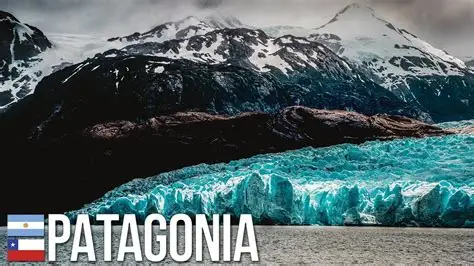
Patagonia cycling Fin del Mundo route 2026 ffers one of the most extraordinary travel experiences availableanywhere on Earth — a 1,400 kilometre journey through the wild, windswept southern tip of South America that puts you directly inside a landscape most visitors only see through glass. Beginning in the Argentine hamlet of El Chaltén and finishing in Ushuaia — the world’s southernmost city — the aptly named Fin del Mundo, or End of the World, route weaves across the border into Chile through some of the planet’s most dramatic and emotionally overwhelming terrain.
Most of the route is unpaved. Most days you will see more guanacos than people. You will ride into winds that feel personal in their persistence and watch sunsets paint the pampas in colours that no photograph can adequately capture. You will understand, by the time you reach Ushuaia saddle-sore and slightly altered, why this remote, barely-visited corner of the world has a way of getting inside people and staying there.
Patagonia cycling is not comfortable. It is not easy. It is, without serious qualification, extraordinary.
Patagonia Cycling Fin del Mundo Route 2026: What the Route Actually Involves
The Patagonia cycling Fin del Mundo route 2026 covers approximately 1,400 kilometres — around 870 miles — through southern Patagonia in a journey that crosses between Argentina and Chile multiple times before reaching its conclusion in Ushuaia. The route starts in El Chaltén — a small Argentine hamlet at the northern edge of Los Glaciares National Park — and heads steadily southward through terrain that shifts constantly between pampas, mountains, forests, and coastline.
Much of the route is unpaved gravel road — the kind of surface that demands attention, punishes careless riding, and rewards patience with a connection to the landscape that paved roads simply cannot offer. The paved highway and tour buses disappear early in the journey, replaced by lonely gravel tracks shared with a handful of Argentine gauchos — cowboys — and the occasional fellow cyclist mad enough to be doing the same thing.
The route was completed in March — the end of the Patagonian summer — a timing that brings its own specific gifts and challenges. The days are still long, the wildlife is active, and the famous Patagonian wind — a constant and powerful presence across the pampas — is slightly more merciful than it will be in the winter months that follow.
The Fin del Mundo route — key facts:
- Total distance: Approximately 1,400 kilometres — around 870 miles
- Start point: El Chaltén, Argentina — a hamlet at the edge of Los Glaciares National Park
- End point: Ushuaia, Argentina — the world’s southernmost city
- Route character: Much of it unpaved gravel — a genuine off-road cycling experience
- Border crossings: The route weaves between Argentina and Chile multiple times
- Best season: The Patagonian summer — roughly November through March
- Traffic: Minimal — shared primarily with gauchos and fellow cycle tourers
- Wildlife: Guanacos, Darwin’s rheas, condors, and multiple other Patagonian species
- Terrain: Pampas, mountain passes, forest sections, and coastal stretches
The route is not a race and is not an organised event. It is a self-directed odyssey — you plan your own stages, carry your own equipment, and navigate your own way through one of the world’s most remote and least-populated regions. That self-direction is one of the experience’s greatest gifts.
Patagonia Cycling Fin del Mundo Route 2026: The Wildlife That Makes It Unforgettable
The Patagonia cycling Fin del Mundo route 2026 rewards slow travel with something that faster modes of transport cannot provide — genuine immersion in the wildlife of one of the planet’s most extraordinary ecosystems. Moving at cycling pace, without the barrier of glass and engine noise, places you inside the landscape in a way that transforms wildlife encounters from tourist photography moments into something closer to genuine encounters.
The guanacos — wild ancestors of the llama — appear throughout the journey. A herd leaping over a cattle fence in the last light of a Patagonian evening, backlit by a honey-coloured sunset, is one of those images that settles into memory permanently. These are large, elegant animals whose presence in significant numbers reflects the landscape’s gradual recovery from the damage of intensive sheep farming.
Darwin’s rhea — the flightless bird that Charles Darwin himself encountered during his voyage aboard the Beagle — appears across the pampas with a sprint and a wobble that manages to be simultaneously prehistoric and comic. A burst of quivering tail feathers and gangly legs accelerating across arid grassland is the kind of sight that makes you grateful for exactly the pace at which you are travelling.
The wildlife of the Fin del Mundo route:
- Guanacos — wild ancestors of the llama, present in significant and growing numbers across the pampas
- Darwin’s rhea — the large flightless bird that appears across the arid grassland in memorable numbers
- Andean condors — the world’s largest flying bird, often visible riding thermals above the mountain sections
- Patagonian foxes — frequently encountered along the route, often surprisingly unbothered by cyclists
- Magellanic penguins — visible in coastal sections of the route closer to Ushuaia
- Various raptor species — including the caracara and multiple hawk species
- Marine wildlife — sea lions and dolphins visible from coastal riding sections
The wildlife’s recovery in this landscape is not accidental. It is the direct result of deliberate conservation action that began decades ago and has transformed much of what was once degraded sheep-farming land into something closer to the wild Patagonia that existed before European settlement.
Patagonia Cycling Fin del Mundo Route 2026: The Rewilding Story Behind the Landscape
The Patagonia cycling Fin del Mundo route 2026 passes through a landscape whose current extraordinary state is the product of one of the world’s most successful and ambitious conservation and rewilding programmes. Understanding that story transforms how you see what you are riding through.
Patagonia was not always this wild. For much of the 20th century, the region was dominated by sprawling sheep farms — estancias — that covered vast areas of land and systematically degraded the ecosystem. The wool industry’s requirements stripped native vegetation, displaced wildlife, and compacted soils in ways that left the pampas in a significantly worse ecological state than the landscape that existed before them.
When the wool industry collapsed at the end of the 20th century, many ranchers found themselves with land that had little commercial value. Tour guide Libertad Giliberto, who works across Chile, describes the prevailing attitude of the time: “Back then, Patagonia was seen as worthless.”
That perception opened a window for conservationists. Starting in the 1980s and 1990s, environmental organisations began purchasing the degraded land at prices that reflected its apparently low value. They restored it, turned it into reserves, and donated it to the Chilean and Argentine governments — on the explicit condition that those governments also protected surrounding land from future degradation.
The rewilding of Patagonia — key facts:
- The region was heavily degraded by intensive sheep farming throughout the 20th century
- The collapse of the wool industry left vast areas of commercially “worthless” land available for purchase
- Environmental organisations began buying degraded land from the 1980s and 1990s onward
- The purchased land was restored, turned into reserves, and donated to Chilean and Argentine governments
- Donation conditions required governments to protect surrounding land — creating large contiguous conservation areas
- Native vegetation has recovered significantly across restored areas
- Wildlife populations have responded to the restoration — guanacos, rheas, and other species are returning
- The rewilding effort represents one of the most successful large-scale conservation programmes in South America
The result of this decades-long effort is visible from the saddle of a bicycle on every day of the Fin del Mundo route. The animals you see are there because people made deliberate, sustained, expensive choices to give them back their land. Riding through this landscape feels, at times, like witnessing a miracle — the slow, patient return of something that was almost lost.
Patagonia Cycling Fin del Mundo Route 2026: The Patagonian Wind — The Route’s Greatest Challenge
Any honest account of the Patagonia cycling Fin del Mundo route 2026 must spend time with the wind — the defining meteorological feature of southern Patagonia and the factor that will occupy more of your mental and physical energy than any other single element of the route.
Patagonian wind is not like wind elsewhere. It is sustained, powerful, and — crucially — largely directional. The prevailing winds in southern Patagonia blow from the west and southwest with a consistency and force that shapes everything about life and travel in the region. On days when the wind is behind you, Patagonia cycling feels almost effortless — the bike accelerating across the pampas with the kind of momentum that makes a 100-kilometre day feel like 60. On days when the wind is in your face, the same route becomes an exercise in patience, stubbornness, and the management of expectations.
Managing the Patagonian wind on the Fin del Mundo route:
- Prevailing winds blow from the west and southwest — plan your route direction accordingly where possible
- Wind speeds regularly exceed 60-80 kilometres per hour on exposed pampas sections
- Wind direction changes are sudden and can reverse conditions rapidly
- Headwinds can reduce cycling speed to walking pace on exposed sections
- Tailwinds can make long flat stages feel genuinely joyful
- Rest days should be built into the itinerary for days when wind conditions make progress dangerous
- Low-profile cycling positions and appropriate gearing significantly affect how manageable headwinds are
- Local knowledge about wind patterns on specific sections is valuable — talk to other cyclists and local guides
The wind’s moments of sudden stillness — when it drops without warning and the landscape seems to hold its breath — are among the route’s most memorable experiences. In those moments, Patagonia reveals itself as something different from the windswept wilderness it usually presents.
Patagonia Cycling Fin del Mundo Route 2026: Practical Information for Planning
The Patagonia cycling Fin del Mundo route 2026 requires more planning than most cycle touring routes given the remoteness of the terrain and the limited infrastructure across much of the route. The following practical information provides a starting point for anyone considering this journey.
Practical planning information:
- Start point: El Chaltén is accessible by bus from El Calafate, which has an international airport
- End point: Ushuaia has international flights and ferry connections
- Accommodation: A combination of wild camping, refugios (mountain huts), and occasional towns with hostels and hotels
- Water: Carry capacity for at least 3-4 litres — sources can be sparse on some pampas sections
- Food resupply: Plan carefully — towns and shops can be many days apart on some sections
- Bike: A gravel bike or hardtail mountain bike with wide tyres is strongly recommended
- Best months: November through March — the Patagonian summer
- Fitness level: Experienced cycle tourers — this is not a beginner route
- Navigation: GPS device strongly recommended — signage is minimal across much of the route
- Emergency: Satellite communication device recommended given the remoteness of many sections
The route is best ridden with a partner — both for safety in the remote sections and because the shared experience of something this extraordinary is part of what makes it meaningful.
Final Word on Patagonia Cycling Fin del Mundo Route 2026
The Patagonia cycling Fin del Mundo route 2026 will not suit everyone. It is demanding, remote, expensive to reach, and physically harder than most cycling experiences you have had. The wind will defeat you on some days. The gravel will punish you on others. And there will be moments — wet and cold in a tent at the edge of the world — when you question every decision that brought you to this particular place.
And then the wind will still. A herd of guanacos will leap a fence in the last light of the day. A Darwin’s rhea will sprint across the arid grassland in a burst of prehistoric absurdity. The moon will rise red behind the clouds to the east and the sun will paint the steppe honey-gold in the west. And you will understand, completely and without reservation, why you came.
Patagonia will get inside you. The End of the World trail will show you why.
MORE NEWS ON THE NEWS INK TRAVEL.