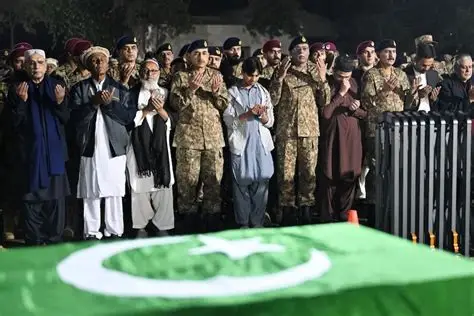
KHAWAJA MUHAMMAD ASIF said Pakistan is now in “open war” with Afghanistan after Islamabad carried out airstrikes in Kabul and other Afghan cities. He stated that Pakistan’s patience had run out.
The strikes followed a large-scale offensive launched by the Afghan Taliban against Pakistani military posts near the border on Thursday night.
This escalation comes after months of tension between the two neighbors. Although both sides agreed to a fragile ceasefire in October, talks failed to secure a permanent peace deal.
How the Fighting Started
The Taliban said it began a “retaliatory operation” around 20:00 local time on Thursday. Officials claimed they captured 19 Pakistani military posts and two bases. They also said 55 Pakistani soldiers were killed. These figures remain unverified.
Pakistan rejected the claim and accused the Taliban of opening unprovoked fire across the border in Khyber Pakhtunkhwa. Islamabad said it responded immediately and effectively.
In the early hours of Friday, Pakistan launched airstrikes on targets in Kabul, Kandahar, and Paktika. All three locations lie near the 2,600 km mountainous border shared by the two countries.
Casualty Claims Differ
Pakistan’s military spokesman, Ahmed Sharif Chaudhry, said forces hit 22 Afghan military targets. He claimed more than 200 Taliban fighters were killed and confirmed that 12 Pakistani soldiers died.
Taliban spokesman Zabihullah Mujahid gave different numbers. He said 13 Taliban fighters were killed and 22 injured. He also reported 13 civilian injuries and an unknown number of civilian deaths.
Both sides have reported heavy losses for the other while minimizing their own casualties. Independent verification remains difficult.
Drone Attacks and Rising Tensions
The Afghan Taliban said it launched airstrikes inside Pakistan using drones. Pakistani officials stated they intercepted drones targeting Swabi, Nowshera, and Abbottabad, home to a major military academy.
Shehbaz Sharif said Pakistan has the full capability to crush any aggression. He vowed there would be no compromise in defending the country.
In Afghanistan, Taliban officials claimed Pakistani rockets struck a refugee camp in Nangarhar, injuring at least nine people. This claim also remains unverified.
Residents in affected cities reported that the situation appeared calmer by Friday evening, but security forces on both sides remain on high alert.
International Calls for De-escalation
Ishaq Dar spoke with Turkey’s Foreign Minister Hakan Fidan and Saudi Foreign Minister Faisal bin Farhan Al Saud. They agreed to stay engaged and stressed the importance of regional peace.
Iran offered to facilitate dialogue between the two countries. The UK also urged both sides to resume talks and avoid further civilian harm.
Root of the Conflict
Despite the October ceasefire, mistrust remains high. Pakistan has long accused Afghanistan’s Taliban government of supporting anti-Pakistan militant groups. Islamabad blames these groups for deadly attacks, including suicide bombings in major cities.
With both sides exchanging strikes and strong statements, the risk of further escalation remains serious. Diplomatic efforts in the coming days will play a key role in preventing a wider conflict.