Pakistan Air Strikes in Afghanistan: The Alarming Border Crisis Explained
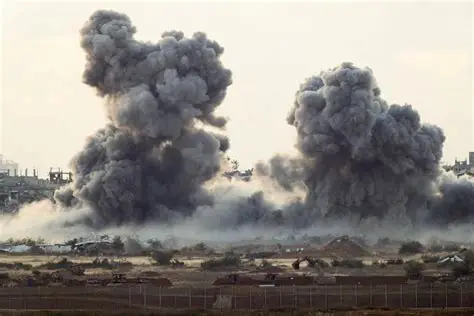
Pakistan air strikes in Afghanistan marked a dangerous escalation in one of South Asia’s most fragile relationships. During the night of 21–22 February 2026, Pakistan said it targeted seven militant camps and hideouts near the border after a series of suicide attacks on Pakistani soil. Afghanistan’s Taliban authorities gave a sharply different account, saying civilian homes, educational sites and other non-military locations were hit.
The initial reports were serious enough on their own. Pakistan air strikes in Afghanistan were followed by claims of civilian deaths, warnings of retaliation and renewed exchanges of fire along a frontier already weakened by months of tension. The crisis then expanded far beyond the first overnight operation. By early March, the United Nations said more than 100,000 people had fled their homes as cross-border fighting intensified. Later incidents, including a disputed strike in Kabul and renewed violence after peace talks, showed how difficult it had become to contain the conflict.
The key facts must be separated carefully. Islamabad said Pakistan air strikes in Afghanistan were intelligence-based operations against Tehreek-e-Taliban Pakistan (TTP), its affiliates and Islamic State Khorasan Province (ISKP). Kabul denied sheltering militants and accused Pakistan of violating Afghan sovereignty and international law. The United Nations Assistance Mission in Afghanistan (UNAMA) later said it had received credible reports that at least 13 civilians were killed and seven injured in Nangarhar province during the 21–22 February strikes.
This article explains what happened, what each side claimed and why Pakistan air strikes in Afghanistan became the opening stage of a wider border crisis.
Editor’s update — June 2026: This article has been rebuilt as an updated analysis. The February strikes were followed by border clashes, further air operations, humanitarian displacement, mediation attempts and renewed violence.
What Happened During the February Pakistan Air Strikes in Afghanistan?
Pakistan confirmed that it carried out cross-border strikes during the night of 21–22 February. According to Reuters, Pakistan’s information ministry described the operation as “intelligence-based selective targeting” of seven camps and hideouts linked to the Pakistani Taliban and Islamic State Khorasan Province.
Islamabad said the operation followed a series of suicide attacks inside Pakistan, including an attack on a Shia mosque in Islamabad and violence in the northwestern districts of Bajaur and Bannu. Pakistan said it had conclusive evidence that militants acting under Afghanistan-based leadership and handlers were responsible.
The Taliban authorities rejected Pakistan’s explanation. They said Pakistan air strikes in Afghanistan hit civilian areas in Nangarhar and Paktika provinces, including homes and educational sites. The Afghan defence ministry described the attacks as a violation of territorial integrity and warned that an appropriate response would follow.
Reuters could not independently verify the earliest Taliban casualty claims. That qualification remains essential. The existence of competing accounts does not justify ignoring civilian harm, but it also does not allow unverified claims to be presented as settled facts.
What the United Nations Reported About Pakistan Air Strikes in Afghanistan
A day after the first reports, Reuters reported that UNAMA had received credible information that at least 13 civilians were killed and seven injured in the Behsud and Khogyani districts of Nangarhar province.
Afghanistan’s education ministry said eight schoolchildren were among those killed and that educational facilities were damaged. Reuters said it could not independently verify every part of that ministry statement. Taliban spokesman Zabihullah Mujahid also said strikes hit locations in Paktika province and that dozens of people had been killed or wounded.
The UNAMA figure matters because it provides a cautious baseline. Pakistan air strikes in Afghanistan caused at least 13 civilian deaths and seven injuries according to the United Nations, even though the complete toll remained disputed and some locations were difficult to assess independently.
What Is Confirmed and What Remains Disputed?
| Issue | Confirmed or reliably reported | What remains disputed or unclear |
|---|---|---|
| Pakistani operation | Pakistan confirmed cross-border strikes during the night of 21–22 February | The complete targeting intelligence has not been publicly released |
| Intended targets | Islamabad said seven camps and hideouts linked to TTP and ISKP were targeted | Kabul said civilian homes and educational sites were hit |
| Civilian casualties | UNAMA said it received credible reports of at least 13 civilians killed and seven injured in Nangarhar | Taliban authorities reported a higher toll and additional casualties in Paktika |
| Militant casualties | Pakistani sources reported militant deaths | The complete number has not been independently verified |
| Sovereignty dispute | Kabul condemned the operation as a territorial violation | Islamabad argued it was acting against militants directing attacks from Afghan soil |
Why TTP Is at the Centre of the Crisis
The dispute cannot be understood without the TTP. The United Nations Security Council describes Tehrik-e-Taliban Pakistan as an alliance of militant groups formed in 2007 after Pakistani military operations against al-Qaeda-linked militants in the former Federally Administered Tribal Areas. It is commonly known as the Pakistani Taliban.
The TTP is distinct from Afghanistan’s Taliban government, but the two movements share ideological and historical links. That distinction is crucial when evaluating Pakistan air strikes in Afghanistan. Pakistan accuses the Afghan Taliban of allowing TTP leaders and fighters to use Afghan territory as a base for attacks inside Pakistan. Kabul denies the accusation and says Pakistan’s security problems are internal.
Pakistan air strikes in Afghanistan reflect the collapse of trust between governments that were once widely seen as close. Islamabad expected the Taliban’s return to power in Kabul in August 2021 to reduce the threat posed by anti-Pakistan militants. Instead, Pakistan says attacks increased.
A Reuters explainer described the TTP as a movement that has attacked markets, mosques, airports, military bases and police stations. It also recalled that the group gained territory in Pakistan in earlier years and that Pakistan launched major military campaigns to weaken it.
The Afghan Taliban’s position is different. Kabul argues that it does not permit Afghan soil to be used against another country. It rejects Islamabad’s claim that Afghanistan is responsible for militant violence inside Pakistan. These incompatible positions make de-escalation difficult because the two sides do not agree on the basic diagnosis of the problem.
Why Pakistan Air Strikes in Afghanistan Broke an Already Fragile Ceasefire
Pakistan air strikes in Afghanistan did not emerge from a stable relationship. Pakistan and Afghanistan had already experienced serious border fighting in October 2025.
An Associated Press report said the neighbours agreed to a ceasefire after more than a week of deadly clashes. Qatar and Turkey mediated the talks in Doha. Both sides pledged to avoid attacking each other’s forces, civilians and infrastructure and to stop supporting hostile groups.
The agreement reduced immediate violence but did not resolve the central dispute. The later Pakistan air strikes in Afghanistan exposed the limits of that temporary arrangement. Pakistan continued demanding action against militants it said were operating from Afghanistan. Kabul continued denying that it sheltered groups attacking Pakistan.
The February Pakistan air strikes in Afghanistan therefore represented more than a single military action. They showed that the October framework had failed to produce a durable security arrangement.
Border Clashes Followed Within Days
The risks became clear quickly. On 24 February, Reuters reported that Pakistani and Afghan forces exchanged fire along the border. Each side accused the other of starting the clash.
Pakistan said Afghan Taliban forces initiated unprovoked firing in the Torkham and Tirah sectors. Afghan officials gave a different account, saying Pakistani forces fired first and Afghan troops responded. Reuters could not independently verify either side’s version.
This pattern continued: Pakistan air strikes in Afghanistan were followed by retaliation claims, counterclaims and fighting along a difficult mountainous frontier. The more often forces exchanged fire, the greater the risk that a local incident could become a wider military confrontation.
The border is not only a security line. Pakistan air strikes in Afghanistan also affect a route for trade, travel and family connections. Repeated closures affect transporters, traders and communities living on both sides. The News Ink’s economy explainer describes how conflict and disrupted trade routes can increase costs, weaken confidence and place pressure on households and businesses.
How Pakistan Air Strikes in Afghanistan Expanded Into a Wider Conflict
By late February and early March, the crisis had escalated well beyond the original Pakistan air strikes in Afghanistan. Fighting included air operations, artillery exchanges and claims of attacks on military installations.
A Reuters report from 6 March said more than 100,000 people had been displaced. The UN refugee agency estimated that approximately 115,000 people had fled their homes in Afghanistan and about 3,000 in Pakistan.
The humanitarian effect of Pakistan air strikes in Afghanistan and the clashes that followed was visible in border towns such as Torkham. Residents described shelling near homes during Ramadan evenings as families prepared to break their fasts. The conflict placed ordinary people inside a dispute driven by militant violence, sovereignty claims and military retaliation.
Pakistan said it was targeting militants and support infrastructure. Afghanistan said civilians were being harmed. Pakistan air strikes in Afghanistan remained the central trigger for the new phase of fighting, but the conflict was no longer limited to one operation.
The Disputed Kabul Strike Raised Wider Civilian Concerns
The most serious later allegation came in March. Afghanistan’s Taliban authorities said a Pakistani strike hit the Omid drug rehabilitation centre in Kabul, killing hundreds of people. Pakistan rejected that account and said it targeted a military camp and terrorist infrastructure.
The scale of the allegation requires caution. It also shows why Pakistan air strikes in Afghanistan require precise attribution. A Reuters timeline reported the Taliban government’s claim that more than 400 people were killed and 265 injured, but also recorded Islamabad’s denial. Independent verification remained difficult.
This incident cannot be presented as a settled finding without clear evidence. What can be said is that the dispute deepened the crisis and increased international pressure for restraint.
The episode also shows why reporting on Pakistan air strikes in Afghanistan must distinguish between confirmed facts and claims made by parties to the conflict. High casualty figures require careful attribution. So do official denials.
China-Mediated Talks Opened a Narrow Path to De-Escalation
After weeks of fighting, Pakistan and Afghanistan entered talks in China. Reuters reported that negotiations in Urumqi aimed to establish a ceasefire, reopen border crossings and improve cooperation on security and regional stability.
China has clear interests in seeking calm. It borders both countries, and prolonged instability threatens regional connectivity, trade and investment confidence. Pakistan also needs secure routes and greater predictability. Afghanistan faces humanitarian pressures and cannot afford indefinite border disruption.
The talks were important, but they did not erase the disagreement behind Pakistan air strikes in Afghanistan. Islamabad continued demanding verifiable action against militants. Kabul continued denying that it sheltered them.
Pakistan air strikes in Afghanistan had created a crisis that diplomacy could slow, but not easily solve.
Renewed Violence Showed How Fragile the Pause Remained
The situation remained unstable after the talks. On 27 April, Afghan officials said strikes and shelling hit Kunar province, killing seven people and injuring at least 85. Pakistan rejected reports that it attacked a university and said claims about civilian targeting were false.
The Associated Press report described the violence as the first major incident after peace talks aimed at reducing hostilities. The competing accounts once again followed a familiar pattern: Afghan authorities reported civilian harm, while Pakistan said its operations were precise and intelligence-based.
The renewed incident underlined the limits of temporary pauses. Pakistan air strikes in Afghanistan may be justified by Islamabad as counterterrorism operations, but each strike also raises the risk of retaliation, border closure and civilian casualties.
A Timeline of the Widening Crisis
| Date | Development | Why it mattered |
|---|---|---|
| October 2025 | Pakistan and Afghanistan agreed to a Qatar- and Turkey-mediated ceasefire after deadly border clashes | The truce reduced immediate violence but did not resolve the militant-shelter dispute |
| 21–22 February 2026 | Pakistan confirmed cross-border strikes on seven alleged militant camps and hideouts | The strikes opened a new phase of escalation |
| 23 February 2026 | UNAMA cited credible reports of at least 13 civilian deaths and seven injuries in Nangarhar | The UN reported civilian harm from the overnight operation |
| 24 February 2026 | Pakistani and Afghan forces exchanged fire along the border | Retaliatory dynamics intensified |
| Early March 2026 | Cross-border fighting expanded and displacement exceeded 100,000 people | The crisis became a humanitarian emergency |
| 16–17 March 2026 | Afghanistan accused Pakistan of striking a Kabul rehabilitation centre; Islamabad denied the account | The disputed incident raised the stakes sharply |
| Early April 2026 | Pakistan and Afghanistan held talks in China | Diplomacy reopened a limited path towards de-escalation |
| 27 April 2026 | Afghan officials reported new casualties in Kunar; Pakistan rejected the claims | The pause remained fragile |
Why Civilian Protection Must Remain Central After Pakistan Air Strikes in Afghanistan
Civilian protection is not a side issue. Pakistan has the right to protect its population from militant attacks. Afghanistan has the right to insist that its sovereignty and civilian population be protected. Those principles create difficult questions when counterterrorism operations cross an international border.
Pakistan air strikes in Afghanistan demonstrate the danger of a security strategy that produces new cycles of retaliation. Even when a government says it is using precise intelligence, civilian casualties can deepen anger, weaken diplomacy and create new grievances.
Independent investigation matters. So does transparent evidence. Islamabad has made serious allegations about Afghanistan-based handlers and militant camps. Kabul has made serious allegations about civilian homes, schools and medical facilities. The public should not be asked to accept either side’s claims without scrutiny.
Why Border Closures Matter Beyond Security
The Afghanistan-Pakistan frontier is economically important. Repeated closures can delay goods, increase transport costs and damage livelihoods. Traders, drivers and families often experience the consequences long before political leaders reach a settlement.
Pakistan air strikes in Afghanistan therefore have an economic dimension as well as a military one. The direct costs include destroyed infrastructure and emergency spending. The indirect costs include disrupted trade, reduced investment confidence and uncertainty for communities that depend on cross-border movement.
A prolonged crisis can also make humanitarian work harder. Aid deliveries, medical access and family travel become more complicated when crossings close or fighting spreads.
What a Durable Agreement After Pakistan Air Strikes in Afghanistan Would Require
A lasting settlement cannot depend only on short pauses after each round of violence. Pakistan air strikes in Afghanistan reveal a deeper security dispute that requires verifiable mechanisms.
A credible arrangement would need to address several questions:
- Militant activity: What concrete steps will prevent armed groups from using territory on either side to launch attacks?
- Verification: How will allegations about camps, handlers and cross-border operations be investigated?
- Civilian protection: What safeguards will reduce harm to homes, schools, medical sites and border communities?
- Border management: How can crossings remain functional for trade and humanitarian movement?
- Communication: Which military and diplomatic channels will operate during emergencies?
- Mediation: What role should China, Qatar, Turkey, Saudi Arabia or other partners play?
- Accountability: How will credible allegations of civilian harm be examined?
Without practical answers, Pakistan air strikes in Afghanistan may continue producing temporary tactical gains while worsening the strategic relationship.
What Happens Next?
The future remains uncertain. Pakistan continues to argue that it cannot tolerate militant attacks directed from outside its territory. Afghanistan continues to deny sheltering anti-Pakistan groups and condemns cross-border operations.
Pakistan air strikes in Afghanistan have shown that military action can escalate faster than diplomacy can contain it. The February operation was followed by border clashes, displacement, contested casualty claims and renewed mediation efforts. Later violence showed that temporary agreements remained vulnerable.
The most responsible conclusion is not that one side’s narrative has been fully proven. It is that the crisis requires evidence, restraint and sustained negotiation.
Pakistan air strikes in Afghanistan may have been presented by Islamabad as a response to terrorism. Their wider impact has been to expose how fragile the relationship between the neighbours has become. Without an enforceable security framework and credible protection for civilians, the next incident could restart the cycle.
For continuing international coverage, join The News Ink on its WhatsApp channel.