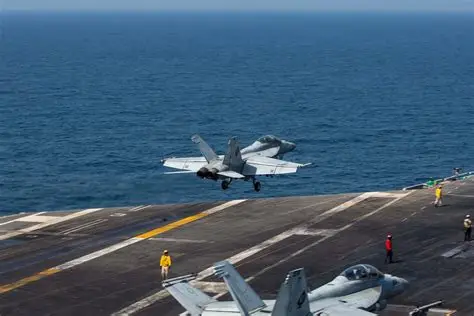
OPERATION EPIC Fury aircraft losses now stand at 42 confirmed cases, according to a Congressional report — as the Pentagon’s cost estimate for the Iran conflict climbs to a staggering $29 billion.
Since the United States and Israel launched coordinated military operations against Iran in early 2026, the scale of the conflict has grown well beyond initial projections. Air strikes, maritime engagements, and missile combat across the Middle East have defined the campaign — and they have come at a significant cost. A new report tracking US aircraft combat losses offers the most detailed public accounting yet of the military toll Operation Epic Fury has taken on American forces.
The report documents 42 fixed-wing aircraft, rotary-wing aircraft, and uncrewed aerial vehicles — commonly known as drones — that have been reportedly lost or damaged during the conflict. As fighting continues and classification barriers remain in place, the full picture may still be incomplete.
Operation Epic Fury Aircraft Losses: The Full Background
How the Conflict Began
On February 28, 2026, the United States initiated military operations against Iran under the official designation Operation Epic Fury (OEF). The campaign was launched in direct coordination with Israel and marked a major escalation of military engagement in the Middle East.
The conflict has since involved multiple domains of warfare:
Air combat operations — including strikes by crewed fighter aircraft and bomber platforms
Maritime engagements — naval forces operating across regional waters
Missile combat — both offensive strikes and defensive interceptions
The April Ceasefire and Its Breakdown
Combat activity showed signs of slowing in April 2026, when a ceasefire came into effect. The pause offered a brief window of reduced hostilities. However, within weeks, strikes resumed. As of the latest available reporting, conditions across the region remain fluid and unpredictable.
The Pentagon’s $29 Billion Price Tag
One of the most striking elements of the Congressional hearing that accompanied this report was the revised cost estimate presented by Acting Pentagon Comptroller Jules W. Hurst III.
During testimony on May 12, 2026, Hurst confirmed that the Department of Defense’s cost estimate for military operations in Iran has now reached $29 billion — a figure that represents a significant increase from earlier projections.
Hurst explained the reason for the revised number directly:
“A lot of that increase comes from having a refined estimate on repair or replacement costs for equipment.”
That single sentence carries enormous weight. It confirms that the financial impact of Operation Epic Fury is not primarily driven by fuel costs or troop deployments — it is being driven by the cost of replacing and repairing damaged and destroyed military equipment, including aircraft.
What the $29 billion figure tells us:
Equipment losses are a major driver of the total cost
Repair and replacement costs were initially underestimated
The true financial toll of the conflict continues to grow
Pentagon planners are still refining their damage assessments
The conflict’s economic impact extends far beyond initial projections
42 Aircraft: Breaking Down the Operation Epic Fury Aircraft Losses
The Congressional report lists 42 aircraft as lost or damaged during Operation Epic Fury. This number encompasses three distinct categories of military aviation assets:
Fixed-Wing Aircraft
Fixed-wing aircraft include traditional combat planes — fighters, bombers, and surveillance jets that rely on wings to generate lift. These are among the most expensive and strategically significant assets in any military operation. Losses in this category carry both financial and operational consequences.
Rotary-Wing Aircraft
Rotary-wing aircraft — more commonly known as helicopters — play a critical role in military operations, supporting troop movements, medical evacuations, and close-air support missions. Their loss affects battlefield mobility and support capabilities.
Uncrewed Aerial Vehicles (Drones)
Drones have become an increasingly central component of modern warfare. Used for surveillance, precision strikes, and electronic warfare, UAVs represent a rapidly growing share of military aviation assets. Their losses in Operation Epic Fury reflect the heavy demands being placed on unmanned systems throughout the conflict.
Key facts about the 42 aircraft losses:
Losses span fixed-wing jets, helicopters, and drones
The figure is based on news reports and official statements from the Department of Defense and US Central Command (CENTCOM)
The number remains subject to revision
Classification restrictions may mean some losses are not yet publicly confirmed
Ongoing combat activity continues to add to the total
Attribution of some losses remains under review
Why the Full Picture Remains Unclear
The report is transparent about one important limitation: the number of 42 aircraft may not be the final count. Several factors contribute to this uncertainty.
Classification
Many details surrounding military operations remain classified. Some aircraft losses may not be publicly disclosed for operational security reasons, meaning the confirmed number of 42 could represent only a portion of the actual total.
Ongoing Combat Activity
Because strikes resumed after the April ceasefire collapsed, new losses continue to occur. Any report compiled during an active conflict reflects a snapshot in time rather than a final accounting.
Attribution Challenges
In complex, multi-domain combat environments, determining whether an aircraft was lost due to enemy action, mechanical failure, or other causes can take time. Some losses may be reclassified or reattributed as investigations are completed.
The Department of Defense’s Unusual Designation
One detail in the report deserves particular attention: the Department of Defense is operating under what the report describes as a “secondary Department of War designation” — established under Executive Order 14347, dated September 5, 2025.
This unusual administrative detail reflects the unique institutional context in which Operation Epic Fury is being conducted. While the DOD has not published a comprehensive public assessment of combat losses, the Congressional report draws on available news reports and official statements from both the Pentagon and US Central Command to compile the most complete picture possible.
What Operation Epic Fury Means for US Military Readiness
The loss or damage of 42 aircraft is not simply a statistical figure. Each aircraft represents significant military capability, and collectively these losses have real implications for US operational readiness.
Why aircraft losses matter beyond the numbers:
Each aircraft takes months or years to manufacture and replace
Pilots and crews require extensive training that cannot be quickly replicated
Repair timelines for damaged aircraft can stretch well into the future
Logistical strain increases as maintenance and replacement demands rise
Adversaries study loss patterns to identify vulnerabilities in US air power
Congressional oversight becomes more urgent as costs and losses mount
The $29 billion cost estimate, paired with 42 confirmed aircraft losses, paints a picture of a conflict that has placed substantial strain on American military resources. Whether that strain is sustainable depends on how long the conflict continues — and whether the ceasefire that briefly slowed combat in April can be restored on a more permanent basis.
7 Key Facts From the Operation Epic Fury Aircraft Losses Report
To summarise the most important takeaways from this Congressional report:
Operation Epic Fury began on February 28, 2026, launched jointly by the United States and Israel against Iran
42 aircraft have been confirmed as lost or damaged, including fixed-wing jets, helicopters, and drones
The Pentagon’s cost estimate has reached $29 billion, driven largely by equipment repair and replacement costs
A ceasefire in April 2026 temporarily slowed combat — but strikes resumed within weeks
The Department of Defense has not released a comprehensive public assessment of all combat losses
Classification and ongoing combat mean the true number of aircraft losses may be higher than currently reported
Acting Pentagon Comptroller Jules W. Hurst III confirmed the revised cost estimate during Congressional testimony on May 12, 2026
Final Thoughts
The Operation Epic Fury aircraft losses report represents one of the most significant public accountings of US military costs in a live conflict in recent memory. With 42 aircraft confirmed as lost or damaged and a $29 billion price tag that continues to grow, the financial and operational toll of this campaign is coming into sharper focus.
What remains less clear is the full extent of those losses. Classification barriers, ongoing combat, and the complexity of attributing losses in a multi-domain conflict all mean that the picture will likely look different weeks or months from now.
What is certain is that Congress, defence analysts, and the American public have a legitimate and urgent interest in understanding exactly what Operation Epic Fury is costing — in dollars, in equipment, and in the readiness of the military forces on which national security depends.