England India Semi-Final: Why a Painful 2026 Defeat Still Matters for Brook and Buttler
England India semi-final night in Mumbai promised noise, colour, pressure and one of the biggest white-ball tests of Harry Brook’s young captaincy. It delivered all of that, then added the cruelty of a seven-run defeat that England will remember for a long time.
The original article looked ahead to the match as a defining moment. It was right to frame it that way. Wankhede Stadium was not just another venue. It was a place where short boundaries, a fast outfield, high scoring and a heavy Indian crowd could turn a semi-final into an emotional storm. England had reached the last four with belief, but India had home advantage, Jasprit Bumrah, Sanju Samson’s form and the confidence of defending champions.
Now the result is known. India made 253-7 from 20 overs. England replied with 246-7. India won by seven runs and moved into the final, where they later beat New Zealand by 96 runs to defend the T20 World Cup title. That means the England India semi-final was not only England’s exit. It became one of the decisive games in India’s championship run.
For England, the defeat hurt because they did not collapse. They fought. Jacob Bethell produced a magnificent 105 from 48 balls. Jofra Archer nearly dragged the chase back with 19 not out from four balls. England stayed alive until the final over. Harry Brook later said he was disappointed but extremely proud of the campaign, and that was the right emotional balance.
This was not a humiliation. It was a missed chance. It was also a lesson about selection, death bowling, top-order starts, Buttler’s future, Brook’s leadership and Brendon McCullum’s direction after a difficult winter.
For readers following The News Ink’s wider cricket coverage, the England India semi-final is a perfect case study in modern T20 cricket: totals above 250 can still be chased, one over can change a campaign, and a young team can lose while still showing signs of growth.
How the England India semi-final unfolded
The England India semi-final began with Brook winning the toss and choosing to bowl. That made sense at Wankhede, where chasing can feel attractive because of dew, short boundaries and the ground’s history of high-scoring games. But the decision also placed huge pressure on England’s bowlers. Against India at home, anything loose would disappear quickly.
India started fast and never truly stopped. Sanju Samson played the innings that defined the match, scoring 89 from 42 balls with eight fours and seven sixes. Ishan Kishan added 39 from 18, Shivam Dube made 43 from 25, Hardik Pandya hit 27 from 12, and Tilak Varma smashed 21 from only seven balls. India’s 253-7 was a huge semi-final total, but not an impossible one at Wankhede.
England’s bowling figures told the story of the pressure. Jofra Archer took a wicket but conceded 61 from four overs. Sam Curran went for 53. Jamie Overton conceded 36 from three. Adil Rashid took 2-41 and Will Jacks 2-40, but India kept finding boundary bursts.
The England India semi-final then turned into a chase of belief. England needed 254. They lost Phil Salt early, Brook cheaply, and Jos Buttler for 25. At 64-3 after 5.5 overs, India were in control. Then Bethell changed the game.
Jacob Bethell nearly changed everything
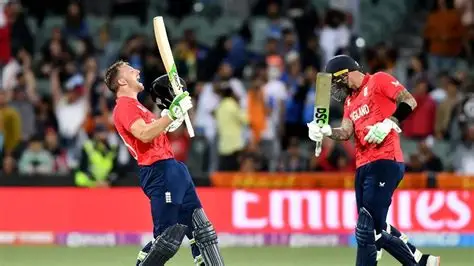
Bethell’s innings was England’s great consolation and their great what-if. His 105 from 48 balls was fearless, clean and full of intent. He struck eight fours and seven sixes, attacking India’s spinners and seamers with the freedom of a player who did not seem weighed down by the occasion.
The England India semi-final could have ended much earlier without him. England were behind the game after losing early wickets. Bethell gave them shape, then gave them hope, then almost gave them the match. His stand with Will Jacks took England from danger to possibility. Jacks made 35 from 20, and together they pulled England to 172-5 by the end of the 14th over.
Brook later praised Bethell’s temperament, calling his innings phenomenal in a high-pressure situation against India on home soil. That mattered because Bethell’s knock was not an empty century in a lost cause. It was a serious semi-final innings that forced India to keep defending until the final over.
The painful part for England is that Bethell was run out at 225-7 in the 20th over. Had he stayed for even three or four more balls, the England India semi-final might have ended differently. That is how narrow the margins were.
Sanju Samson gave India the innings England needed from Buttler
India’s innings was built around Samson. He did what England hoped Buttler might do. He dominated the top half of the innings, punished mistakes, and gave India enough control for later hitters to attack without fear.
Samson’s 89 from 42 balls was the difference between a strong total and a match-winning one. He shared a 97-run stand with Kishan and pushed India through the middle overs at a rate that never let England settle. Even when wickets fell, India’s tempo remained high because Samson had already lifted the base.
The contrast with Buttler was unavoidable. Buttler had been the centre of England’s pre-match debate. In 2022, he destroyed India in Adelaide with an unbeaten 80 as England won by 10 wickets. In 2026, he arrived in Mumbai short of runs and under pressure. Sky Sports noted before the semi-final that Buttler was averaging only 8.86 in the tournament and had not passed seven in five consecutive innings before the match.
In Mumbai, he improved but did not explode. Buttler made 25 from 17, with four fours and one six, before Varun Chakaravarthy bowled him. It was a start, not a statement. In a chase of 254, England needed more.
That is why the England India semi-final will remain part of the Buttler question. He was not England’s worst player. But he was the senior player England most needed to produce something defining.
Why Buttler’s future became part of the story
Buttler’s career does not need defending. He is one of England’s greatest white-ball cricketers. He helped win the 2019 ODI World Cup and the 2022 T20 World Cup. He has played some of England’s most important limited-overs innings. His wicketkeeping, six-hitting and calmness have shaped an era.
But every great career eventually reaches a difficult phase. The England India semi-final arrived with that question already hanging over him. Was this the moment for one more great Buttler knockout innings, or the sign that England needed to move further into Brook’s generation?
The answer was not clean. Buttler showed signs of rhythm, but not enough. He did not fail completely. He did not win the game either. That grey area is often harder than a clear ending.
England should not rush to discard him emotionally. Recent form matters, but so does experience. However, the team must be honest about roles. If Buttler remains in the side, he must either rediscover the explosive opener who terrifies bowlers or adapt into a role that still gives England value.
The England India semi-final did not end Buttler’s story. It made the next chapter unavoidable.
Brook’s leadership survived the defeat
Harry Brook had a poor personal match with the bat, scoring seven from six balls before Bumrah dismissed him. In a chase of 254, England needed more from their captain. But captaincy is not judged only by runs, especially in a first major ICC tournament as leader.
Brook’s reaction after the defeat was mature. The ICC quoted him saying he was disappointed but extremely proud, and that England had stayed in games until the final over throughout the competition. He praised the toughness of the group and the quality of Bethell’s innings.
That matters because the England India semi-final could have become a crushing captaincy moment. Instead, Brook framed it as proof of fight. England had not won, but they had not folded. They had entered an Indian cauldron, conceded 253, lost early wickets, and still pushed the hosts to the edge.
Brook’s captaincy also impressed McCullum, who praised his mental fortitude after a difficult winter. That is important. England’s winter included a heavy Ashes defeat and off-field scrutiny. Brook had to lead through all of that, then take England deep into a World Cup.
The England India semi-final was painful, but it did not make Brook look lost. It made him look unfinished, which is different.
McCullum’s future question became sharper
Brendon McCullum’s future was already a talking point before Mumbai. England’s Test struggles, especially the 4-1 Ashes defeat in Australia, had increased scrutiny. The white-ball campaign gave him something better to point to. England showed identity, confidence and resilience under Brook.
After the England India semi-final, McCullum said he would love to continue as England head coach but admitted hard conversations were needed after a difficult winter. Sky Sports reported that he praised the white-ball team as exceptional after the Ashes and said England had played with a clear identity under Brook.
That was a fair reading. England’s T20 side did not win the tournament, but it looked alive. It looked modern. It had young players stepping forward. It had clear aggression. It also had issues: inconsistent starts, uncertain use of older players, expensive bowling spells and pressure moments missed.
The defeat therefore strengthened both sides of the argument. McCullum could say England were moving in the right direction. Critics could say England still lost the biggest match.
The England India semi-final did not settle his future. It gave the ECB evidence for a complicated review.
Why Wankhede shaped the match
Wankhede was always central to the story. The ground encourages ambition. Boundaries are reachable. The ball travels. The crowd is close and loud. Visiting teams can either feed off the energy or feel swallowed by it.
The Guardian noted before the match that Wankhede had been the IPL’s highest-scoring ground across the previous three seasons, with an average of 9.89 runs per over. That context proved relevant. The England India semi-final produced 499 runs and 34 sixes, according to ESPN’s report snippet. It was not a cautious knockout. It was a run-fest decided by tiny moments.
England knew the challenge. Sam Curran had described facing India as a dream and a brilliant opportunity. Brook had said India were favourites on home soil but that T20 is fickle and anything can happen. Both ideas proved true. India were favourites. England nearly made anything happen.
Wankhede did not defeat England by itself. But it amplified everything: India’s hitting, the crowd pressure, Bumrah’s calm, England’s early wickets, Bethell’s charge and the final-over tension.
Bumrah gave India control when chaos threatened
In a game where nearly every bowler suffered, Bumrah’s spell stood out. He conceded only 33 from four overs and took Brook’s wicket. More importantly, he bowled the 18th over when England needed 45 from 18 balls and gave up only six runs.
That over may have been the hidden match-winner. T20 scoreboards can swing wildly late, especially at Wankhede. England still had hitters. Bethell was flying. One expensive over could have changed the game. Bumrah denied it.
Brook later called Bumrah arguably the best bowler in the world at the moment. That was not empty praise. In a semi-final where 253 almost was not enough, India needed one bowler who could slow the chase without panic. Bumrah did exactly that.
The England India semi-final showed the value of elite death bowling. Batting power has changed the format, but one world-class over at the right time can still win a knockout.
England’s selection call will be debated
England brought in Jamie Overton for Rehan Ahmed, a decision that had logic but will remain debated. Mumbai was not Colombo. Wankhede did not promise the same grip for leg spin. Overton offered pace, bounce and lower-order hitting.
But India still scored 253. England’s seamers were expensive. Rehan had starred against New Zealand in Colombo, and leaving him out removed one wicket-taking spin option. The News Ink covered that earlier debate in our article on Rehan Ahmed’s World Cup role.
It is too simple to say Rehan would have won the match. Varun Chakaravarthy went for 64 in India’s attack, so spin was hardly safe. But selection is about trade-offs, and England’s chosen balance did not quite work.
The England India semi-final should therefore be remembered as a tactical lesson, not only an emotional defeat. Conditions matter. Matchups matter. But so does form and confidence. England’s next white-ball cycle must decide how flexible it wants to be and how much trust it gives emerging all-rounders.
What India did better
India did not win only because of home support. They won because their key players delivered in key phases.
Samson gave them a top-order anchor with acceleration. Kishan and Dube maintained tempo. Hardik and Tilak added late damage. Bumrah held the chase at the most dangerous moment. Hardik took two wickets. Axar and Varun took wickets even while conceding runs. India also fielded sharply, with Brook praising Axar Patel’s catch as one of the best he had seen.
That complete spread matters. England relied heavily on Bethell’s miracle. India had more contributors.
That is the difference in many knockout games. One brilliant innings can keep a team alive. A wider team performance usually wins.
India then proved the quality of that side by beating New Zealand in the final. Their win over England was not a one-off escape. It was the step before a dominant title finish.
What England can take forward
The England India semi-final should hurt, but it should not discourage England. Brook’s side showed enough to build from. Bethell’s century was a major discovery. Will Jacks continued to look important. Archer’s late hitting was another reminder of depth. Brook’s leadership showed promise even on a bad personal batting night.
England’s task is to turn promise into sharper tournament execution. They need more reliable powerplay starts. They need Buttler’s role resolved. They need a clearer bowling plan on flat pitches. They need to decide how Brook, Bethell, Jacks, Salt, Buttler and Curran fit together over the next two years.
The good news is that England have talent. The harder news is that talent did not quite beat India in Mumbai.
That is why the T20 World Cup semi-finals race matters as a wider lesson. England were good enough to reach the last four. India were good enough to win the trophy. The gap was seven runs in one match, but it also came from small details across 40 overs.
Key numbers from the England India semi-final
| Detail | Figure |
|---|---|
| Venue | Wankhede Stadium, Mumbai |
| Match | 2nd semi-final, 2026 T20 World Cup |
| India score | 253-7 |
| England score | 246-7 |
| Result | India won by seven runs |
| Sanju Samson | 89 off 42 balls |
| Jacob Bethell | 105 off 48 balls |
| Jos Buttler | 25 off 17 balls |
| Harry Brook | 7 off 6 balls |
| Jasprit Bumrah | 1-33 from four overs |
| England powerplay | 68 runs |
| India’s next result | Beat New Zealand by 96 runs in final |
The careful takeaway
England India semi-final night was the kind of match that can be read two ways. England lost. They conceded too many. Their senior opener did not produce the defining innings. Their captain fell cheaply. Their selection will be questioned. Their tournament ended one step short of the final.
But England also fought brilliantly. Bethell played one of the great losing semi-final innings. Brook’s team stayed alive until the final over. McCullum’s white-ball project showed life after a difficult winter. A younger generation proved it could handle pressure.
India deserved the win. They scored 253, held their nerve, and later completed the job by beating New Zealand in the final. But England left Mumbai with more than disappointment. They left with evidence of what they can become.
The England India semi-final was painful because England were close enough to imagine the other ending. That is also why it matters. Teams learn more from near-misses than from easy wins. England’s next white-ball chapter should begin with that truth.
For more cricket analysis, tournament updates and sports features, follow The News Ink on Medium.