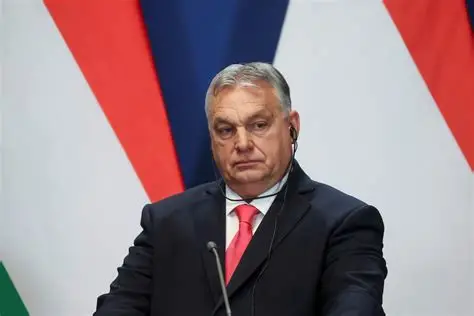
JD VANCE has defended his decision to support Viktor Orbán during Hungary’s recent election, despite Orbán’s decisive defeat.
Vance visited Hungary for two days to campaign alongside Orbán just days before the vote. Speaking afterward, he described Orbán as a “great guy” who had done a strong job leading the country. He also praised Orbán for challenging European Union institutions, particularly in Brussels.
Although disappointed by the outcome, Vance expressed confidence that the United States would maintain a positive relationship with Hungary’s incoming government.
The election resulted in a major victory for the opposition party Tisza, led by Péter Magyar. His party secured a landslide win, ending Orbán’s time in power.
Magyar had previously criticized Vance’s involvement, warning that foreign political figures should not interfere in Hungary’s elections. However, after his victory, he took a more diplomatic tone, describing the United States as an important NATO ally and signaling openness to dialogue with leaders such as Donald Trump.
For now, Orbán will continue serving in a caretaker role until a new government officially takes office. Meanwhile, Tamás Sulyok will oversee the transition process, including convening the new parliament and recommending a prime minister.
Magyar has pushed for a swift transition and suggested he could assume office as early as May. He has also called on Sulyok to step down, accusing him of aligning too closely with the previous government.
Another major development involves Hungary’s state media. Magyar revealed that he had never been invited to appear on public television while leading the opposition. However, he received an invitation shortly after his election victory.
He rejected the offer and instead called for reforms to ensure media independence. He proposed creating an oversight board to guarantee unbiased reporting, similar to systems used by established public broadcasters.
With a strong parliamentary majority, Magyar’s party now has the power to implement major reforms. These could include constitutional changes and reversing policies introduced during Orbán’s leadership.
This political shift marks a significant turning point for Hungary, with potential implications for both domestic policy and international relations.