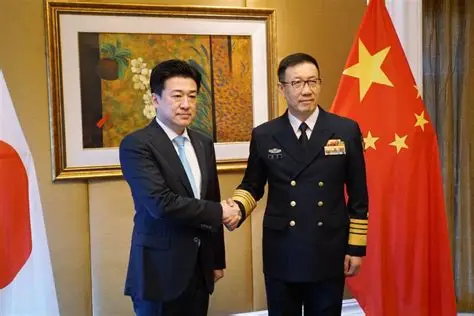
Japan Defence Minister Criticises China Over Military Expansion and Transparency Concerns
Japan Defence Minister Criticises China after Beijing accused Tokyo of pursuing a path toward renewed militarism. Speaking at a major defence summit in Singapore, Japan’s defence chief strongly rejected those allegations and instead pointed to China’s growing military capabilities as a source of concern for the international community.
The remarks marked one of the clearest responses yet from Japan regarding criticism of its defence policies. As tensions continue to rise across the Asia-Pacific region, both nations remain engaged in a war of words over military spending, security strategies, and regional influence.
The latest exchange highlights the deep historical and geopolitical challenges that continue to shape relations between Asia’s two largest powers.
Japan Defence Minister Criticises China at Security Summit
During the final day of a major defence gathering in Singapore, Japan’s defence minister delivered a forceful response to accusations made by Chinese officials.
Chinese representatives had recently warned that Japan was moving toward what they described as a form of “new militarism.” In response, Japan’s defence minister argued that such claims ignore the realities of modern security challenges.
He stated that every nation has the right to strengthen its defence capabilities in response to evolving threats. According to Japanese officials, the country’s military modernization efforts are focused entirely on deterrence and national security rather than offensive ambitions.
The speech was designed to reassure regional partners while also challenging China’s criticism of Japan’s defence strategy.
Why China Has Raised Concerns About Japan
China has repeatedly voiced concerns over Japan’s growing defence budget and military reforms.
In recent years, Japan has steadily increased defence spending as regional security threats have become more complex. Government leaders argue that changing geopolitical conditions require stronger defensive capabilities.
Chinese officials, however, have expressed concern that these developments signal a departure from Japan’s post-war military posture.
Recent statements from Beijing warned that Japan’s military expansion could destabilize the region and revive concerns linked to historical conflicts.
These accusations reflect longstanding distrust between the two countries, much of which stems from events that occurred during the twentieth century.
Historical Tensions Continue to Shape Relations
Relations between Japan and China remain heavily influenced by history.
Japan’s military actions during World War II left deep scars across Asia, particularly in China. Decades later, historical memory continues to influence diplomatic discussions and public opinion in both countries.
Because of this history, any increase in Japan’s military capabilities often attracts close scrutiny from neighboring nations.
Japanese leaders frequently emphasize that modern Japan operates under a defensive security framework and remains committed to peace.
Nevertheless, historical sensitivities continue to make military issues highly controversial across the region.
Japan’s Defence Spending Reaches New Levels
One of the major factors behind the recent criticism is Japan’s growing defence budget.
The country has increased military spending for more than a decade, setting consecutive annual records. Officials argue that these investments are necessary to strengthen national security and respond to changing threats.
Key priorities include:
- Advanced missile defence systems
- Cybersecurity capabilities
- Maritime security improvements
- Modernization of defence equipment
- Enhanced regional deterrence measures
Japanese policymakers have set ambitious targets aimed at increasing defence spending relative to the size of the economy.
Supporters argue that these investments are essential for maintaining stability in an increasingly uncertain security environment.
Concerns Over China’s Military Expansion
A central theme of the minister’s speech focused on China’s military growth.
Japanese officials argue that China’s expanding military capabilities deserve greater international attention.
Areas frequently cited by security analysts include:
Nuclear Capabilities
China continues to modernize and expand its nuclear arsenal, prompting concerns among regional governments.
Strategic Bombers
The development and deployment of long-range strategic aircraft have become a key focus of regional security discussions.
Naval Expansion
China’s growing naval presence across the Indo-Pacific has significantly altered the strategic balance in the region.
Military Transparency
Japanese officials have repeatedly called for greater transparency regarding China’s military planning, spending, and long-term objectives.
These concerns formed the basis of the minister’s argument that international attention should focus on China’s actions rather than Japan’s defensive measures.
Japan Rejects Claims of Militarism
A key message delivered during the summit was Japan’s rejection of accusations that it is returning to militarism.
Japanese officials insist that the country’s defence policies remain rooted in constitutional principles and defensive objectives.
The minister emphasized that Japan does not possess certain categories of weapons often associated with major military powers.
He argued that labeling Japan as militaristic while overlooking larger military arsenals elsewhere creates an imbalance in public discussion.
According to Japanese leaders, defence modernization should not automatically be interpreted as evidence of aggressive intentions.
Transparency Becomes a Key Theme
Another important element of Japan’s message was transparency.
Officials pledged to continue explaining defence policies openly to the international community.
The minister stated that Japan would maintain dialogue with neighboring countries and clearly communicate the purpose behind military developments.
Transparency has become an increasingly important issue in regional security discussions because governments seek reassurance about one another’s intentions.
Japanese leaders believe open communication can help reduce misunderstandings and prevent unnecessary tensions.
Regional Security Challenges Continue to Grow
The exchange between Japan and China reflects broader security concerns across Asia.
Several factors continue to influence regional stability:
- Military modernization programs
- Territorial disputes
- Strategic competition between major powers
- Maritime security concerns
- Technological advancements in defence systems
As governments respond to these challenges, debates over defence spending and military capabilities are likely to intensify.
Regional leaders continue to stress the importance of diplomacy alongside defence preparedness.
Key Takeaways From the Minister’s Remarks
The speech delivered several important messages:
1. Japan Rejects Militarism Claims
Officials insist military modernization is defensive rather than aggressive.
2. China Faces Increased Scrutiny
Japan argues China’s military growth deserves greater international attention.
3. Defence Spending Will Continue
Tokyo remains committed to strengthening national security capabilities.
4. Transparency Is a Priority
Japan pledged to openly explain its defence policies and objectives.
5. Historical Issues Remain Relevant
World War II continues to influence regional perceptions of military developments.
6. Regional Security Challenges Are Evolving
Governments across Asia are adapting to new threats and geopolitical realities.
7. Dialogue Remains Essential
Both competition and communication will shape future regional relations.
LATEST UPDATES ON THE NEWS INK CURRENT AFFAIRS.