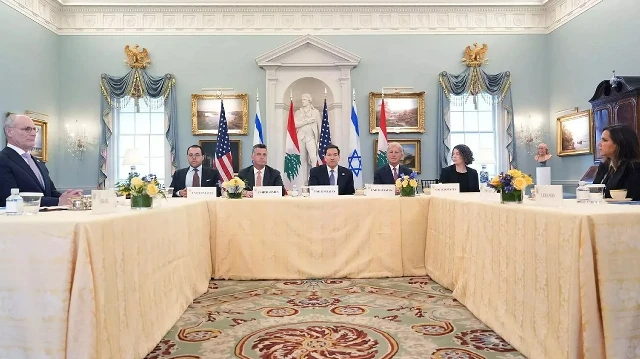
Israel Lebanon Talks Resume After Decades of Silence
The long-awaited Israel Lebanon talks have officially resumed, marking the first direct diplomatic engagement between the two countries since 1993. The meeting represents a rare breakthrough as both sides attempt to address ongoing conflict and regional instability.
Historic Meeting Mediated by the United States
The Israel Lebanon talks took place with mediation from the United States, where Marco Rubio described the meeting as a “historic opportunity.” Officials confirmed that both nations agreed to launch formal negotiations, although the timeline and venue remain undecided.
Focus on Hezbollah and Regional Security
A key issue in the Israel Lebanon talks is the role of Hezbollah. Israel has pushed for the disarmament of non-state armed groups, while Lebanon has emphasized the need for a ceasefire and stability. These opposing priorities highlight the complexity of the negotiations.
Ongoing Violence Despite Diplomatic Efforts
Despite the progress in the Israel Lebanon talks, tensions remain high on the ground. Hezbollah claimed multiple attacks during the same period, while alerts sounded across northern Israel. This ongoing violence shows that diplomacy alone may not immediately end hostilities.
Lebanon Calls for Ceasefire and Humanitarian Relief
Lebanese officials used the Israel Lebanon talks to stress the urgent need for a ceasefire. They also called for international support to address the country’s worsening humanitarian crisis, which has displaced large numbers of civilians.
Challenges in Reaching a Lasting Agreement
Although the Israel Lebanon talks signal progress, major challenges remain. Hezbollah has indicated it may not accept any agreement reached during negotiations. In addition, Lebanon’s government has limited control over the group, complicating enforcement of any deal.
A Step Toward Possible Stability
Even with obstacles, the Israel Lebanon talks offer a potential path toward reducing conflict. Both sides have shown willingness to engage, and continued dialogue could help ease tensions in the region over time.