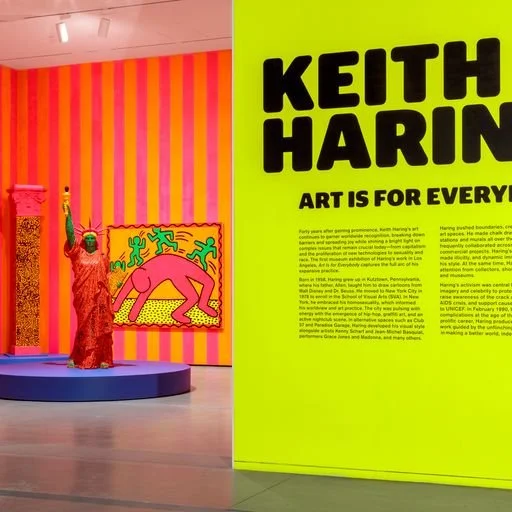
The legacy of Keith Haring continues to thrive decades after his death, but many critics believe his work is losing its original meaning.
Haring’s bold, energetic figures now appear everywhere—from fashion collections to retail stores. Major brands like H&M and Uniqlo regularly feature his designs on clothing, making his art widely accessible to a global audience.
Supporters argue that this exposure aligns with Haring’s belief that art should be for everyone. Through the Keith Haring Foundation, licensing deals also fund charitable initiatives. The foundation supports programs focused on children and raises awareness about HIV/AIDS—a cause deeply connected to Haring’s life and activism.
However, critics say commercialization has stripped away important context. Some collaborations highlight the colorful visuals but avoid mentioning Haring’s identity, activism, and the social issues he addressed. This selective storytelling has raised concerns that his work is being “sanitised” for broader appeal.
The debate intensified when a jewelry collection inspired by Haring’s art faced backlash for omitting references to his advocacy work. Critics argued that removing this context weakens the cultural and historical significance of his creations.
Despite this, the foundation maintains that its ongoing charitable work reflects Haring’s mission. It continues to support communities affected by HIV/AIDS and vulnerable youth, keeping his activist spirit alive beyond commercial partnerships.
As Haring’s art reaches new audiences, the challenge remains clear: how to balance accessibility with authenticity while preserving the powerful messages behind his work.