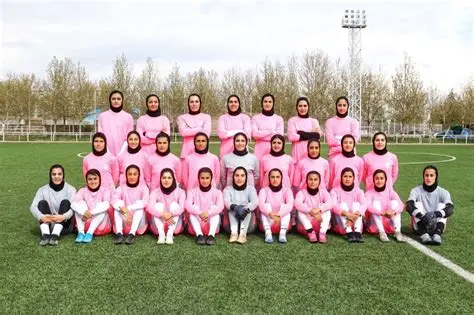
Iran Women’s Football Team Lauded as Heroes for Anthem Silence
The Iran women’s football team became one of the most powerful symbols of the 2026 AFC Women’s Asian Cup after every player stood silently during the national anthem before their opening match against South Korea on 2 March. What lasted only a few seconds quickly became much bigger than football.
The silence came less than 48 hours after US and Israeli strikes on Iran began on 28 February, during a period of war, political repression and deep uncertainty inside the country. Former Iran men’s head coach Afshin Ghotbi later described the players as “heroes,” arguing that athletes should never have to decide how to display political loyalty before they can simply play a match.
The story did not end with the anthem. Iranian state television condemned the players, fears grew about what might happen when the squad returned home, Australian officials quietly offered protection, and several members of the delegation accepted humanitarian visas. Months later, two players who ultimately stayed in Australia — Fatemeh Pasandideh and Atefeh Ramezanisadeh — were granted Australian citizenship.
That later development changes how the original moment should now be understood. The Iran women’s football team did not simply produce a one-night protest. Their silence triggered a chain of events involving sport, asylum, state pressure, family risk and the right of athletes to make personal choices under extraordinary circumstances.
1. Why the Iran Women’s Football Team Stayed Silent
The Iran women’s football team lined up before South Korea at Gold Coast Stadium and did not sing. The players stood facing forward while the anthem played, but there was no visible singing.
The match ended in a 3-0 defeat, yet the pre-match moment dominated international attention. The silence was widely interpreted as an act of protest or mourning, although the players themselves did not publicly provide a unified political explanation immediately after the game.
That caution matters. In highly controlled sporting environments, silence can carry several meanings at once. It can represent grief, dissent, solidarity or simply a refusal to perform state loyalty. Journalists should therefore avoid placing words in the players’ mouths that they did not say themselves.
Still, the context made the symbolism difficult to ignore. The Iran women’s football team arrived in Australia after months of domestic unrest and just as the country entered a new military crisis. The News Ink’s report on US and Israeli strikes on Iran explains the wartime setting that made the anthem moment so politically sensitive.
Human Rights Activists in Iran later documented 7,007 total fatalities during the first 50 days of protests beginning on 28 December 2025. The organisation’s figure included protesters, children, other civilians and government or military personnel, rather than 7,000 protesters alone. Severe communications restrictions complicated independent verification throughout the crackdown.
2. Afshin Ghotbi Called the Players “Heroes”
Former Iran men’s national team coach Afshin Ghotbi gave the anthem silence its most memorable description.
Speaking to BBC Sport in March, he said the women had become symbolic and had become “heroes.” His concern was not only the political message. It was the emotional burden placed on athletes who were trying to compete while knowing that every gesture before kickoff could be judged at home and abroad.
Ghotbi, who coached Iran between 2009 and 2011, compared the situation with the dilemma faced by the men’s national team at the 2022 World Cup in Qatar. During that tournament, Iranian players also faced intense scrutiny over whether they sang the anthem and how they responded to protests at home.
The underlying problem was the same: athletes were being asked to communicate political allegiance through body language before a football match.
For the Iran women’s football team, the stakes were even higher because the controversy unfolded during wartime and after a major domestic crackdown. Ghotbi argued that the players deserved the basic freedom to live their own lives rather than become tools for governments, movements or political campaigns.
His remarks helped shift international coverage away from the question of whether the players had “disrespected” an anthem and toward a more important question: what level of choice did they actually have?
The News Ink’s football guide explains how national-team football can carry identity and political meaning far beyond the result on the pitch. This case became an unusually clear example.
3. Why the Iran Women’s Football Team Sang in Later Matches
The Iran women’s football team took a visibly different approach in their next two matches.
Before facing host nation Australia, the players sang the anthem and saluted. They did the same before their final group game against the Philippines. The contrast with the South Korea match immediately fuelled speculation that officials accompanying the team had pressured them to change their behaviour.
There was strong reason for concern, but direct claims of coercion should be handled carefully unless supported by verified evidence. The Guardian reported allegations that players were closely monitored, while activists and journalists raised concerns about pressure on the athletes and relatives in Iran.
A state television presenter then called the players “wartime traitors” and argued that they should face more severe treatment because the country was at war. Reuters and The Guardian independently reported the comments.
That language dramatically raised the stakes.
In an ordinary sports controversy, refusing to sing might lead to criticism from supporters or federation officials. During war, being described publicly as a traitor can carry a much more serious meaning. Australian refugee advocates argued that the players could face persecution if they returned.
Iran lost 4-0 to Australia and then 2-0 to the Philippines, ending its tournament without a point. Yet by the time the squad was eliminated, the results mattered far less than the question of what would happen next.
The News Ink’s report on sexism in football provides broader context for the pressures women athletes face. In Iran, those pressures can overlap with state rules, security concerns and restrictions on public expression.
4. Why the Iran Women’s Football Team Faced a “Wartime Traitors” Backlash
The most serious moment came when Iranian state television host Mohammad Reza Shahbazi condemned the Iran women’s football team for the anthem silence.
He described the players as traitors during wartime and called for severe consequences. The comments spread quickly outside Iran and prompted calls for the Australian government to protect the squad.
The label mattered because it moved the issue beyond football discipline. Supporters and human-rights advocates feared the players could face interrogation, punishment or pressure if they returned to Iran.
Australian Foreign Minister Penny Wong publicly expressed support for the Iranian people and women’s rights. Refugee organisations said players should be given private access to Australian officials so they could make decisions without team minders or political pressure.
The atmosphere intensified after Iran’s elimination. Protesters gathered around the team bus chanting “Save our girls.” Some players were seen making what observers interpreted as an international hand signal for help, although the intentions of individual players could not be independently confirmed.
The situation became highly sensitive. Australian officials had to offer protection without turning the players into political trophies of their own.
5. How the Iran Women’s Football Team Reached the Humanitarian Visa Crisis
The first major breakthrough came when five members of the Iran women’s football team accepted Australian humanitarian visas.
Those five were Zahra Sarbali Alishah, Mona Hamoudi, captain Zahra Ghanbari, Fatemeh Pasandideh and Atefeh Ramezanisadeh. Australian authorities moved them to a secure location, and Prime Minister Anthony Albanese said they were safe and welcome in the country.
The News Ink previously covered the full humanitarian visa operation, including the role of Australian Federal Police and Home Affairs Minister Tony Burke.
The story then became more complicated.
On 11 March, Burke confirmed that another player and one support person from the Iranian delegation had told officials they wanted to accept the same offer. They were separated from the group with police assistance and given humanitarian visas with a pathway toward permanent status. At that point, seven members of the delegation had accepted Australia’s protection.
But not everyone who initially accepted protection ultimately remained.
Australian authorities repeatedly acknowledged that players were making decisions in an extraordinary context involving families still in Iran. On 15 March, Burke said three members had decided to rejoin the group travelling back to Iran. Later reporting showed that additional members also returned.
By August, the lasting outcome was clear: Fatemeh Pasandideh and Atefeh Ramezanisadeh were the two players who remained in Australia.
This is an important correction to early versions of the story. Saying simply that “five players stayed in Australia” is no longer accurate as the final outcome.
6. Two Iran Women’s Football Team Players Later Became Australian Citizens
The story of the Iran women’s football team took another major turn on 6 August 2026.
Fatemeh Pasandideh and Atefeh Ramezanisadeh were granted Australian citizenship at a ceremony in Brisbane attended by Home Affairs Minister Tony Burke and members of the local Iranian community.
Both had remained in Australia after the Asian Cup and later joined Brisbane Roar. The two players described their new citizenship as a source of pride and gratitude.
Their citizenship process moved unusually quickly compared with the ordinary Australian residence pathway. Australian authorities did not publicly give a detailed case-by-case explanation for the expedited timeline.
Their new status does not erase the choices made by teammates who returned to Iran. Those players faced different family circumstances, risks and pressures. It would be unfair to divide the Iran women’s football team into “brave” players who stayed and others who somehow failed by returning.
The Australian government itself recognised that distinction. Officials said they could provide genuine choices but could not remove the circumstances in which those choices were being made.
That is one of the most important lessons from the case.
7. Why This Story Became Bigger Than Football
The Iran women’s football team entered the Asian Cup as athletes. Within days, they became symbols in a conflict involving women’s rights, war, nationalism, asylum and political freedom.
That transformation was not necessarily something the players asked for.
National teams often carry a heavy symbolic burden because they compete under flags and anthems. Governments use sporting success to project unity. Opposition movements may look to athletes for public acts of resistance. Fans can demand gestures of loyalty or protest.
The athlete is caught in the middle.
Ghotbi’s central argument was that the women should be allowed to live freely rather than be forced into someone else’s political narrative. That remains relevant even when people strongly support the anthem silence.
The moment can be admired without claiming ownership over the players.
This is especially important in the Iranian context. Women athletes have long navigated restrictions on dress, travel, training, media appearances and public expression. International competition can provide visibility and opportunity, but it can also increase scrutiny.
For the Iran women’s football team, the Asian Cup showed both sides of that reality. The tournament gave them a global stage. That same stage made a few seconds of silence impossible to ignore.
What Happened to the Rest of the Iran Women’s Football Team?
Most members of the Iran women’s football team ultimately returned to Iran.
Iranian officials presented their return as proof that the players had rejected foreign pressure. State-linked media organised public welcomes, and the Iranian Football Federation praised the squad.
That official narrative did not answer all the concerns raised in Australia. Rights organisations and athletes’ advocates have documented pressure on Iranian athletes and their relatives when competitors defect or make politically sensitive statements.
At the same time, it is important not to claim punishment without evidence. Public reporting has not established that every returning player was arrested or prosecuted because of the anthem incident.
The responsible conclusion is narrower: credible concerns existed, government-aligned voices made threatening public statements, and some players sought protection because they feared returning. Those facts alone explain why the Australian government treated the case seriously.
The wider conflict also disrupted sport across the region. The News Ink’s coverage of how the Iran conflict disrupted global travel shows how athletes, airlines and international events were affected far beyond the battlefield.
Why the Iran Women’s Football Team Echoed the 2022 Men’s World Cup
Ghotbi’s comparison with Iran’s men’s team at the 2022 World Cup helps explain why anthem behaviour carries unusual political weight.
Before Iran’s opening match against England in Qatar, the men stood silently during the national anthem amid nationwide protests following the death of Mahsa Amini. In later matches, some players appeared to sing.
The reaction showed the impossible position of national-team athletes. One audience sees silence as courage. Another sees it as betrayal. Singing can be interpreted as support for the government even when a player may simply be trying to avoid consequences.
The Iran women’s football team faced a similar dilemma in 2026, but with additional wartime pressure.
The comparison also shows why body language should not be over-interpreted. Players may act because of personal conviction, team discussions, federation instructions, concern for family members or some combination of all four.
A camera captures the gesture. It cannot capture every reason behind it.
The Protest Context Around the Iran Women’s Football Team
The original version of this story referred to at least 7,000 protesters being killed during anti-government protests in December and January.
That figure needs more precise wording.
Human Rights Activists in Iran documented 7,007 total fatalities in its report covering the first 50 days of the protests that began on 28 December 2025. Its breakdown included 6,488 protesters, 23 children counted separately, 76 non-protester civilians and 207 military or government personnel.
The total therefore should not be described simply as “7,000 protesters killed.”
The distinction does not reduce the seriousness of the crackdown. Amnesty International and Human Rights Watch independently documented unlawful lethal force, shootings and mass arrests, while internet restrictions made verification exceptionally difficult.
Accurate numbers matter precisely because the underlying subject is so serious.
Why Afshin Ghotbi Called the Iran Women’s Football Team “Heroes”
When Ghotbi called the Iran women’s football team heroes, he was not presenting a tactical football argument. He was talking about the human cost of being an Iranian athlete during political crisis.
He spoke emotionally about the unfairness of players having to calculate every expression before a match. His message was that people deserved freedom, dignity and the ability to decide who they wanted to be.
That interpretation is more useful than reducing the story to a patriotic argument over whether an anthem should be sung.
The players’ silence mattered because it revealed how little separation can exist between sport and state power. The later humanitarian visa drama made that pressure visible to a global audience.
And the August citizenship decision ensured the story did not disappear after the Asian Cup ended.
The Bottom Line on the Iran Women’s Football Team
The Iran women’s football team became international symbols after standing silently during the national anthem before facing South Korea on 2 March 2026.
Former Iran coach Afshin Ghotbi called the players heroes and said they deserved the freedom to live their own lives. Their actions were followed by hostile commentary on Iranian state television, concern from human-rights advocates and an extraordinary Australian government intervention.
Five players initially received humanitarian visas, and another player and support staff member later accepted the same offer. Several subsequently chose to return to Iran. By August, Fatemeh Pasandideh and Atefeh Ramezanisadeh were the two players who had remained in Australia, and both were granted Australian citizenship.
That updated timeline matters. It shows that the anthem silence was only the beginning.
The lasting story is about choice under pressure. Some members of the Iran women’s football team stayed. Others returned. Every decision was made against the background of war, family risk and intense political scrutiny.
Calling the players heroes captures the courage many people saw in their silence. Respecting them also means recognising that their lives are more complicated than one symbolic moment before kickoff.
For more football and global sports coverage, follow The News Ink on X.