



Sign In
The News Ink
  • Technology
  • Anime
  • Sports
  • Business
  • Beauty & Fashion
  • Daily News
  • More
    • Lifestyle
    • Bizarre
    • Current Affairs
    • Entertainment
    • Health
    • Opinion
    • Science
    • Travel
Reading: India’s Supreme Court Allows Removal of Life Support in Landmark Passive Euthanasia Case
Share
The News InkThe News Ink
Font ResizerAa
  • Travel
  • Opinion
  • Science
  • Technology
  • Beauty & Fashion
Search
  • Home
    • Home 1
    • Home 2
    • Home 3
    • Home 4
    • Home 5
  • Categories
    • Technology
    • Opinion
    • Travel
    • Beauty & Fashion
    • Science
    • Health
  • Bookmarks
  • More Foxiz
    • Sitemap
Have an existing account? Sign In
Follow US
© 2022 Foxiz News Network. Ruby Design Company. All Rights Reserved.
The News Ink > Blog > Current Affairs > India’s Supreme Court Allows Removal of Life Support in Landmark Passive Euthanasia Case
Current Affairs

India’s Supreme Court Allows Removal of Life Support in Landmark Passive Euthanasia Case

Dowry Lane
Last updated: March 11, 2026 6:56 pm
Dowry Lane
Share
Harish Rana’s mother caring for him while he lies in bed in a vegetative state
Harish Rana’s mother sits beside her son, who has been in a vegetative state since 2013.
SHARE

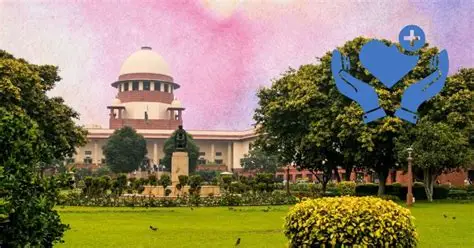
In a landmark decision, the Supreme Court of India has allowed the withdrawal of life support for a 31-year-old man who has remained in a vegetative state for more than ten years.

Contents
A Decade in a Vegetative StateFamily’s Long Legal BattleIndia’s Passive Euthanasia LawAbsence of a Living WillMedical Boards’ AssessmentEthical Debate in India

The ruling marks the first time a court in India has approved passive euthanasia in such a case.

A Decade in a Vegetative State

The patient, Harish Rana, suffered severe head injuries after falling from a fourth-floor balcony in 2013. At the time, he was an engineering student at Punjab University.

Since the accident, Rana has remained in a coma-like condition. Doctors say he cannot speak, see, hear, or recognise anyone.

He breathes through a tracheostomy tube and receives food through a gastrostomy tube. His parents have cared for him since the accident.

Family’s Long Legal Battle

Rana’s parents approached courts several times over the years. They requested permission to remove life support for their son.

They told local media that they had spent all their savings on his care. They also worried about who would look after him after their death.

Rana’s father, Ashok Rana, thanked the court after the ruling.

“This was a very difficult decision for our family. But we believe it is the best decision for Harish,” he said.

India’s Passive Euthanasia Law

India legalised passive euthanasia in 2018. However, active euthanasia remains illegal.

Passive euthanasia allows doctors to withdraw or withhold life-sustaining treatment in certain situations. Active euthanasia involves intentionally causing a person’s death and is prohibited under Indian law.

A key element of passive euthanasia is a living will. This document allows adults to state their medical preferences if they become terminally ill or unable to communicate.

For example, a person can specify that they do not want to be kept alive on life-support machines.

Absence of a Living Will

In Rana’s case, no living will existed because he was unconscious immediately after the accident.

Because he could not express his wishes, the courts had to rely on medical evaluations.

Judges noted that Rana shows sleep-wake cycles but does not interact meaningfully with others. He also depends entirely on caregivers for daily activities.

Medical Boards’ Assessment

Two medical boards examined Rana’s condition before the final decision.

Doctors concluded that he had permanent brain damage and almost no chance of recovery. They also reported serious complications such as severe bed sores.

Under Indian law, medical boards must confirm that a patient meets strict conditions before life support can be withdrawn.

The Supreme Court’s order now allows doctors to use their clinical judgement to withdraw treatment.

Ethical Debate in India

Rana’s case has sparked debate across India.

Some experts argue that allowing passive euthanasia without a living will raises ethical questions about personal choice.

Others believe the decision respects the dignity of patients who have no hope of recovery.

The ruling is expected to influence future cases involving end-of-life care and medical ethics in India.

Subscribe to Our Newsletter

Subscribe to our newsletter to get our newest articles instantly!

[mc4wp_form]
TAGGED:India’s Supreme Court Allows Removal of Life Support in Landmark Passive Euthanasia Case
Share This Article
Twitter Email Copy Link Print
Previous Article US soldier patrolling a street during the Iraq War Trump’s Call for Iran Uprising Revives Lessons from the 1991 Iraq Rebellion
Next Article Palestinian villagers stand near the site where a man was killed during a settler attack in the West Bank. EU and UK Urge Israel to Stop Rising Settler Violence in the West Bank
Leave a comment

Leave a Reply Cancel reply

You must be logged in to post a comment.

Editor's Pick

Hot News

US jobs report April 2026 Bureau of Labor Statistics employment data

US Jobs Report April 2026: Economy Beats Forecasts for Second Straight Month as Labour Market Holds Firm

The US jobs report April 2026 delivered another positive surprise…

May 9, 2026

Carvana’s 5-for-1 Stock Split: What Investors Need to Know About CVNA Shares

Carvana’s 5-for-1 Stock Split Explained: What…

May 9, 2026

Stock Market Movers: Rocket Lab, Akamai, Block and AI Plays Drive Friday’s Biggest Gains

Stock Market Movers Friday: AI and…

May 8, 2026

DRAM ETF Ignites: $1B Daily Haul Fuels AI Memory Mania

Roundhill Memory ETF Skyrockets with $1…

May 8, 2026

AMD Stock Surge Highlights Growing Demand for AI Chips as Investors Hunt for Undervalued Semiconductor Plays

AMD Revenue Surge Signals New Phase…

May 8, 2026

You Might Also Like

Russia Ukraine three-day ceasefire 2026 Trump announcement Victory Day
Current Affairs

Russia Ukraine Three-Day Ceasefire 2026: Trump Secures Truce and 1,000-Prisoner Swap as Victory Day Tensions Peak

The Russia Ukraine three-day ceasefire 2026 became reality on Saturday after US President Donald Trump announced a temporary truce between…

15 Min Read
US Iran ceasefire deal 2026 Strait of Hormuz diplomatic negotiations Marco Rubio
Current Affairs

US Iran Ceasefire Deal 2026: Rubio Waits for Tehran’s Answer as Hormuz Violence and Diplomacy Run in Parallel

The US Iran ceasefire deal 2026 remains uncertain and deeply fragile after US Secretary of State Marco Rubio confirmed on…

12 Min Read
Israel Beirut strike 2026 aftermath of Israeli airstrike on Lebanese capital
Current Affairs

Israel Beirut Strike 2026: 31 Dead and 149 Injured as Regional Conflict Escalates Following Hezbollah Attack

The Israel Beirut strike 2026 has killed at least 31 people and injured 149 others after Israeli jets bombed Lebanon's…

13 Min Read
Iranian Foreign Minister Abbas Araghchi speaks as tensions rise between Iran and the United States in the Strait of Hormuz.
Current Affairs

Iran Condemns US Escalation as Strait of Hormuz Tensions Threaten Fragile Ceasefire

Iran Accuses US of Escalating Conflict as Strait of Hormuz Crisis Deepens Tensions between Iran and the United States intensified…

10 Min Read
The News Ink

Categories

  • Anime
  • Beauty & Fashion
  • Bizarre
  • Business
  • Current Affairs

Explore

  • Daily News
  • Entertainment
  • Health
  • Lifestyle
  • Opinion

More

  • Science
  • Sports
  • Technology
  • Travel

Legal Docs

  • Home
  • About Us
  • Contact
  • Blog
  • Privacy Policy
  • Terms and Conditions

© The News Ink. All Rights Reserved.

Go to mobile version
Welcome Back!

Sign in to your account

Register Lost your password?