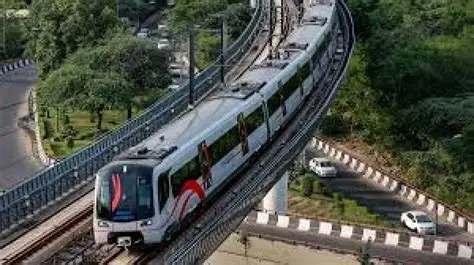
India has invested heavily in building modern metro rail systems, but many of these networks are failing to attract the expected number of commuters. Despite rapid expansion and advanced infrastructure, ridership in several cities remains far below projections.
In Mumbai, the newly launched Aqua Line offers a clear example of this issue. During peak evening hours, trains often run with fewer passengers than expected. By the time the train reaches its final stops, coaches appear nearly empty—an unusual sight in one of the world’s most densely populated cities.
The Aqua Line is a fully underground metro corridor connecting key areas such as Cuffe Parade, Bandra-Kurla Complex, and the airport zones in the northern suburbs. Authorities expected the 33.5 km route to carry around 1.5 million passengers daily. However, current estimates suggest it serves only a fraction of that number.
Cost remains a major concern for commuters. Many passengers find ticket prices too high compared to other forms of public transport, making the metro a less attractive option.
This trend is not limited to Mumbai. Across India, metro systems are expanding rapidly, but usage often falls short of expectations. Since 2014, the government has invested over $26 billion to develop metro networks in nearly two dozen cities. The total network has grown from under 300 km to more than 1,000 km by 2025.
While overall ridership has increased nationwide, the numbers hide deeper challenges. Studies show that many metro lines operate at only 25–35% of their projected capacity. In some smaller cities, usage rates are even lower.
For example, cities like Kanpur have reported extremely low ridership levels, while larger cities such as Chennai have achieved only moderate success. Similarly, metro systems in Pune and Nagpur show usage levels ranging between 20% and 50% of their targets.
The only major exception appears to be Delhi, where the metro network performs closer to expectations. However, experts point out that the counting method—where interchanges are recorded as separate trips—may inflate ridership figures.
Urban transport experts highlight several reasons for the low adoption rates. These include high ticket prices, limited last-mile connectivity, and a lack of integration with other transport systems. Without convenient access to stations, many commuters prefer traditional options such as buses, auto-rickshaws, or personal vehicles.
The gap between planning and reality raises important questions about the long-term sustainability of these projects. While metro systems aim to reduce traffic congestion and pollution, their success depends on consistent and widespread usage.