Global financial markets remain unstable as the war involving the United States, Israel and Iran continues. Investors fear the conflict could disrupt energy supplies and push prices higher.
On Wednesday, stock markets in the US, Europe and the UK showed some recovery after two days of sharp losses. The FTSE 100 index in London and major US and European indexes moved higher.
However, several Asian markets continued to fall for a third straight day as uncertainty spread across the region.
Energy prices remain the main concern. Oil and gas prices dropped slightly on Wednesday but stayed far above the levels seen before the conflict began.
The rise comes as shipping traffic has nearly stopped through the strategic Strait of Hormuz. This narrow waterway lies between Iran and the United Arab Emirates and carries about one-fifth of the world’s oil and gas supply.
Iran has threatened to attack ships passing through the strait. As a result, many tankers remain stranded and shipping insurance costs have surged.
According to shipping data from Lloyd’s List Intelligence, around 200 oil tankers are currently unable to move through the area.
Oil prices have reacted quickly. The global benchmark Brent crude has jumped by about 12% since the US and Israel launched strikes on Iran.
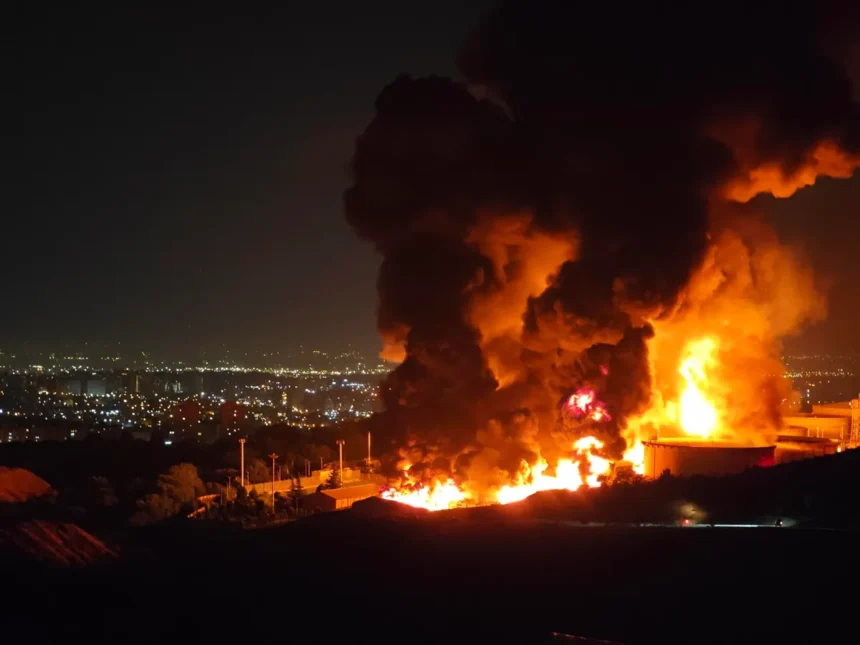
Energy infrastructure has also faced threats. Saudi Arabia reported a drone attack attempt on the Ras Tanura oil refinery earlier this week. Meanwhile, state energy giant QatarEnergy temporarily halted production of liquefied natural gas.
Gas prices in the UK have surged sharply since the conflict started. The benchmark price climbed more than 60% before closing at 128p per therm on Wednesday.
Economists warn that higher energy prices could push inflation higher.
David Miles from the Office for Budget Responsibility said the impact on prices could reach around 1% if energy costs stay high. However, he noted the increase is still smaller than the price surge that followed the Russian invasion of Ukraine in 2022.
Shipping companies remain cautious despite assurances from Donald Trump that the US Navy could protect oil tankers passing through the Strait of Hormuz.
Analysts believe companies may still avoid the route due to safety concerns.
Energy markets are also feeling pressure from Asia. Many countries in the region depend heavily on Middle East energy supplies.
Stock markets in South Korea and Thailand even halted trading briefly after their indexes dropped more than 8%.
Analysts say the suspension of LNG exports from Qatar could push prices higher in Asia.
Higher energy prices could also affect economic policy in the UK. Chancellor Rachel Reeves plans to meet North Sea energy companies to discuss the risks created by the conflict.
Economists warn that rising inflation may limit the chances of interest rate cuts from the Bank of England.
Markets previously expected the central bank to cut interest rates twice this year. However, analysts now say rising energy costs could delay those plans or even push rates higher again.
For now, investors remain cautious. Many experts believe market stability will only return once the conflict in the Middle East moves toward a peace agreement.