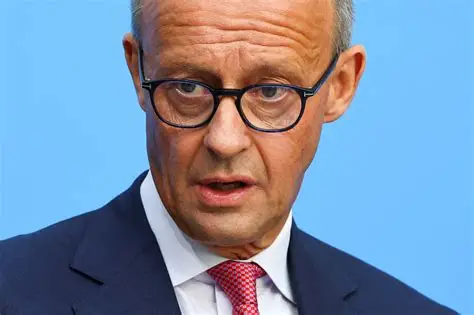
During his first official trip to Beijing, Germany’s Chancellor Friedrich Merz highlighted a growing trade imbalance with China, calling it “not healthy” for the German economy.
Last year, imports from China into Germany were more than double the value of German exports, according to federal statistics. Merz said he plans to explore ways “to reduce this trade deficit,” which has quadrupled over five years. He also urged Beijing to use its influence with Moscow to help end the war in Ukraine.
China remains Germany’s largest trading partner, overtaking the US in 2025. German imports from China reached €170.6bn (£148.8bn; $200.9bn), an 8.8% increase, while exports fell by 9.7% to €81.3bn. Experts warn that the gap threatens key industries, including automotive, machinery, and chemicals.
Jürgen Matthes from the German Economic Institute (IW) said Chinese subsidies and currency management give Beijing a pricing advantage that cannot be explained by efficiency alone. China has said its policies comply with international trade rules and maintains a managed floating exchange rate.
The trade imbalance is part of a broader “China shock,” influenced by the pandemic, rising European production costs, and Chinese overcapacity. Europe faces challenges balancing global trade, with the US also imposing tariffs in recent years.
Business groups urged Merz to address competitive distortions and export controls on critical materials. The Chancellor noted China will purchase up to 120 aircraft from Airbus, signaling opportunities for European firms while highlighting risks from over-dependence.
Merz emphasized that Germany seeks to strengthen partnerships but will protect its economic interests. He warned against full decoupling from China, calling it a mistake, while pursuing fair trade and balanced competition.