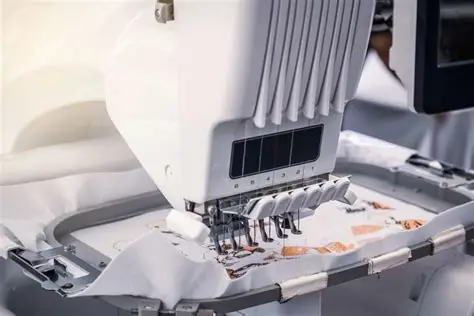
Garment Manufacturing Robots: How Machines Are Getting Ready to Make Your Next T-Shirt
Robots already build cars, assist surgeons, and move cargo across airports with precision and speed. But hand them a needle and thread, and the results fall apart — sometimes literally. That fundamental limitation has kept the global clothing industry almost entirely dependent on human hands for decades, with millions of low-paid workers across Asia stitching together the garments the world wears every day.
Now, a small group of robotics companies believes it has found a way to change that. Garment manufacturing robots are no longer just a distant concept — they are already producing women’s underwear, and t-shirts could follow within months. The question is no longer whether machines can make clothes. The question is whether they can do it at scale, at speed, and without putting millions of workers out of a job.
Why Clothing Has Resisted Automation for So Long
Almost every industry that involves repetitive, precision-based physical work has been transformed by automation in the past 30 years. Garment manufacturing is the striking exception.
The reason comes down to fabric itself. Unlike metal, plastic, or even food products, fabric is soft, flexible, and constantly shifting. It stretches, bunches, slips, and distorts the moment tension is applied — which makes the precise alignment that automated systems require extremely difficult to maintain.
“You have a problem if it’s sewing,” explains Cam Myers, founder and chief executive of California-based robotics company CreateMe. “You have to keep two pieces of fabric in alignment under motion.”
That challenge — maintaining perfect alignment between two moving pieces of soft material — has defeated most attempts at full garment automation for decades. Standard industrial robots that operate with millimetre precision on rigid components simply cannot adapt to the unpredictable behaviour of textile.
The result is a global industry that still looks, in many respects, like it did 50 years ago — labour-intensive, low-wage, and concentrated in countries where human workers are cheap enough to make the economics work.
The Adhesive Revolution: Forget Sewing, Just Glue
CreateMe has taken a fundamentally different approach to the automation problem. Rather than trying to teach robots to sew, the company has eliminated sewing from the process entirely.
“Forget sewing — glue the pieces of fabric together instead,” says Myers. “Once the adhesive is laid down, you simply line something over it and stamp.”
The process works by applying a thermoset adhesive along the seam lines of a garment. A robot then aligns the fabric pieces and presses them together. The result is a bond that holds through washing, ironing, and the general stresses of daily wear.
Myers is emphatic about the durability question that any adhesive-based garment immediately raises. The thermoset adhesive CreateMe uses cannot be broken down by standard washing machine temperatures or ironing heat, he insists. The bond is permanent under normal conditions of use.
What makes CreateMe’s approach significant:
- Robots can apply adhesive with high precision without needing to track flexible fabric under a moving needle
- Seam-free construction produces a streamlined garment with a cleaner silhouette
- Garments can be manufactured on moulds shaped to the contours of the human body, improving fit
- The process works with cotton, wool, and leather — not just synthetic fabrics
- CreateMe is already producing women’s underwear using this method commercially
- T-shirt production is set to begin within months, with mass production potentially following in 2027
The company already has customers seeking to market products as genuinely made in the United States, using domestically sourced cotton. Myers argues that even a modest shift in production could reshape the industry — if just 10% of t-shirt manufacturing returned to the US through automation, he says, that would represent a transformative change.
The Case for Keeping the Needle: Why Sewing Is Not Dead
Not everyone in the garment manufacturing robots space believes adhesive bonding is the answer. A competing school of thought insists that sewing itself can be automated — and that the stitch is too important to design or fashion to abandon.
“We do not believe that sewing is going away,” says Palaniswamy Rajan, chairman and chief executive of Softwear Automation, based in Georgia. He points to visible stitching as a fundamental design element in countless popular garments — most famously denim jeans, where the stitch pattern is as much aesthetic statement as structural necessity.
Rajan’s company is developing sewing robots capable of matching the cost of imported garments. He says Softwear Automation will soon announce the third generation of its sewing robot technology, which he claims will be able to produce a t-shirt at the same unit cost as importing one to the United States.
He declines to share specific technical details ahead of that announcement — but the claim, if it holds up, would mark a genuine milestone in garment manufacturing automation.
The debate between adhesive bonding and robotic sewing reflects a broader truth about the clothing industry: there is no single product type, no single material, and no single consumer expectation. Different garment categories may ultimately demand different automation approaches.
Bringing Clothes Manufacturing Back to the West
One of the most significant potential consequences of successful garment manufacturing robots is reshoring — the return of clothing production to countries in Europe and North America that largely lost their textile industries to low-wage competition over the past half century.
Today, just a few percent of clothes sold in the UK are made domestically. The situation in the United States is similar. Decades of offshoring have left both countries with minimal domestic garment manufacturing capacity, concentrated mainly in niche or luxury segments.
Automation changes the economics of that equation. If a robot can produce a t-shirt at the same cost as a factory worker in Bangladesh or Vietnam, geography and labour costs stop mattering. Production can move wherever the infrastructure, raw materials, and consumer markets are located.
What reshoring through automation could mean:
- Shorter supply chains that reduce shipping distances and associated carbon emissions
- Faster response to consumer demand, reducing overproduction and excess inventory
- Products marketed authentically as domestically made, appealing to a growing segment of ethically conscious consumers
- Reduced dependence on complex global supply chains vulnerable to geopolitical disruption
- New skilled jobs in robotics operation and maintenance, albeit fewer than the factory jobs replaced
The environmental dimension is particularly significant. The fashion industry is one of the largest polluters on the planet, with long supply chains, overproduction, and textile waste all contributing to a substantial environmental footprint. Automation-enabled reshoring could reduce shipping emissions and — if paired with on-demand production — dramatically cut the waste generated by unsold inventory.
The Challenge of Variety: Fashion Demands Flexibility
Even the most optimistic voices in the garment manufacturing robots sector acknowledge a fundamental challenge that no current technology has fully solved: fashion is infinitely variable.
Myers frames it plainly. A key challenge in apparel is that it is “high flex” — in other words, producing only white t-shirts gets you nowhere fast. Consumers expect vast arrays of styles, colours, fits, and designs. The more variable the product, the harder automation becomes.
Current garment robots — whether adhesive-based or sewing-based — are still optimised for high-volume, low-variation production runs. They can make the same item thousands of times efficiently. They cannot yet replicate the adaptability of a skilled human seamstress switching between product types, adjusting to different fabrics, or executing the intricate construction of a structured jacket or an embroidered dress.
Fully flexible garment automation — a robot that can make anything a human tailor can make — remains a long-term aspiration rather than a near-term reality.
What Happens to the Workers?
Any honest discussion of garment manufacturing robots must address the human cost. The global clothing industry employs tens of millions of workers, the vast majority of them women in South and Southeast Asia. Many earn wages that, while low by Western standards, represent meaningful income in their local economies.
If automation makes garment production viable in the US and UK again, the factories that currently employ those workers face a devastating competitive shift. The transition would not happen overnight, but its direction — if automation delivers on its promise — points toward significant displacement of the world’s largest remaining manual labour workforce.
The International Labour Organization has documented the pressures already facing Asian garment workers. Automation adds a new and potentially accelerating dimension to those pressures.
Key Takeaways
- Garment manufacturing robots are advancing rapidly, with two distinct approaches — adhesive bonding and robotic sewing — competing for dominance
- CreateMe already produces women’s underwear using adhesive robots and plans to begin t-shirt production within months
- Softwear Automation claims its next-generation sewing robot will match the cost of imported garments
- Successful automation could reshore clothing production to the US and UK, slashing supply chain emissions
- Fashion’s demand for variety remains the biggest unsolved technical challenge for garment robots
- Tens of millions of low-paid garment workers face long-term displacement if automation scales globally