Finn Allen Century: Why New Zealand’s Stunning 2026 Semi-Final Breakthrough Still Matters
Finn Allen century was not just a great innings. It was the night New Zealand tore through South Africa’s unbeaten campaign, rewrote T20 World Cup history and reached a final that had looked unlikely only a few days earlier.
The original article correctly focused on the immediate drama: Allen’s 100 not out from 33 balls, New Zealand’s nine-wicket win, and South Africa’s collapse under knockout pressure. But the tournament has now moved on, so the updated story needs the full arc. New Zealand reached the final in Ahmedabad, but India stopped them with a dominant 96-run win. That ending does not reduce the force of the semi-final. It makes the Finn Allen century stand out even more as one of the tournament’s most explosive individual performances.
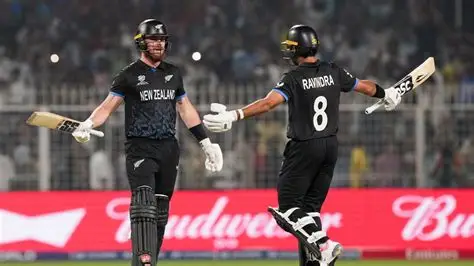
New Zealand chased 170 against South Africa at Eden Gardens in only 12.5 overs. They finished on 173-1, with 43 balls unused. Allen struck 10 fours and eight sixes. Tim Seifert made 58 from 33 balls, and the opening pair added 117 in 55 deliveries. By the time Seifert was bowled by Kagiso Rabada, the match had already been broken.
South Africa had entered the semi-final unbeaten. Aiden Markram’s side had dominated the Super Eight stage, beaten India, crushed West Indies and looked balanced enough to reach the final. Instead, the Finn Allen century turned their dream into another painful knockout exit.
For readers following The News Ink’s wider cricket coverage, this match is a perfect example of how T20 knockout cricket can change in one hour. South Africa had a strong tournament. New Zealand had a clean plan. Allen had the power to make every plan look simple.
How the Finn Allen century changed the semi-final
The Finn Allen century changed the match because it removed the normal tension of a semi-final chase. South Africa’s 169-8 was not a huge total, but it was not irrelevant either. On a used Eden Gardens surface, with South Africa’s pace attack and spin options, 170 could have become awkward if New Zealand lost early wickets.
Allen did not allow that possibility to breathe. He and Seifert took 84 runs from the powerplay. That one phase almost ended the contest. South Africa needed dots, pressure and at least two early wickets. Instead, they watched the ball disappear through cover, over midwicket and down the ground.
The Finn Allen century was brutal because it came with almost no pause. There was no long rebuilding period, no cautious start, no careful mid-innings calculation. New Zealand batted as if the target was far too small and South Africa’s attack had no right to settle.
By the seventh over, the chase had become less about whether New Zealand would win and more about how quickly Allen could finish it. That is rare in a World Cup semi-final. It is even rarer against an unbeaten team.
South Africa’s 169 looked competitive for only a moment
Before the chase, South Africa had at least given themselves something to defend. They were in trouble at 12-2 after Quinton de Kock and Ryan Rickelton fell inside the first two overs. They later slipped to 77-5, with Aiden Markram, David Miller and Dewald Brevis also gone.
Marco Jansen then rescued the innings. His unbeaten 55 from 30 balls gave South Africa hope. Tristan Stubbs made 29 from 24, and their 73-run partnership from 47 deliveries dragged the total to 169-8. Without Jansen, the match could have been over even earlier.
That late recovery gave South Africa a chance. It did not give them control. The Finn Allen century made the difference between a target that could be defended with pressure and a target that vanished under attack.
South Africa’s innings had already shown signs of anxiety. Their top order never looked comfortable. New Zealand used spin cleverly, with Cole McConchie taking two wickets in one over and Rachin Ravindra removing Markram and Miller. Matt Henry also struck late. South Africa’s 169 owed more to Jansen’s fight than to a complete batting performance.
Against ordinary chasing, that might have been enough. Against Allen, it was nowhere near enough.
Why Allen and Seifert worked so well together
The Finn Allen century was possible because Seifert gave New Zealand the perfect partner innings. Seifert’s 58 from 33 balls was not a quiet supporting role. He attacked hard enough to stop South Africa from focusing only on Allen.
The opening stand of 117 from 55 balls was the heart of the chase. Seifert scored 58 from 33 in that partnership. Allen scored 58 from 22 before the first wicket fell. That balance mattered. South Africa could not simply push fielders to Allen’s hitting zones and hope Seifert would slow down. Both openers were scoring too quickly.
Seifert’s tempo also gave Allen freedom. Allen later said batting with Seifert made the chase easier because his partner’s aggression kept pressure on the bowlers. That was clear from the way New Zealand used the powerplay. Seifert was not just rotating strike. He was driving the game forward.
The Finn Allen century became the headline, but the opening stand was the platform. In T20 cricket, even a record hundred usually needs a partner who keeps the innings from becoming one-dimensional. Seifert did that perfectly.
The fastest hundred in T20 World Cup history
The Finn Allen century now belongs in the record books. Allen reached three figures in 33 balls, the fastest hundred in men’s T20 World Cup history. The previous record belonged to Chris Gayle, who made a 47-ball century against England at Wankhede Stadium in 2016.
That is a huge gap. Beating a record by one or two balls is impressive. Beating it by 14 balls changes the scale of the achievement. Allen did not just edge ahead of Gayle. He created a new benchmark.
The innings also sits among the fastest men’s T20I centuries overall. Cricbuzz’s stats listed it as joint-third fastest in all men’s T20Is and the fastest against a full-member side. It was also New Zealand’s fastest T20I hundred, beating Glenn Phillips’ 46-ball century against West Indies in 2020.
The Finn Allen century had another statistical layer. His eight sixes were the most by a New Zealander in a T20 World Cup innings and the most by any player in a T20 World Cup knockout match. His 18 boundaries, 10 fours and eight sixes, matched the joint-highest boundary count in a T20 World Cup innings.
Those numbers explain why the match felt unreal. It was not only that Allen scored quickly. It was that he did so in a semi-final, under lights, against a team that had not lost all tournament.
The Jansen over that sealed the statement
The finish made the Finn Allen century even more memorable. Marco Jansen had been South Africa’s best batter, dragging his side to 169-8. But with the ball, he became the final victim of Allen’s assault.
Allen took Jansen apart in the 13th over. He moved into the 90s with huge blows, then finished the match with a boundary that completed his hundred and sent New Zealand into the final. The image was perfect for a knockout story: the player who had rescued South Africa’s innings watched the player of the match end South Africa’s tournament.
It also showed the emotional difference between the sides. New Zealand looked free. South Africa looked trapped. Every attempted plan seemed to feed Allen’s scoring options. Pace disappeared. Length disappeared. Slower balls disappeared. Even when South Africa tried to adjust, Allen was already waiting.
The Finn Allen century was not elegant in the old-fashioned sense. It was violent, clean and decisive. That is what modern T20 batting often rewards.
South Africa’s unbeaten run ended brutally
Before this match, South Africa had looked like one of the tournament’s strongest teams. Markram’s side had beaten India, West Indies and Zimbabwe in the Super Eight stage. Their nine-wicket win over West Indies, powered by Markram’s 82, made them look settled and dangerous.
That is why the semi-final defeat hurt so much. South Africa were not a struggling side that happened to reach the last four. They were unbeaten, balanced and confident. Then they were beaten with 43 balls to spare.
The Finn Allen century revived familiar South African heartbreak in ICC knockout cricket. It would be unfair to reduce their entire campaign to one bad night, but knockout tournaments are judged by endings. South Africa’s ending was brutal.
They had enough talent to reach the final. They had enough form to be favourites. But New Zealand won the toss, judged the conditions well, used spin effectively, and then attacked the chase with total clarity. South Africa never recovered from the first six overs.
New Zealand’s route to the final was not smooth
The Finn Allen century also changed how New Zealand’s tournament was remembered. Before the semi-final, they had not looked like an unstoppable finalist. Their Super Eight campaign was tense. They lost to England and needed Pakistan to fail to overtake them on net run-rate.
New Zealand’s 61-run win over Sri Lanka in Colombo became the key result that protected them. The News Ink covered that turning point in our report on Sri Lanka being knocked out by New Zealand. That margin gave the Black Caps enough cushion when Pakistan later beat Sri Lanka by only five runs.
In other words, New Zealand reached the semi-final by doing enough, not by dominating every week. Then came Allen. The Finn Allen century transformed a side that had survived the group race into a team that suddenly looked capable of winning the whole tournament.
That is one of the beauties of T20 cricket. A team does not always need a perfect campaign. It needs a route to the knockouts and one extraordinary night.
Santner’s captaincy deserves credit
The Finn Allen century will dominate memory, but Mitchell Santner’s captaincy also mattered. New Zealand won the toss and bowled first. On a surface that played slower in the first innings, that decision helped. New Zealand used spin early and often, and South Africa’s right-hand-heavy top order struggled to settle.
Santner’s own bowling figures were controlled rather than spectacular: four overs for 25. Ravindra and McConchie took important wickets. Henry and Ferguson provided seam support. New Zealand kept South Africa under pressure long enough that Jansen’s late hitting could only repair the innings, not transform it into a winning total.
Santner also kept the mood calm. South Africa’s late surge could have frustrated New Zealand. Instead, the chase began with purpose. Allen and Seifert played as if the dressing room knew 170 was gettable and wanted to win before pressure could return.
The Finn Allen century was an individual masterpiece, but the team environment allowed it to happen. Good captaincy often looks invisible when a batter makes the chase look easy.
Why South Africa’s bowling had no answers
South Africa’s attack had been one of their strengths, but it had no answer to Allen and Seifert. Jansen went for 53 in 2.5 overs. Corbin Bosch conceded 35 in two. Lungi Ngidi gave up 22 in two. Keshav Maharaj went for 33 in three. Rabada was the only wicket-taker, but even he could not slow the chase enough.
The problem was not only bad bowling. It was momentum. Once Allen and Seifert got ahead, every bowler entered the attack under pressure. A slightly full ball became a boundary. A slightly short ball became a six. A dot ball felt like temporary relief rather than control.
The Finn Allen century exposed the hardest part of defending in T20 cricket: when the batter is ahead of the match, the fielding side starts defending against memory as much as the next ball. Bowlers remember the previous boundary. Captains move fields for shots already played. The batter keeps changing angles.
South Africa’s body language showed that pressure. By the time Allen reached his hundred, the match had become a statement about power, confidence and how quickly a good attack can be overwhelmed.
What happened in the final
New Zealand carried huge momentum into the final, but the story did not finish with the trophy. India beat New Zealand by 96 runs at Ahmedabad’s Narendra Modi Stadium. India made 255-5, the highest total in a T20 World Cup final, and bowled New Zealand out for 159 in 19 overs.
The contrast was sharp. In Kolkata, the Finn Allen century made New Zealand look unstoppable. In Ahmedabad, India removed Allen early and put New Zealand under scoreboard pressure they could not escape. Tim Seifert made 52, but the chase never truly threatened India’s total. Jasprit Bumrah took 4-15 and was named player of the match.
India became the first team to defend the men’s T20 World Cup title successfully, the first host nation to win the tournament, and the first team to win it three times. The ICC’s final report underlined how completely India controlled the match.
That final result changes the article’s angle. New Zealand’s semi-final was historic, but the campaign ended one step short. The Finn Allen century became a legendary knockout innings, not a title-winning one.
Why the innings still matters despite the final defeat
The Finn Allen century still matters because cricket history is not only written by champions. Some innings live beyond the trophy because they change a match, break a record or create a memory that fans keep replaying.
Allen did all three. He ended South Africa’s unbeaten run. He scored the fastest hundred in men’s T20 World Cup history. He took New Zealand into another ICC final. He produced the highest score in a T20 World Cup knockout match.
New Zealand’s final defeat to India does not erase that. It only puts it in context. The Black Caps were beaten by a stronger team in Ahmedabad, but they had already produced one of the great knockout performances in Kolkata.
The Finn Allen century also matters for New Zealand’s future. It showed that Allen can dominate the highest stage, not just bilateral series or league cricket. It showed that New Zealand’s next white-ball generation has explosive match-winning power. And it showed that the Black Caps can still reach finals even after losing senior players and rebuilding parts of the side.
Key numbers from New Zealand vs South Africa
| Detail | Figure |
|---|---|
| Match | 1st semi-final, 2026 T20 World Cup |
| Venue | Eden Gardens, Kolkata |
| South Africa score | 169-8 |
| New Zealand score | 173-1 |
| Result | New Zealand won by nine wickets |
| Balls remaining | 43 |
| Finn Allen | 100 not out off 33 balls |
| Allen boundaries | 10 fours, 8 sixes |
| Tim Seifert | 58 off 33 balls |
| Opening stand | 117 from 55 balls |
| New Zealand powerplay | 84 runs |
| Marco Jansen | 55 not out off 30 balls |
| Jansen-Stubbs stand | 73 from 47 balls |
These numbers explain why the match felt so one-sided. South Africa’s total was not tiny, but New Zealand’s chase was so fast that the target looked outdated almost immediately.
The tactical lesson from the Finn Allen century
The biggest tactical lesson is that T20 semi-finals are no longer matches where teams can simply aim for a “competitive” total. South Africa reached 169, had an elite attack, and still lost by nine wickets inside 13 overs.
The Finn Allen century showed how modern batting has changed par scores. Once a team has batters who can sustain a strike rate above 250, the old idea of scoreboard pressure shifts. Bowlers need wickets, not only economy. Captains need attacking plans, not just boundary protection. Batting sides know that even 170 can be chased brutally if the powerplay goes right.
The innings also showed the value of intent after winning the toss. New Zealand did not see 170 as a tricky chase. They saw it as an opportunity to attack early before South Africa could settle. That attitude mattered as much as the shots.
The News Ink’s sports training and technology guide is relevant here because modern teams increasingly build plans around phases, matchups and power-hitting zones. Allen’s innings looked instinctive, but it also reflected preparation: hitting straight, adapting to black-soil conditions and using powerplay width.
The careful takeaway
Finn Allen century sent New Zealand into the 2026 T20 World Cup final with one of the most devastating knockout innings the tournament has ever seen. His 100 not out from 33 balls broke Chris Gayle’s record, ended South Africa’s unbeaten run and turned a semi-final chase into a 12.5-over demolition.
Seifert’s 58 gave New Zealand the perfect partner innings. Santner’s bowlers had set up the chase by keeping South Africa to 169-8 despite Jansen’s unbeaten 55. But the night belonged to Allen. He hit 10 fours, eight sixes and finished the match with the authority of a player who had taken control of history.
The final brought a harsher ending. India beat New Zealand by 96 runs in Ahmedabad and became the first side to defend the men’s T20 World Cup. That means Allen’s hundred did not lead to a trophy. It did, however, give New Zealand one of the great nights in their white-ball history.
The Finn Allen century remains a record, a statement and a reminder of how quickly T20 cricket can turn. South Africa learned that even an unbeaten campaign can disappear in one powerplay. New Zealand learned that one fearless opener can carry a team to the edge of glory.
For more cricket analysis, tournament updates and sports features, follow The News Ink on Medium.