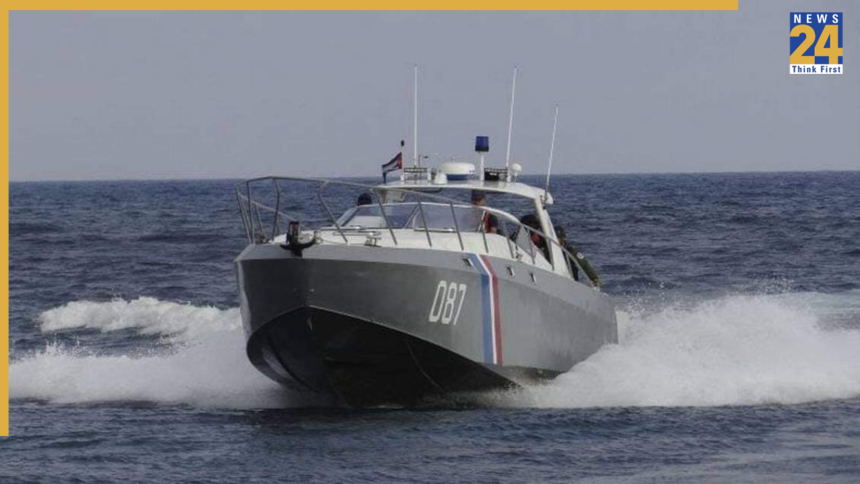
Cuba Speedboat Shootout: How an Alarming Maritime Clash Deepened US-Cuba Tensions
The Cuba speedboat shootout has become one of the most sensitive maritime incidents between Havana and Washington in years. Cuban authorities first said four people were killed and six wounded after a Florida-registered speedboat entered Cuban territorial waters near Cayo Falcones and opened fire on a Cuban patrol vessel. The death toll later rose to five after one of the wounded died from injuries.
The incident immediately raised difficult questions. Who was on the boat? Why did it enter Cuban waters? Who fired first? Were the people aboard carrying weapons for an armed operation, as Cuba alleged, or is there more to the story that still requires independent verification? The United States denied any government involvement and later sent an FBI technical team to Cuba to conduct its own investigation.
The Cuba speedboat shootout is not only a criminal or maritime-security story. It is also a diplomatic test between two governments already locked in deep hostility. Cuba framed the boat’s arrival as a terrorist infiltration attempt by exiles based in the United States. U.S. officials said they would not rely only on Havana’s account and wanted to verify the facts independently.
Editor’s update — June 2026: This article has been rebuilt after later developments. The original version reported four deaths, but Reuters later confirmed that Cuba announced a fifth casualty. The rewrite also includes terrorism charges, the FBI investigation and the continuing uncertainty around the full facts.
What Happened in the Cuba Speedboat Shootout?
According to Cuba’s Interior Ministry, the confrontation took place on February 25, 2026, near Cayo Falcones off the northern coast of Cuba. The ministry said a Florida-registered speedboat carrying 10 Cuban nationals who had been living in the United States entered Cuban territorial waters and was approached by a Cuban border patrol.
Cuba said the occupants of the speedboat opened fire first, wounding the commander of the Cuban patrol vessel. Cuban border forces then returned fire. Four people on the speedboat were initially reported killed, while six were wounded and taken into custody for medical treatment.
Reuters reported the first official version under the headline that Cuba said four exiles were killed after a speedboat from Florida entered Cuban waters and opened fire. The report also said Cuba claimed the group was dressed in camouflage and carrying assault rifles, handguns, homemade explosives, ballistic vests and telescopic sights. Read Reuters’ original report here: Cuba says it killed four exiles who attacked from Florida speedboat.
The Cuba speedboat shootout later became even more serious when Cuba said one of the wounded had died, raising the death toll to five.
Quick Facts About the Incident
| Detail | Information |
|---|---|
| Incident | Deadly maritime clash between Cuban border forces and a Florida-registered speedboat |
| Date | February 25, 2026 |
| Location | Near Cayo Falcones, off Cuba’s northern coast |
| Initial death toll | Four people aboard the speedboat |
| Later death toll | Five people, after one wounded person died |
| Wounded / detained | Initially six wounded; after one later died, five remained alive in Cuban custody |
| Cuban patrol injury | Cuba said the patrol commander was wounded |
| People aboard | Cuban nationals who had lived in the United States, according to Cuba |
| U.S. position | No U.S. government involvement, according to Marco Rubio |
| Later development | FBI technical team arrived in Cuba for independent investigation |
Why the Death Toll Changed
The Cuba speedboat shootout was first reported as a four-death incident. That was accurate at the time of the first official statements. The article now needs to reflect the later update.
Reuters reported on March 6 that Cuban authorities confirmed a fifth casualty. The person was identified as Roberto Alvarez Avila, who died on March 4 from injuries sustained in the confrontation. That update changed the casualty count from four killed and six wounded to five killed and five wounded.
This matters for accuracy. A headline based on the first day of the story can become outdated when one of the wounded later dies. The correct updated framing is that Cuba initially said four people were killed, but the death toll later rose to five.
The Cuba speedboat shootout should therefore be described as a five-death incident in the updated article, while still explaining that the first official report listed four deaths.
Cuba’s Allegations Against the Group
Cuba presented the people aboard the boat as part of an armed anti-government operation. Officials said the group intended to carry out “an infiltration for terrorist purposes” on Cuban soil.
According to Cuban authorities, weapons and equipment seized from the boat included rifles, pistols, ammunition, Molotov cocktails, ballistic protection, military-style clothing and communications equipment. Later reporting said Cuba alleged the group had nearly 13,000 rounds of ammunition, 13 rifles and 11 pistols.
Cuba also claimed some members of the group had been previously wanted in connection with violent plots. It identified several wounded detainees and said another Cuban national, Duniel Hernández Santos, had been arrested on land after allegedly coming from the United States to receive the group.
Those claims are serious, but they should be reported carefully. The Cuba speedboat shootout remains a case in which much of the first information came from the Cuban government. That does not mean the claims should be ignored, but they require independent verification where possible.
The Survivors Were Charged With Terrorism-Related Crimes
The legal phase began quickly. Cuban prosecutors formally charged six people with crimes of terrorism after the incident and ordered them held in pretrial detention.
Reuters reported on March 3 that prosecutors charged the six wounded survivors with terrorism-related crimes after Cuban forces killed four people and wounded six aboard the speedboat. Read the Reuters report here: Cuba charges six exiles with terrorism in speedboat attack.
The timing is important. The charges came before Cuba later confirmed that one of the wounded had died. That means the article should say six people were initially charged, while noting that the death toll later rose to five.
The Cuba speedboat shootout now sits in two tracks: the Cuban criminal process and the U.S. effort to verify what happened.
Rubio Denied U.S. Government Involvement
U.S. Secretary of State Marco Rubio said the speedboat incident was not a U.S. government operation and that no U.S. government personnel were involved. He also said Washington would seek its own information about what happened.
That denial was politically important because Cuban authorities framed the incident as an attack originating from the United States. Havana has a long history of accusing U.S.-based exile groups and U.S. policy of encouraging destabilising actions. Washington, meanwhile, rejected any official role and said it would not simply accept Cuban claims without verification.
The Cuba speedboat shootout therefore became a test of evidence. Cuba said it had weapons, detainee statements and a wounded patrol commander. U.S. officials said they needed independent confirmation before making decisions.
This distinction should remain central to the article. A responsible rewrite should not present Cuba’s version as fully proven, nor should it dismiss it without evidence. The correct approach is to state what Cuba alleges, what the United States denies and what remains under investigation.
FBI Investigators Later Arrived in Cuba
The strongest later update is the FBI visit. Reuters reported on April 1 that a technical team from the FBI had arrived in Cuba to begin an independent investigation. The U.S. Embassy in Havana said the visit was part of a “thorough and independent investigation” into the incident.
Reuters also quoted an embassy official saying the U.S. would verify Havana’s version of events and would not make decisions solely based on Cuban authorities’ claims. Read the Reuters update here: FBI arrives in Cuba to investigate deadly speedboat shootout.
The Associated Press separately reported that FBI agents had arrived to investigate the fatal shooting of five men aboard a U.S.-flagged speedboat. AP said the survivors faced criminal terrorism charges that could carry a life sentence and that Cuban officials had displayed weapons and equipment allegedly seized from the boat.
The FBI visit gives the Cuba speedboat shootout a rare investigative dimension. U.S. law enforcement access inside Cuba is politically sensitive, especially when the incident involves a U.S.-registered vessel and people who had lived in the United States.
Why Independent Verification Matters
The Cuba speedboat shootout involves competing political incentives.
Cuba has an incentive to present the incident as proof that hostile exile networks based in the United States are trying to destabilise the island. The United States has an incentive to deny official involvement and verify whether Cuba’s claims are accurate, exaggerated or incomplete.
Independent verification matters because several questions remain essential:
- Who owned and operated the Florida-registered vessel?
- How did the people aboard obtain weapons and ammunition?
- Did the speedboat enter Cuban territorial waters intentionally?
- Who fired first?
- What evidence supports Cuba’s terrorism allegations?
- Were any of the dead or detained U.S. citizens or permanent residents?
- Did any network inside or outside the United States support the operation?
- What happened to the surviving detainees after charges were filed?
Until those questions are answered through reliable evidence, the Cuba speedboat shootout should be treated as a developing legal and diplomatic case.
Why Cayo Falcones Matters
Cayo Falcones lies off Cuba’s northern coast, in waters facing the Florida Straits. The location matters because the sea route between Florida and Cuba has long been tied to migration, smuggling, exile politics and maritime patrols.
For decades, people have used boats to move between Cuba and Florida. Some journeys have involved migrants fleeing the island. Others have involved smugglers. A smaller number have involved politically motivated exile activity.
Cuba said the speedboat came within about one nautical mile of a channel near Cayo Falcones before the patrol approached it. If true, that would place the vessel deep inside a highly sensitive security area from Havana’s perspective.
The Cuba speedboat shootout therefore took place in a zone where maritime movement is rarely just a simple navigation issue. It can quickly become a national-security, migration and diplomatic matter.
Historical Echoes in US-Cuba Relations
The Cuba speedboat shootout revived memories of older confrontations between Cuba and U.S.-based exile groups.
The failed Bay of Pigs invasion in 1961 remains one of the defining events in the history of U.S.-Cuba hostility. Cuban authorities also frequently refer to sabotage plots and exile-linked activity from past decades. In 1996, Cuban forces shot down two Brothers to the Rescue aircraft, killing four people and triggering a major diplomatic rupture.
The 2026 incident is not identical to those events, and it should not be treated as automatically equivalent. But it sits inside the same long history of distrust. Cuba views armed exile activity as proof of external aggression. Many Cuban exiles view Havana’s government as illegitimate and oppressive. Washington often becomes the central actor, even when it denies direct involvement.
That is why the Cuba speedboat shootout carried such immediate diplomatic weight.
The Incident Came During Rising Tensions
The shooting took place during a period of sharply worsened U.S.-Cuba relations. Reuters and other outlets reported that tensions had increased after Washington escalated pressure on Cuba and Venezuela. Cuba’s energy and humanitarian crisis also formed part of the wider background.
In this atmosphere, any armed maritime clash risked becoming more than a local security event. It could be used by either side to justify tougher action, stronger rhetoric or new investigations.
The Cuba speedboat shootout therefore arrived at a dangerous moment. Cuba could frame it as evidence of hostile operations from U.S. territory. U.S. officials could frame Cuba’s account as something requiring independent scrutiny. Florida politicians demanded investigations and expressed deep mistrust of Havana’s version.
The result was a fast-moving story in which casualty figures, legal charges and diplomatic statements all developed within weeks.
What the U.S. Investigation Could Clarify
The FBI investigation could clarify facts that are difficult to establish from public statements alone.
Investigators may seek information about the boat’s registration, its departure point, communications, fuel, equipment, weapons, passengers and possible support networks. They may also examine whether U.S. laws were broken before the vessel left Florida.
The Cuba speedboat shootout may involve several legal questions on the U.S. side:
- whether the boat was lawfully possessed or stolen;
- whether weapons were illegally transported;
- whether any U.S.-based individuals financed or planned the journey;
- whether any passengers were U.S. citizens or lawful residents;
- whether U.S. neutrality or terrorism laws were implicated;
- whether Cuba’s account of the shooting sequence can be verified.
A final public conclusion had not been clearly established in the reliable sources checked for this rewrite. That uncertainty should remain visible.
What Cuba’s Case Could Mean for the Detainees
Cuba’s terrorism charges create serious legal exposure for the surviving detainees. AP reported that the survivors face criminal terrorism charges that could carry severe sentences, including life imprisonment.
The Cuban legal process will likely focus on whether the group intended to carry out armed actions, whether the weapons and equipment were connected to that purpose, and whether any detainee statements support the government’s case.
The Cuba speedboat shootout also raises due-process questions. International observers may watch whether the detainees receive access to defence lawyers, medical care, consular support where applicable and a transparent trial process.
Because the case is politically charged, those procedural details matter. A terrorism prosecution tied to U.S.-Cuba tensions will be judged not only by Havana’s claims but also by the fairness and transparency of the legal process.
Why the Boat’s U.S. Registration Is Important
The boat’s Florida registration does not automatically mean the U.S. government was involved. Civilian vessels can be registered in the United States and used without official approval.
However, the registration matters because it gives U.S. authorities a direct reason to investigate. If the vessel left from Florida, carried weapons, or was connected to people living in the United States, U.S. law enforcement may need to determine how that happened.
That is why Rubio’s denial and the FBI visit belong together. Washington denied official involvement, but it still needed to find out whether people or networks inside the United States played a role.
The Cuba speedboat shootout therefore became a test of U.S. enforcement as well as Cuban border security.
What Remains Unclear
Despite the public statements and later investigation, important points remain unclear.
Cuba has provided a detailed version of the incident, but much of that account comes from official Cuban sources. U.S. officials have said they want independent verification. Public reporting has not yet produced a complete, independently confirmed timeline of the gunfire.
It also remains unclear whether the detainees’ alleged statements were made freely, whether all seized weapons were independently examined, and what the FBI team concluded after its visit.
The Cuba speedboat shootout should therefore be written with caution. It is fair to say Cuba alleges an armed infiltration. It is fair to say U.S. officials denied government involvement. It is fair to say the death toll rose to five and terrorism charges were filed. It is not fair to claim that every disputed detail has been independently proven.
Timeline of the Cuba Speedboat Shootout
| Date | Development |
|---|---|
| February 25, 2026 | Cuba said a Florida-registered speedboat entered Cuban waters near Cayo Falcones and opened fire on a patrol vessel |
| February 25, 2026 | Cuba initially reported four killed and six wounded aboard the boat |
| February 25, 2026 | Marco Rubio denied U.S. government involvement and said Washington would investigate |
| March 3, 2026 | Cuban prosecutors charged six people with terrorism-related crimes |
| March 4, 2026 | Roberto Alvarez Avila died from injuries, according to later Cuban confirmation |
| March 6, 2026 | Reuters reported that Cuba had confirmed a fifth casualty |
| March 13, 2026 | Cuba said an FBI team would help investigate the incident |
| April 1, 2026 | Reuters reported that an FBI technical team had arrived in Cuba |
Final Takeaway
The Cuba speedboat shootout began as a deadly maritime confrontation and quickly became a major diplomatic incident. Cuba said armed exiles from the United States entered its waters, opened fire first and intended to carry out terrorist actions. The United States denied any government role and later sent the FBI to verify what happened independently.
The most important update is that the death toll rose from four to five. The legal stakes also grew after Cuban prosecutors filed terrorism-related charges. At the same time, unanswered questions remain about the boat, the weapons, the passengers, the shooting sequence and the results of the U.S. investigation.
The safest conclusion is balanced: the Cuba speedboat shootout was a serious armed incident in Cuban waters, but several key details still depend on ongoing investigations and evidence that has not been fully tested in public.
For more current-affairs coverage, follow The News Ink on Threads.