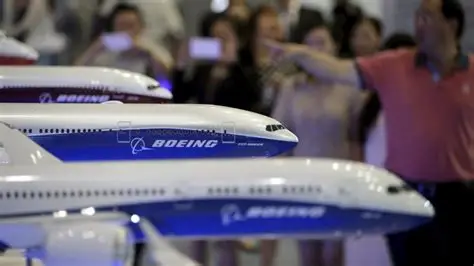
China Boeing 200 jets: 7 key takeaways from the Trump‑Xi summit
China Boeing 200 jets leads this report: during and after a high-profile meeting between U.S. President Donald Trump and Chinese President Xi Jinping, Chinese authorities confirmed an initial commitment to buy 200 Boeing commercial aircraft. The deal includes supply guarantees for engine parts and components and comes amid talks to extend a tariff truce and negotiate tariff reductions on selected goods. Below are seven key takeaways that explain the deal’s context, commercial implications, and geopolitical significance.
-
What the agreement covers
China confirmed it will buy 200 Boeing jets and the United States will provide supply guarantees for aircraft engines and components. The supply assurances aim to reduce concerns about service continuity and parts availability for American-made planes operating in the Chinese market. Boeing and U.S. officials described the order as an initial tranche, with further commitments possible. -
Timing and diplomatic context
The announcement followed a bilateral meeting between President Trump and President Xi in Beijing. The summit produced several commercial pledges and a broader effort to stabilize trade relations. The jet deal arrived alongside discussions about extending a tariff truce—originally negotiated months earlier—and pursuing tariff reductions on at least $30 billion worth of goods on each side. -
Commercial and market implications
-
Boeing: A multi-hundred-aircraft commitment would represent a major recovery for Boeing’s commercial sales in China, the world’s largest aviation market by passenger volumes. The initial 200-airplane commitment provides immediate order visibility and potential backlog growth.
-
Suppliers and MRO: Supply guarantees for engines and components will reassure suppliers and maintenance, repair, and overhaul (MRO) operators that long-term service agreements can proceed in China.
-
Competitors: The order shifts competitive dynamics with Airbus, which has held a strong presence in China. A sustained Boeing comeback could alter fleet planning for major Chinese carriers.
-
Tariffs and trade measures
Officials said both sides will work toward extending the tariff truce they agreed to previously and aim for mutual tariff cuts on at least $30 billion of goods. The tariff discussions include complex sectors and likely involve phased steps. Progress on tariffs can reduce immediate trade frictions, lower costs for some exporters, and set a calmer backdrop for further commercial deals. -
Broader geopolitical signals
The aircraft agreement signals a pragmatic turn in U.S.-China economic ties. High-level engagements with commercial outcomes suggest both governments see value in stabilizing trade and investment channels. The deal also surfaced amid other diplomatic activity, notably the Chinese president’s subsequent meetings with other global leaders, underscoring the multipronged nature of Beijing’s international outreach. -
What Boeing and U.S. officials say
Boeing described the initial commitment as a successful reopening of the Chinese market to its orders and said it expects further commitments to follow. Company leadership joined the U.S. delegation to China, underscoring the administration’s push to bring business goals into diplomatic talks. U.S. officials framed the guarantees and potential tariff adjustments as part of a broader effort to secure market access and predictability for American exporters. -
Risks and open questions
-
Formal contracts: An initial commitment differs from finalized purchase agreements that include delivery schedules, financing terms, and detailed contract clauses.
-
Regulatory approvals: Aircraft sales to Chinese carriers often require regulatory clearances and long-term maintenance agreements.
-
Supply-chain politics: While supply guarantees ease near-term concerns, long-term component sourcing and certification remain sensitive issues.
-
Geopolitical shifts: Further geopolitical tensions or policy shifts could disrupt the momentum behind large order flows.
Why the deal matters for airlines and passengers
For airlines, clearer access to Boeing jets expands fleet flexibility and may influence route planning and capacity growth. For passengers, the competition between aircraft manufacturers can drive cabin innovations and service improvements. A renewed pipeline of Boeing deliveries to China could accelerate fleet modernizations across Chinese carriers, improving fuel efficiency and passenger experience over time.
Economic implications
Large aircraft orders often translate into manufacturing and service jobs, export revenues, and strengthened supplier networks. For the United States, renewed aerospace exports support high-skilled jobs and domestic supply chains. For China, access to diverse aircraft types helps meet rising domestic travel demand and supports carrier growth strategies.
Practical next steps to watch
-
Contract signings and delivery timelines: Monitor announcements from carriers and Boeing for confirmed purchase agreements and aircraft delivery schedules.
-
Tariff negotiations: Watch for formal statements on tariff cuts and the scope of any agreed reductions.
-
Regulatory filings: Regulatory approvals for aircraft imports and maintenance certifications will indicate the deal’s practical progress.
-
Supplier agreements: Follow updates on engine-makers and spare-part suppliers securing long-term deals to service arriving aircraft.
Quick bullet summary
-
Deal: China confirmed an initial commitment to buy 200 Boeing jets with supply guarantees for parts.
-
Context: Announced after a Trump-Xi summit focused on trade normalization.
-
Tariffs: Both sides aim to extend a tariff truce and seek tariff cuts on at least $30 billion in goods each.
-
Market impact: Positive for Boeing, suppliers, and U.S. aerospace jobs; competitive for Airbus.
-
Risks: Initial commitment vs finalized contracts, regulatory approvals, and geopolitical uncertainty.