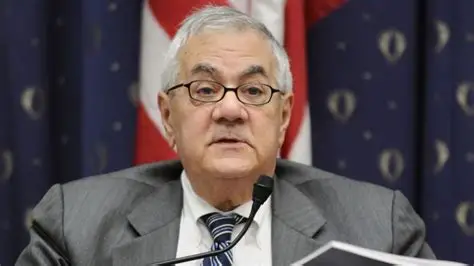
Barney Frank dies at 86, leaving behind a remarkable political legacy that shaped modern financial regulation, advanced LGBTQ rights, and redefined progressive leadership in the United States. The longtime Massachusetts congressman earned national recognition for his sharp political instincts, fearless public voice, and leading role in responding to the 2008 global financial crisis.
Family members confirmed that Frank died after battling congestive heart failure. He had entered hospice care earlier this year following ongoing health complications. Tributes quickly poured in from political leaders, activists, and former colleagues who praised his intelligence, humor, and decades of public service.
Frank spent more than 30 years in Congress and became one of the most influential Democratic lawmakers of his era. He played a central role in rewriting banking regulations after the collapse of major financial institutions in 2008. At the same time, he became a groundbreaking figure for LGBTQ representation in American politics.
H2: Barney Frank Dies at 86 After Historic Political Career
Barney Frank represented Massachusetts in the House of Representatives from 1981 until 2013. During that time, he developed a reputation as one of Capitol Hill’s most outspoken and intellectually aggressive lawmakers.
He rarely avoided political confrontation and often challenged opponents with direct arguments and quick wit. Supporters admired his honesty and command of policy details, while critics acknowledged his influence even when they disagreed with him.
Frank’s death marks the end of a political career that touched nearly every major debate surrounding banking reform, housing policy, civil rights, and government oversight.
Key Highlights of Barney Frank’s Career
- Served in Congress for over three decades
- Chaired the House Financial Services Committee
- Helped create major Wall Street reform laws
- Became the first openly gay member of Congress to come out voluntarily
- Supported marriage equality and LGBTQ protections
- Played a major role during the 2008 financial crisis
H2: Financial Crisis Elevated Barney Frank Into National Spotlight
The financial collapse of 2008 became one of the defining moments of Frank’s career. As chairman of the House Financial Services Committee, he helped guide Congress through one of the worst economic emergencies since the Great Depression.
Banks were collapsing, credit markets were freezing, and millions of Americans faced foreclosure. Frank pushed lawmakers to strengthen federal oversight and protect consumers from risky lending practices.
His name became permanently tied to the Dodd-Frank Wall Street Reform and Consumer Protection Act, one of the most sweeping financial reform laws in modern American history.
The legislation aimed to:
- Reduce risky behavior by large financial institutions
- Increase government oversight of banks
- Improve consumer financial protections
- Prevent future taxpayer-funded bailouts
- Increase transparency in financial markets
Supporters argued the law helped stabilize the financial system and reduced the chances of another catastrophic collapse. Critics claimed the regulations placed too many burdens on businesses and financial institutions.
Despite political disagreements, few questioned Frank’s influence during the crisis.
H2: Barney Frank Became a Trailblazer for LGBTQ Representation
Long before LGBTQ rights gained broad national support, Barney Frank openly acknowledged his sexuality during a difficult political period in the late 1980s.
At the time, the AIDS epidemic fueled discrimination and fear across the United States. Many political figures avoided discussing LGBTQ issues publicly. Frank chose a different path.
By publicly coming out in 1987, he became the highest-profile openly gay politician in Washington. His decision carried enormous political risks, yet he continued winning elections comfortably in Massachusetts.
Frank later admitted he wished he had spoken openly sooner because hiding his identity had become emotionally exhausting.
His visibility helped normalize LGBTQ representation in American politics and inspired younger politicians to enter public life openly.
H2: Barney Frank Strongly Supported Marriage Equality and Civil Rights
Throughout his career, Frank advocated for equal rights for LGBTQ Americans. He supported anti-discrimination protections, military inclusion, and marriage equality legislation.
He played a significant role in efforts to repeal the “Don’t Ask, Don’t Tell” military policy, which banned openly gay people from serving in the armed forces.
In another historic milestone, Frank became the first sitting member of Congress to marry a same-sex partner while still serving in office.
Supporters viewed his marriage as a powerful symbol of changing attitudes toward LGBTQ rights in America.
His advocacy helped move conversations about equality from the political margins into mainstream national debate.
H2: Barney Frank’s Sharp Political Style Defined His Public Image
Frank became famous for his fast responses, direct criticism, and sarcastic humor during congressional hearings and television interviews.
Unlike many politicians who carefully scripted their public appearances, Frank often spoke spontaneously and forcefully. Journalists regularly sought his opinions because he rarely delivered predictable answers.
His debating skills made him one of the most recognizable lawmakers in Washington.
Even political opponents respected his deep understanding of policy issues, especially financial regulation and housing markets.
Many younger lawmakers studied his committee performances as examples of effective political communication.
H2: Financial Reform Remains Barney Frank’s Lasting Legacy
Although Frank championed many causes, experts believe his greatest legislative achievement remains financial reform after the 2008 economic collapse.
The Dodd-Frank reforms reshaped how banks operated and created new oversight systems for major financial institutions.
Several parts of the law included:
H3: Consumer Protection Measures
The reforms created stronger protections for borrowers and consumers against deceptive lending practices.
H3: Oversight of Large Banks
Regulators gained broader authority to monitor institutions considered “too big to fail.”
H3: Financial Stability Rules
Banks faced stricter capital requirements and stress testing procedures.
The law remains politically controversial, but historians widely agree it permanently changed the structure of American banking regulation.
H2: Colleagues Remember Barney Frank’s Intelligence and Honesty
Political leaders across ideological lines praised Frank following news of his death.
Former colleagues described him as:
- Exceptionally intelligent
- Fearlessly outspoken
- Deeply committed to public service
- Passionate about fairness and equality
- Highly influential in economic policymaking
Many also remembered his humor and ability to simplify complex policy debates for ordinary Americans.
His supporters say he never avoided difficult conversations and consistently defended his positions with confidence.
H2: Barney Frank’s Influence Extended Beyond Congress
After retiring from Congress in 2013, Frank remained active in public discussions surrounding finance, politics, and civil rights.
He frequently appeared at universities, policy forums, and political events where he shared insights about economic regulation and democratic institutions.
Frank also wrote books and opinion pieces reflecting on his political career and the changing American political landscape.
His commentary continued influencing debates on banking reform and social equality long after leaving office.
H2: Public Reaction Reflects Barney Frank’s Broad Impact
News of Frank’s death triggered emotional reactions from activists, lawmakers, economists, and LGBTQ organizations.
Many praised him for opening doors for future generations of openly gay politicians. Others highlighted his role in protecting the economy during a period of financial chaos.
Social media users shared old speeches, interviews, and memorable congressional moments that showcased his wit and political skill.
For many Americans, Frank represented a rare combination of intellectual seriousness and unapologetic authenticity.
H2: Barney Frank Dies at 86 Leaving a Lasting Political Legacy
Barney Frank dies at 86 after spending decades reshaping American politics through financial reform, civil rights advocacy, and fearless public leadership.
His work changed banking laws, strengthened consumer protections, and advanced LGBTQ visibility at a time when few national politicians openly supported equality.
Frank’s influence extended far beyond Massachusetts. His legislative achievements, public courage, and outspoken personality helped define an important era in modern American politics.
Future generations will likely remember him not only as a skilled lawmaker but also as a figure who challenged political norms and pushed the country toward broader equality and accountability.