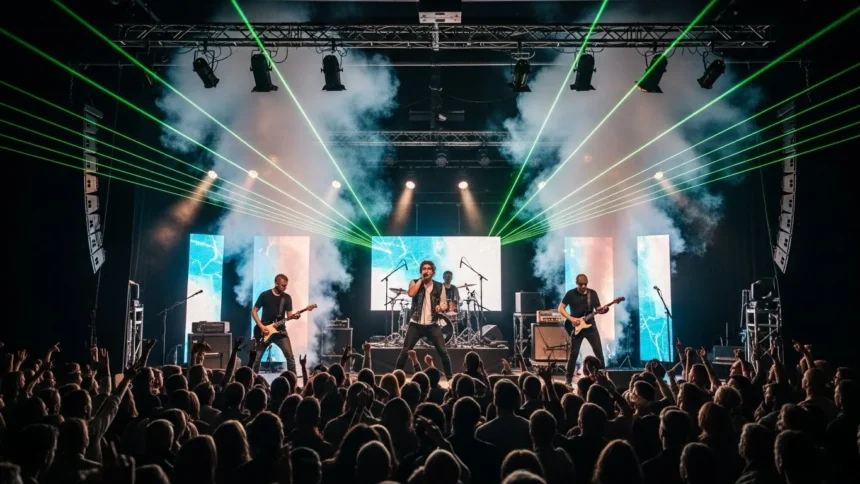
Music is rarely only background sound.
A song can become attached to a memory, a relationship, a film, a sports event or an entire period of a person’s life. A concert can turn thousands of strangers into a temporary community. A short clip on social media can introduce an old track to a new generation. A fan community can transform an emerging artist into a global name.
Music and pop culture are deeply connected because both depend on emotion, identity and shared attention.
The connection is not new. Radio, television, magazines, films and live performances shaped earlier generations of music fans. However, the speed has changed. Streaming services provide access to enormous catalogues. Social platforms allow trends to move across countries quickly. Fan communities organize online. Artists release music, videos, merchandise and tour announcements directly to audiences.
The result is exciting and sometimes overwhelming.
A listener can discover a singer from another continent within minutes. A song recorded decades ago can return to the charts after appearing in a series or viral clip. A festival ticket can sell rapidly. A fake celebrity account can mislead fans. An artificial-intelligence tool can create a song that sounds similar to a real artist without clear permission.
Understanding music and pop culture now requires more than following the latest release.
It requires understanding the systems behind the attention.
This article explains how music streaming, charts, playlists, concerts, fandom, copyright, social media and artificial intelligence shape modern entertainment. It also offers practical guidance for listeners who want to enjoy music without overspending, falling for scams or becoming trapped inside endless online hype.
What Music and Pop Culture Really Mean
Pop culture refers to the ideas, entertainment, styles, personalities and trends that attract widespread public attention.
Music is one of its most influential forces.
A popular song can shape fashion, dance, language, advertising and online conversation. A music video can create a recognizable visual style. A tour can affect tourism and local businesses. An artist’s clothing can influence retail trends. A soundtrack can revive interest in a film, series or video game.
Music and pop culture interact constantly.
| Music-related moment | Wider pop-culture impact |
|---|---|
| Viral song | Inspires videos, dances and online discussions |
| Major album release | Creates reviews, fan theories and fashion moments |
| Concert tour | Drives ticket demand, travel and merchandise sales |
| Film soundtrack | Connects music with cinema audiences |
| Sports performance | Reaches viewers outside the artist’s usual fan base |
| Celebrity collaboration | Combines music, fashion and brand attention |
| Festival appearance | Builds cultural identity around a live event |
| Older song returning | Introduces a previous era to younger listeners |
| AI-generated imitation | Raises questions about identity and rights |
| Fan campaign | Amplifies releases and creates online momentum |
Pop culture can move quickly.
That does not mean every trend lasts.
Some songs dominate conversation briefly and disappear. Others remain meaningful for decades. Certain artists build long careers by adapting to changing formats while maintaining a recognizable identity.
A useful music and pop culture article should therefore examine both the moment and the system behind it.
Twelve Powerful Forces Shaping Music and Pop Culture
The entertainment landscape has changed significantly.
| Force | Why it matters |
|---|---|
| 1. Streaming | Gives audiences immediate access to large music catalogues |
| 2. Playlists | Influence discovery and listening habits |
| 3. Algorithms | Personalize recommendations and shape exposure |
| 4. Social media | Accelerates viral trends and fan conversation |
| 5. Music charts | Measure attention through streams, sales and other signals |
| 6. Global fandoms | Help artists reach audiences across borders |
| 7. Concerts and festivals | Turn digital attention into live experiences |
| 8. Physical music formats | Give fans tangible ways to connect with artists |
| 9. Celebrity culture | Connects music with fashion, television, sport and brands |
| 10. Copyright | Protects musical works, recordings and performances |
| 11. Artificial intelligence | Creates opportunities and serious ethical questions |
| 12. Media literacy | Helps fans separate real information from hype and scams |
These forces overlap.
A song may appear in a playlist, spread through short-form video, climb a chart, increase demand for concert tickets and inspire merchandise sales. An older album may return to attention after a viral moment. A fan community may turn a regional release into an international success.
Music and pop culture no longer move through one channel.
They move through an ecosystem.
Streaming Changed the Music Industry
Streaming is now the dominant source of global recorded-music revenue.
The IFPI Global Music Report 2026 reported that streaming generated more than US$22 billion in revenue during 2025 and accounted for 69.6% of the global total. Paid subscription streaming grew by 8.8% and represented 52.4% of recorded-music revenues.
The scale matters.
A listener no longer needs to buy an entire album before hearing it. Music can be played through a phone, laptop, smart speaker, television or car system. A playlist can combine artists from several countries and decades.
Streaming services made music more accessible.
They also changed audience expectations.
| Earlier listening habit | Modern streaming habit |
|---|---|
| Buy an album or single | Access a large catalogue through a subscription or free tier |
| Wait for a radio station | Search for a specific track immediately |
| Carry physical media | Listen across supported devices |
| Discover music through shops or magazines | Discover music through playlists, algorithms and social clips |
| Build a collection slowly | Save tracks instantly |
| Listen mainly to local releases | Explore international artists easily |
| Depend heavily on scheduled broadcasting | Listen on demand |
The advantages are clear.
The complications are real too.
Streaming royalties remain an important industry debate. Artists, songwriters, labels, publishers, distributors and platforms may all play roles in the chain. The exact payment model can be difficult for ordinary listeners to understand.
The News Ink explored the pressure facing working musicians in its article about touring income and the streaming crisis.
Streaming made access easier.
It did not make the business simple.
Music Discovery Now Happens Through Playlists and Algorithms
A playlist can be created by a listener, editor, artist or platform.
It may focus on a mood, genre, activity, decade or cultural moment.
Examples include:
- Workout tracks
- Study music
- New releases
- Relaxing songs
- Regional hits
- Classic rock
- K-pop
- Wedding music
- Film soundtracks
- Festival preparation
- Personal favorites
Playlists are useful because they reduce the effort required to choose every song manually.
They can also shape exposure.
Spotify explains that most streams come from active listening, including visits to artist pages, albums, liked songs and listener playlists. It also offers editorial and algorithmic discovery tools. (Spotify playlist explainer)
In 2026, Spotify continued developing features that allow selected users to shape recommendations more directly. Its Prompted Playlist tool lets eligible listeners describe the kind of music they want to hear, while newer taste-profile features allow some users to influence how the platform interprets their preferences. Availability can vary by market and account type.
Algorithms Help, but They Can Narrow Taste
Recommendation systems are useful when they introduce listeners to artists they may genuinely enjoy.
However, a listener who repeatedly selects the same type of music may receive increasingly similar recommendations.
| Helpful algorithm outcome | Possible limitation |
|---|---|
| Finds similar artists | Repeats a narrow group of sounds |
| Builds mood-based playlists | Encourages passive listening |
| Highlights new releases | Favors attention already building |
| Revives forgotten tracks | Pushes the same nostalgic songs repeatedly |
| Personalizes discovery | Reduces accidental exploration |
| Supports emerging artists | Does not guarantee equal visibility |
A listener should not depend entirely on one recommendation system.
Try searching deliberately.
Listen to a different genre.
Ask a friend for one album.
Explore a local artist.
Choose a full record rather than another endless playlist.
Music discovery becomes more rewarding when the listener remains curious.
Music Charts Still Matter, but They Need Context
Music charts provide a snapshot of popularity.
They help audiences understand which songs and albums are attracting attention. They also influence radio coverage, industry discussion, marketing campaigns and fan celebrations.
The Billboard Hot 100 ranks songs using a combination of streaming activity, radio airplay and sales data in the United States. Billboard explains that different charts use different combinations of data, while some focus more heavily on streaming, radio or sales.
A chart position is meaningful.
It is not the complete story.
| Chart position can reveal | Chart position cannot fully reveal |
|---|---|
| Current popularity | Long-term artistic importance |
| Listener attention | Cultural meaning for every audience |
| Commercial momentum | Live-performance quality |
| Marketing impact | Whether a song will remain popular |
| Streaming activity | The full financial picture |
| Fan support | The private reasons people connect with music |
A song can become culturally influential without reaching number one.
An artist can build a loyal career without dominating mainstream charts.
An older song can return after a film, series or social-media trend introduces it to a new audience.
Music and pop culture move in cycles.
The newest track is not always the only one that matters.
Social Media Can Turn a Song Into a Cultural Moment
Social platforms have changed the speed of discovery.
A short clip can spread across millions of screens. A dance routine can give a chorus new life. A fashion edit, sports montage, travel video or emotional scene can make a song feel connected to a specific moment.
This can help new artists.
It can also revive older music.
A listener may discover a track through:
| Discovery route | Example |
|---|---|
| Short-form video | A chorus used in thousands of clips |
| Meme | A lyric or beat attached to a joke |
| Film scene | Soundtrack moment spreads online |
| Television series | Older song appears in a dramatic episode |
| Sports highlight | Track becomes associated with a team or player |
| Fashion trend | Music supports a visual style |
| Fan edit | Artist or celebrity montage attracts attention |
| Video game | Soundtrack creates nostalgia |
| Concert clip | Live performance encourages wider discovery |
| Brand campaign | Advertisement introduces a song to new listeners |
Your article about Mixtape and its connection with music, friendship and teenage memories fits naturally within this wider discussion.
Music can strengthen storytelling because it creates emotional memory.
A scene may be forgotten.
The song remains.
Virality Is Not the Same as a Career
A viral song can create opportunity.
It can also create pressure.
An artist may suddenly face expectations to produce another hit immediately. Audiences may know one short section of a song without exploring the full album. Labels and marketers may focus on repeatable clips rather than artistic development.
The most visible moment is not always the most important one.
A sustainable music career requires more than virality.
It requires songs, live performance, rights management, audience trust and time.
Global Music Communities Are More Visible Than Ever
Streaming and social platforms make it easier for music to travel across borders.
Audiences can discover artists from countries they may never have visited.
The effect can be seen through the rise of global interest in K-pop, Afrobeats, Latin music, Punjabi music, regional pop, anime soundtracks and many other genres.
Music and pop culture are no longer shaped by one city or one language.
| Global trend | Why it matters |
|---|---|
| K-pop fandoms | Show how coordinated fan communities support artists internationally |
| Afrobeats | Demonstrates the global reach of regional sounds |
| Latin music | Reaches audiences beyond language boundaries |
| Punjabi music | Connects diaspora audiences and wider listeners |
| Film soundtracks | Introduce regional music to new markets |
| Anime and gaming music | Build cross-media fan communities |
| Music festivals | Create spaces for international discovery |
| Subtitles and translation | Help fans understand artists more deeply |
| Social platforms | Spread performances rapidly |
| Streaming playlists | Place artists from different countries side by side |
The News Ink has covered the K-pop industry through its article about a BTS-linked business investigation and the wider cultural power of performers through stories such as the Jung Kook fashion collaboration.
These articles should link back to this pillar page where relevant.
K-pop is not only a music story.
It is also a fandom, fashion, business and global pop-culture story.
Fandom Can Build Community and Pressure
A fan is someone who cares deeply about an artist, genre, show, team or cultural world.
Fandom can be joyful.
Fans share recommendations, attend concerts, buy albums, collect merchandise, discuss lyrics and create friendships. Online groups allow people to connect across cities and countries.
However, fandom can become unhealthy when support turns into hostility, harassment or obsession.
| Healthy fandom | Unhealthy fandom |
|---|---|
| Enjoys the music | Treats disagreement as a personal attack |
| Supports artists responsibly | Invades privacy |
| Discusses releases | Harasses other artists or fan groups |
| Buys merchandise within a budget | Overspends to prove loyalty |
| Attends concerts safely | Ignores personal safety |
| Celebrates achievements | Spreads rumors |
| Accepts different tastes | Demands conformity |
| Respects boundaries | Treats celebrities as personal property |
A healthy relationship with music allows excitement without losing perspective.
Fans do not need to stream constantly, purchase every edition or participate in every online argument.
Support should remain voluntary.
Music and pop culture become less enjoyable when fandom turns into pressure.
Concerts and Festivals Turn Listening Into a Shared Experience
Streaming is convenient.
Live music offers something different.
A concert transforms a song from a private experience into a shared one. Thousands of people sing the same chorus. A festival introduces listeners to unfamiliar artists. A small venue can create intimacy. A stadium show can become a major cultural event.
The News Ink has covered this side of music culture through stories about Radio 1’s Big Weekend, Sonic Temple festival demand and Twenty One Pilots announcing a major stadium performance.
Before Buying a Concert Ticket
| Check | Why it matters |
|---|---|
| Official artist page | Confirms the show |
| Venue website | Confirms date and ticket seller |
| Total price | Reveals fees |
| Seating or standing area | Affects experience |
| Age restrictions | Some events have rules |
| Refund policy | Protects against misunderstanding |
| Resale rules | Vary by event and country |
| Accessibility | Should be checked before purchase |
| Travel plan | Prevents last-minute stress |
| Return journey | Important for nighttime safety |
In the United States, the FTC’s rule on unfair or deceptive fees requires live-event ticket sellers to disclose required fees clearly rather than surprising buyers at checkout. Rules vary internationally, but the principle is useful everywhere: check the total price before paying.
Avoid Ticket Scams
Scammers know that fans may act quickly when tickets are limited.
Be cautious when:
- A stranger demands immediate payment.
- The price appears unrealistically low.
- The seller refuses to use a trusted platform.
- Payment is requested through gift cards, cryptocurrency or unusual methods.
- A link arrives unexpectedly.
- The account was created recently.
- The seller cannot provide verifiable details.
- The ticket screenshot looks suspicious.
- The venue does not recognize the seller.
- The offer creates extreme pressure.
The FTC recommends signing up for official artist, venue or ticket-seller alerts and checking back when a show initially appears sold out because promoters may release additional tickets or add dates.
Excitement should not remove caution.
Physical Music Formats Still Matter
Streaming dominates the industry financially, but physical formats remain culturally important.
IFPI reported that physical recorded-music revenues grew by 8.0% in 2025. Vinyl revenues increased by 13.7%, marking a nineteenth consecutive year of growth.
Why would listeners buy a physical album when music is already available online?
Because the experience is different.
| Streaming | Physical format |
|---|---|
| Immediate access | Tangible object |
| Large catalogue | Curated collection |
| Easy portability | Collectible value |
| Low storage needs | Artwork and packaging |
| Playlist-friendly | Album-focused listening |
| Convenient discovery | Stronger sense of ownership |
| Subscription model | One-time purchase |
| Digital interface | Physical ritual |
A vinyl record, CD or cassette can feel more deliberate.
The listener chooses an album.
Opens the packaging.
Reads the credits.
Looks at the artwork.
Listens in sequence.
This does not make physical music automatically better than streaming.
It shows that convenience is not the only value audiences seek.
Pop culture often moves forward while revisiting older formats.
Albums Still Matter in the Playlist Era
Streaming can encourage individual-track listening.
A listener hears one song in a playlist, saves it and moves on.
Albums offer a different experience.
An album can create:
- A narrative
- A mood
- A visual identity
- A sequence
- A period in an artist’s career
- A group of themes
- A reason to revisit earlier songs
- A connection between music and artwork
The playlist era did not destroy albums.
It changed the way people discover them.
A listener may find one track through a viral video and later explore the full record. Another may discover an artist through a concert and return to earlier albums. A fan may buy a vinyl edition because the packaging adds meaning.
Music and pop culture work best when listeners have both options:
Quick discovery and deeper attention.
Celebrity Culture Extends Beyond Music
A successful artist may become visible far beyond songs.
Fashion brands, films, sports events, interviews, books, social media and major public appearances can expand the audience.
| Artist activity | Pop-culture effect |
|---|---|
| Fashion collaboration | Reaches style audiences |
| Film soundtrack | Connects with cinema fans |
| Sports-event performance | Reaches global viewers |
| Talk-show appearance | Introduces an artist to broader audiences |
| Book or memoir | Adds personal narrative |
| Brand campaign | Creates commercial visibility |
| Social-media post | Drives immediate conversation |
| Public controversy | Attracts attention beyond music |
| Charity work | Shapes public identity |
| Festival headline slot | Signals cultural status |
The News Ink has covered crossover moments such as the proposed World Cup halftime performance involving Madonna, Shakira and BTS and Paul McCartney appearing during a major late-night television farewell.
Music travels because it connects with other parts of culture.
That visibility creates opportunity.
It can also create intense scrutiny.
Music Journalism Requires Careful Reporting
Entertainment reporting moves quickly.
A rumor can spread before an official announcement. A fan account can be mistaken for a verified source. A short clip can remove context. A tour discussion can be presented as a confirmed booking.
A responsible music article should distinguish clearly between:
- Official announcements
- Reported information
- Rumors
- Fan speculation
- Reviews
- Opinion
- Commercial promotion
- Social-media reaction
Use a Verification Checklist
| Headline claim | What should be checked? |
|---|---|
| Artist announces tour | Official artist and venue pages |
| Album release date confirmed | Artist, label or distributor announcement |
| Festival lineup revealed | Official festival website |
| Collaboration confirmed | Official statement or verified release |
| Artist leaves group | Management or artist statement |
| Song reaches number one | Relevant chart source |
| Concert sold out | Official ticket platform or promoter |
| Celebrity controversy | Original context and reliable reporting |
| AI-generated song uses artist voice | Source, authenticity and rights issues |
| Artist death reported | Family, representative or credible outlet |
Your site has covered performers across genres and generations, including the death of opera singer Limmie Pulliam and the death of Rob Base.
Sensitive stories deserve particular care.
Accuracy matters more than speed.
Copyright Protects Creativity
Music is creative work.
It is also intellectual property.
The World Intellectual Property Organization explains that intellectual-property rights protect musical works, recordings and performances. These rights help creators control how work is used, receive compensation and invest in future projects.
A song may involve several rights and contributors.
| Contributor or right | Possible role |
|---|---|
| Songwriter | Writes lyrics or composition |
| Composer | Creates musical structure |
| Performer | Records or performs the work |
| Producer | Shapes the recording |
| Publisher | Manages composition-related rights |
| Record label | Supports recording, release and promotion |
| Distributor | Delivers music to platforms |
| Platform | Makes licensed music available to listeners |
| Collective-management organization | Helps administer selected rights and payments |
| Venue or broadcaster | May need appropriate permissions |
The details differ by country and agreement.
The main lesson is simple:
Music does not become free of rights merely because it is available online.
Support Legal Listening
Use licensed streaming services, official purchases, authorized physical releases and legitimate concert tickets.
Illegal downloads and piracy harm creators and may expose listeners to scams, malware and poor-quality files.
Your movies and streaming article explains why illegal entertainment sites can create cybersecurity and privacy risks.
Music and pop culture depend on creativity.
Creativity deserves protection.
Artificial Intelligence Is Changing the Music Conversation
Artificial intelligence can support creative work.
It can also create difficult ethical and legal questions.
AI tools may assist with:
- Audio cleanup
- Production workflows
- Translation
- Discovery
- Recommendation systems
- Metadata organization
- Accessibility
- Music education
- Experimentation
- Marketing analysis
However, generative AI creates more controversial possibilities.
A system may imitate a famous voice.
A fake track may sound similar to a real artist.
A large number of artificial tracks may flood streaming platforms.
A listener may struggle to distinguish an authorized experiment from an unauthorized imitation.
The IFPI Global Music Report 2026 states that the use of copyright-protected music by AI systems should be authorized by rights holders.
WIPO has also highlighted the legal and ethical problems surrounding unauthorized voice cloning. Its discussion of AI voice cloning explains that a singer’s voice can involve both personality rights and copyright-related concerns when recordings are used without permission.
Questions to Ask About AI Music
| Question | Why it matters |
|---|---|
| Was the artist involved? | Determines whether the project is authorized |
| Was the voice cloned? | Raises identity and consent concerns |
| Were copyrighted recordings used for training? | Raises rights questions |
| Is the track labeled clearly? | Helps audiences understand what they are hearing |
| Who receives revenue? | Fair compensation matters |
| Is the artist’s reputation affected? | Fake recordings can cause damage |
| Is the release designed to mislead? | Deception harms trust |
| Does the platform detect fraud? | Streaming manipulation affects the industry |
AI should not become an excuse to erase human creativity.
It should be used responsibly.
Streaming Fraud Harms Artists and Listeners
Artificial intelligence also makes streaming fraud more difficult to detect.
WIPO has reported that fraudsters can use AI music generators to upload large numbers of artificial tracks and generate streams in ways designed to collect royalties without attracting immediate attention.
Streaming fraud matters because royalty pools are not unlimited.
Manipulated listening can redirect attention and money away from legitimate creators.
| Fraud tactic | Why it is harmful |
|---|---|
| Fake streams | Distorts popularity |
| Bot listening | Manipulates platform data |
| Large volumes of low-quality AI tracks | Crowds catalogues |
| Artist impersonation | Misleads fans |
| Fake playlists | Creates false promotion |
| Purchased engagement | Distorts discovery |
| Fraudulent uploads | Claims work without permission |
| Misleading metadata | Confuses platforms and listeners |
Listeners should remain skeptical when an unfamiliar track appears under a famous name, especially when the voice, artwork or release details seem unusual.
Check the verified artist profile.
Look for official announcements.
Do not assume every upload is authentic.
Music Can Affect Identity and Wellbeing
Music accompanies daily life.
People listen while commuting, exercising, studying, cooking, celebrating, grieving and resting.
IFPI’s Engaging with Music 2023 study reported that people spent an average of 20.7 hours each week listening to music and used more than seven different methods to engage with it. The same study found that 79% of respondents believed human creativity was essential to music creation.
Music can provide:
- Comfort
- Motivation
- Memory
- Connection
- Cultural identity
- Relaxation
- Energy
- Reflection
- Community
- Celebration
However, music should not become another source of pressure.
A person does not need to follow every trend, know every artist or join every fandom.
Listening should remain enjoyable.
Families Should Use Explicit-Content Controls Thoughtfully
Music platforms make large catalogues available inside the home.
Families may need to review what younger listeners can access.
Spotify explains that releases containing explicit material may include an EXPLICIT or E tag based on information received from rights holders. The service also provides explicit-content settings and family-focused options for younger listeners.
Family Music Checklist
| Setting or habit | Why it helps |
|---|---|
| Review explicit-content controls | Limits unsuitable tracks |
| Create age-appropriate profiles | Separates listening experiences |
| Discuss lyrics | Builds understanding |
| Listen together sometimes | Creates conversation |
| Review playlists | Helps identify unsuitable material |
| Respect cultural differences | Encourages open discussion |
| Avoid overreaction | Keeps communication honest |
| Teach digital safety | Protects accounts and devices |
A content filter can help.
It cannot replace conversation.
Children and teenagers may encounter music through social media, friends and public spaces even when a home filter is active.
The goal is guidance, not panic.
Protect Your Accounts and Personal Information
Music streaming accounts may contain personal information, payment details, listening history and connected devices.
Use basic security habits.
| Security habit | Why it matters |
|---|---|
| Use a unique password | Reduces damage after another breach |
| Protect your email account | Email controls password resets |
| Review connected devices | Identifies unknown access |
| Use official apps | Reduces fake-login risks |
| Avoid suspicious links | Protects against phishing |
| Review billing | Helps identify unexpected charges |
| Ignore fake giveaways | Prevents fraud |
| Update devices | Improves security |
| Avoid sharing codes | Protects account access |
| Be cautious on public Wi-Fi | Reduces unnecessary exposure |
A fake message may claim:
- Your subscription payment failed.
- You won VIP concert tickets.
- An artist selected you for a private giveaway.
- Your account will close immediately.
- You need to verify your password.
- A refund is waiting.
- A presale code is available after payment.
Pause before clicking.
Use the official app or verified website.
Your cybersecurity guide explains the wider habits that protect online accounts.
Enjoy Music Without Overspending
Music can become expensive when enthusiasm turns into impulsive spending.
Costs may include:
- Streaming subscriptions
- Concert tickets
- Travel
- Merchandise
- Physical albums
- Limited-edition releases
- Festival passes
- Food at venues
- Parking
- Resale prices
- Brand collaborations
Build a Music Budget
| Expense | Planned amount | Actual amount | Keep or reduce? |
|---|---|---|---|
| Streaming subscriptions | |||
| Concert tickets | |||
| Festival passes | |||
| Travel | |||
| Merchandise | |||
| Physical music | |||
| Food and parking | |||
| Optional extras |
Your personal-finance pillar explains how small recurring payments can accumulate and why budgets should reflect real spending.
Supporting an artist does not require buying every version of an album.
A fan can stream legally, share music, attend one carefully chosen concert or buy one meaningful item.
Support should fit the budget.
Read Pop-Culture Headlines Carefully
Pop-culture reporting can become exaggerated because attention is valuable.
Use a simple checklist.
| Headline says | Ask this question |
|---|---|
| Song is a viral global hit | Which chart or platform supports the claim? |
| Tour is sold out | Which dates and official ticket seller? |
| Artist confirmed a collaboration | Is there an official statement? |
| Celebrity relationship changes everything | Is the article reporting facts or speculation? |
| Fan controversy erupts | Does the reaction represent a broad audience or a small group? |
| AI song is real | Was it released or approved by the artist? |
| Music industry is collapsing | Which revenue source or artist group is being discussed? |
| Vinyl is replacing streaming | Is the headline ignoring the scale difference? |
| Streaming pays artists fairly or unfairly | Which agreements and payment models are involved? |
| One artist dominates pop culture | Which country, audience and time period? |
Entertainment reporting should remain interesting.
It should not become careless.
Music and pop culture deserve the same fact-checking standards as other topics.
A Practical Music and Pop Culture Checklist
Use this table when exploring new music, buying tickets or following entertainment news.
| Question | Why it matters |
|---|---|
| Is the artist announcement official? | Reduces rumor sharing |
| Is the concert ticket seller verified? | Protects against scams |
| Does the total ticket price fit the budget? | Avoids overspending |
| Is the streaming platform licensed? | Supports creators |
| Does an AI-generated track have clear labeling? | Protects trust |
| Are younger listeners using suitable controls? | Supports family safety |
| Is the artist profile verified? | Reduces impersonation risk |
| Am I discovering music beyond one algorithm? | Broadens taste |
| Am I buying merchandise because I value it or feel pressured? | Encourages healthier fandom |
| Is a pop-culture headline reporting facts or speculation? | Improves media literacy |
| Are account passwords unique? | Protects personal information |
| Does music still feel enjoyable? | Keeps listening healthy |
Music should add something valuable to life.
It should not become another source of stress.
Related Entertainment Articles From The News Ink
The News Ink already has several articles connected to music and pop culture.
| Related article | Why it is useful |
|---|---|
| Movies and streaming | Explains subscriptions, entertainment platforms and legal viewing |
| Touring income and streaming pressure | Explores the financial reality facing musicians |
| Radio 1 Big Weekend | Shows how live festivals create major cultural moments |
| Sonic Temple demand | Connects fan excitement with ticket planning |
| Twenty One Pilots stadium show | Highlights the scale of modern live events |
| BTS-linked business story | Adds context about K-pop as a global industry |
| Jung Kook fashion collaboration | Shows how music connects with fashion |
| World Cup halftime show | Demonstrates the reach of music beyond concerts |
| CMAT body-shaming story | Examines the pressure artists may face |
| Mixtape review | Explores music, memory and storytelling |
| Limmie Pulliam tribute | Shows the cultural importance of performers across genres |
| Paul McCartney television appearance | Connects music with television history |
These articles should link back to this page where appropriate using short anchors such as music and pop culture, music streaming, pop-culture trends or music fandom.
Frequently Asked Questions About Music and Pop Culture
What is pop culture?
Pop culture refers to entertainment, trends, personalities, styles and ideas that attract widespread public attention.
How does music influence pop culture?
Music influences fashion, language, social media, films, advertising, live events, fandom and cultural identity.
Why is music streaming important?
Streaming allows listeners to access large catalogues quickly and has become the dominant source of global recorded-music revenue.
How much of recorded-music revenue comes from streaming?
IFPI reported that streaming accounted for 69.6% of global recorded-music revenues in 2025.
Are physical formats still relevant?
Yes. IFPI reported growth in physical recorded-music revenues during 2025, including a 13.7% increase in vinyl revenues.
How do music charts work?
Charts use defined data sources. For example, the Billboard Hot 100 combines streaming activity, radio airplay and sales data in the United States.
Why do older songs become popular again?
Older tracks may return because of films, television series, social-media trends, fan edits, concerts or renewed cultural interest.
How do playlists affect music discovery?
Playlists help listeners find songs based on mood, genre, activity, personal taste or editorial choices. They can introduce new artists but may also narrow listening habits.
Is every viral song a long-term hit?
No. Virality can create attention quickly, but a sustainable career usually requires broader audience support and strong artistic development.
What is music fandom?
Music fandom is a community built around interest in an artist, group, genre or cultural scene.
Can fandom become unhealthy?
Yes. Overspending, harassment, privacy invasion and pressure to prove loyalty can make fandom unhealthy.
How can I avoid concert-ticket scams?
Use official artist, venue or ticket-seller links. Check the total price, avoid rushed payment requests and be suspicious of deals that appear unrealistically cheap.
What is music copyright?
Music copyright protects creative work. Rights may relate to compositions, lyrics, recordings and performances.
Is illegal music streaming risky?
Yes. Illegal services can harm creators and expose listeners to malware, phishing and privacy risks.
How is artificial intelligence used in music?
AI can support production, recommendation systems and organization. It can also create controversial imitations, voice clones and fraudulent uploads.
Why is AI voice cloning a concern?
A cloned voice may mislead listeners, damage an artist’s reputation and raise consent, personality-rights and copyright questions.
How can families limit explicit music?
Use age-appropriate profiles, explicit-content settings and open conversations about lyrics and media choices.
How can I discover more diverse music?
Search beyond recommendations, listen to full albums, ask friends for suggestions and explore genres or countries you rarely choose.
Should I buy every limited-edition album or merchandise item?
No. Support artists in a way that fits your budget. Fandom should remain enjoyable rather than financially stressful.
What is the most important habit for following pop culture responsibly?
Pause before sharing, buying or reacting. Verify the information and decide whether the choice genuinely adds value.
Music Matters Because It Connects People
Music and pop culture are constantly changing.
The devices change.
The platforms change.
The charts change.
The trends move faster.
The basic emotional connection remains.
A song can remind someone of childhood.
A live performance can bring strangers together.
A soundtrack can transform a film scene.
A fan community can introduce people across countries.
A physical album can become a meaningful object.
A festival can create a shared memory.
A new artist can emerge from a region that mainstream audiences previously overlooked.
Technology creates opportunity.
It also creates responsibility.
Streaming services should help audiences discover music without trapping them inside narrow recommendations.
Fan communities should celebrate artists without crossing boundaries.
Concert excitement should not make people easy targets for scammers.
Artificial intelligence should support creativity rather than exploit identity.
Music journalism should remain accurate even when rumors spread quickly.
Listeners should enjoy music without feeling pressured to buy every item, stream every track repeatedly or join every online argument.
Music and pop culture matter because they reflect how people feel, connect and remember.
The healthiest way to participate is simple.
Listen with curiosity.
Support creators responsibly.
Protect your accounts.
Verify headlines.
Respect artists and other fans.
Enjoy the music.
Follow The News Ink for More Entertainment Stories
Explore more music news, film updates and cultural stories in our Entertainment section. Follow The News Ink on Threads for new articles, major updates and pop-culture discussions.