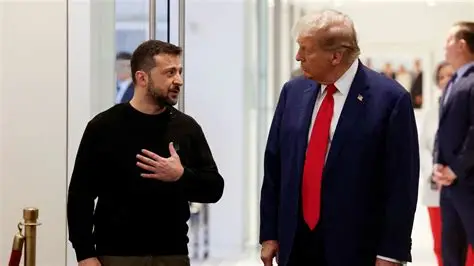
The Russia Ukraine three-day ceasefire 2026 became reality on Saturday after US President Donald Trump announced a temporary truce between the two warring nations, covering a suspension of all military activity alongside a significant prisoner exchange. Both Ukrainian President Volodymyr Zelensky and Russian President Vladimir Putin confirmed their agreement to the proposal shortly after Trump’s announcement, marking a rare moment of diplomatic alignment between the two sides in a conflict that has ground on for years.
“This ceasefire will include a suspension of all kinetic activity, and also a prison swap of 1,000 prisoners from each country,” Trump said in his announcement. He added that he had personally requested the three-day truce and expressed appreciation for its acceptance, stating: “I very much appreciate its agreement by President Vladimir Putin and President Volodymyr Zelenskyy.”
The announcement came against a backdrop of mutual accusations of ceasefire violations, drone attacks on Moscow, strikes across multiple Russian regions, and heightened tensions surrounding Russia’s Victory Day celebrations on May 9.
Russia Ukraine Three-Day Ceasefire 2026: What the Agreement Covers
The Russia Ukraine three-day ceasefire 2026 agreement contains two distinct and significant components — a military suspension and a humanitarian exchange — both of which represent meaningful steps beyond the temporary, unilateral ceasefires that each side had previously declared and immediately accused the other of violating.
What the three-day ceasefire agreement includes:
- A complete suspension of all kinetic military activity for three days
- A prisoner swap of 1,000 individuals from each country — 1,000 Russian prisoners returned to Russia, 1,000 Ukrainian prisoners returned to Ukraine
- Agreement confirmed by both President Zelensky and President Putin following Trump’s announcement
- The ceasefire was personally requested by Trump and accepted by both leaders
- The truce coincides with Russia’s Victory Day celebrations on May 9
The prisoner swap element of the agreement carries humanitarian significance beyond the immediate military pause. A simultaneous exchange of 2,000 total prisoners — 1,000 from each side — would represent one of the largest single prisoner exchanges of the entire conflict and would deliver thousands of families on both sides some form of relief amid an otherwise devastating war.
Russia Ukraine Three-Day Ceasefire 2026: How It Came About
The Russia Ukraine three-day ceasefire 2026 announcement did not emerge from a calm diplomatic process. It arrived in the middle of a chaotic and mutually accusatory sequence of events surrounding Russia’s Victory Day commemorations — a period of heightened symbolic and military tension for both sides.
Putin had previously announced a ceasefire covering May 8 and 9 — the period surrounding Victory Day, which marks the Soviet Union’s victory over Nazi Germany in World War Two. Ukraine had separately called for an indefinite truce beginning May 6. Neither proposal was accepted by the other side, and almost immediately both parties accused each other of continuing to attack military and civilian targets in violation of their respective declared ceasefires.
That mutual accusation dynamic — each side claiming the other fired first — created the conditions in which Trump stepped in with a US-brokered proposal that both parties could accept simultaneously, removing the political problem of one side appearing to agree to the other’s unilateral terms.
The sequence of events leading to the ceasefire:
- Putin declared a ceasefire covering May 8-9 for Victory Day celebrations
- Ukraine called for an indefinite truce starting May 6
- Neither side accepted the other’s unilateral proposal
- Both sides immediately accused the other of ceasefire violations
- Moscow’s mayor reported approximately 20 drones downed near the city in the first two hours of the Russian ceasefire period
- Ukrainian strikes were reported across multiple Russian regions including Perm, Yaroslavl, Rostov, and Grozny
- Thirteen airports in southern Russia suspended operations following drone attacks
- Trump intervened with a joint three-day ceasefire proposal that both leaders accepted
The dynamic illustrates why a US-brokered framework proved more viable than either side’s unilateral declaration — it gave both Putin and Zelensky a pathway to accept a ceasefire without appearing to capitulate to the other’s demands.
Russia Ukraine Three-Day Ceasefire 2026: Victory Day Tensions
The Russia Ukraine three-day ceasefire 2026 coincides with one of the most politically charged moments in the Russian calendar. Victory Day — commemorating the Soviet Union’s defeat of Nazi Germany on May 9, 1945 — is the single most important national holiday in Russia and carries enormous symbolic weight for the Putin government.
This year’s Victory Day parade in Moscow proceeded under extraordinary security conditions that reflected the genuine threat Russia perceived from potential Ukrainian action during the celebrations.
Russia issued stark warnings ahead of the parade. Its defence ministry threatened to launch a “retaliatory, massive missile strike” on the centre of Kyiv if Moscow was attacked during the Victory Day period. Foreign diplomats in Kyiv were warned to leave the Ukrainian capital before May 9 — an unusual and serious diplomatic signal that underlined the credibility of Russia’s threat.
Victory Day 2026 — key security measures and changes:
- For the first time in nearly two decades, no military hardware appeared at the Red Square parade — only soldiers marched
- Moscow and the wider city region operated on high security alert throughout the period
- Residents of Moscow and St Petersburg received warnings that mobile internet access would be limited for security reasons
- Russia’s defence ministry threatened a massive missile strike on Kyiv if Moscow was attacked
- Foreign diplomats in Kyiv were advised to leave before May 9
- The usual large gathering of foreign dignitaries did not materialise — only the leaders of Belarus, Malaysia, and Laos attended alongside a small number of other dignitaries
- The absence of military hardware from the parade represented a dramatic and symbolic departure from decades of tradition
The decision to remove military hardware from the parade was particularly striking. For generations, the Victory Day parade’s display of tanks, missiles, and armoured vehicles served as a showcase of Russian military power. Its absence in 2026 reflects both genuine security concerns about Ukrainian drone and missile capabilities and the broader military context of an ongoing war that has consumed enormous quantities of the very equipment that would normally appear on Red Square.
Russia Ukraine Three-Day Ceasefire 2026: Violations Before the Truce
Even as the Russia Ukraine three-day ceasefire 2026 announcement brought a degree of hope, the hours and days immediately preceding it were marked by significant military activity from both sides and mutual accusations of bad faith.
On Friday, both Russia and Ukraine accused the other of battlefield violations of the earlier unilateral ceasefires. Russia’s defence ministry stated that Ukraine continued striking civilian targets in the Kursk and Belgorod border regions and said Russian forces provided a “mirror response” to those violations — effectively acknowledging its own military action while framing it as reactive.
Moscow Mayor Sergey Sobyanin reported that approximately 20 drones were downed near the Russian capital in just the first two hours of Russia’s declared ceasefire period — a figure that, if accurate, suggests intensive Ukrainian drone activity directed toward or near the Russian capital during the very period Moscow said it had stopped fighting.
Reported military activity before the three-day ceasefire:
- Russia accused Ukraine of striking civilian targets in the Kursk and Belgorod regions
- Russian forces acknowledged conducting a “mirror response” to Ukrainian actions
- Moscow Mayor Sobyanin reported roughly 20 drones downed near the city in two hours
- Ukrainian strikes were reported on industrial sites in Perm and Yaroslavl regions
- Strikes were also reported in the Rostov region and on Grozny, the Chechen capital
- Thirteen airports across southern Russia suspended operations following drone attacks
- Ukraine accused Russia of continuing attacks on Ukrainian positions despite its ceasefire declaration
This pattern of mutual violation — real or alleged — underlines why the Trump-brokered simultaneous three-day ceasefire carries more practical weight than either side’s unilateral declarations. A jointly agreed framework with US backing creates greater political cost for the first party to break it.
Russia Ukraine Three-Day Ceasefire 2026: The Prisoner Swap Significance
Beyond the military dimension, the Russia Ukraine three-day ceasefire 2026 agreement’s prisoner swap component deserves careful attention for its humanitarian and symbolic significance.
A simultaneous exchange of 1,000 prisoners from each side — 2,000 total — would represent an enormous humanitarian action. Prisoners of war held by both Russia and Ukraine have faced documented difficult and sometimes brutal conditions. Their families have often spent years with no information about whether their loved ones are alive, where they are held, or when — if ever — they might return home.
Why the prisoner swap matters:
- 2,000 total prisoners would be exchanged — 1,000 from each side simultaneously
- The scale would make it one of the largest single prisoner exchanges of the entire conflict
- Prisoners of war on both sides have faced harsh and sometimes inhumane conditions
- Families of prisoners have often gone years without reliable information about their loved ones
- A successful exchange would deliver immediate humanitarian relief to thousands of families
- It would also demonstrate that practical cooperation between the two sides remains possible
- A completed swap would build a small but real foundation of trust that future negotiations could build upon
The inclusion of the prisoner swap in Trump’s ceasefire announcement was a deliberate and strategically significant choice. It gives both sides a tangible, concrete deliverable that they can point to as a positive outcome of the ceasefire — making it harder for either party to walk away from the agreement without completing the exchange.
Russia Ukraine Three-Day Ceasefire 2026: What It Means for Broader Peace Prospects
The Russia Ukraine three-day ceasefire 2026 does not resolve the conflict. Three days of suspended fighting, however welcome, does not address the fundamental territorial, political, and security questions that have driven the war and prevented its resolution. But it does carry significance beyond its immediate duration.
A successfully observed three-day ceasefire — if both sides genuinely hold to its terms — would demonstrate that temporary military pauses are achievable when US pressure and personal diplomacy from Trump are applied simultaneously to both leaders. That demonstration of feasibility matters for any longer-term peace process.
It also tests the actual military and political control that Putin and Zelensky each exercise over their respective forces. Ordering a halt to fighting is one thing. Ensuring that order is followed by every unit on an extended front line is another. A successful three-day pause would show that both leaders possess genuine command authority — a prerequisite for any negotiated settlement.
What a successful ceasefire could demonstrate:
- That temporary military pauses are achievable through US-brokered diplomacy
- That both Putin and Zelensky exercise genuine command authority over their forces
- That humanitarian actions like prisoner swaps remain possible even amid active conflict
- That a framework for longer-term negotiations has at least a minimal foundation
- That Trump’s personal involvement carries genuine diplomatic weight with both leaders
- That incremental steps toward de-escalation are possible even without a comprehensive settlement
The risks of failure are equally significant. If either side violates the three-day ceasefire — as both violated the earlier unilateral declarations — it will damage the credibility of future diplomatic efforts and signal that even short-term agreements cannot be trusted.
Final Word on the Russia Ukraine Three-Day Ceasefire 2026
The Russia Ukraine three-day ceasefire 2026 represents the most significant diplomatic development in the conflict in recent months. Trump’s personal intervention, the simultaneous agreement of both Putin and Zelensky, and the inclusion of a 2,000-person prisoner swap give this ceasefire more substance and more political weight than the unilateral declarations that immediately preceded it and collapsed almost instantly.
Three days is not peace. A prisoner swap is not a settlement. But in a conflict that has brought immeasurable suffering to millions of people over years of grinding warfare, three days of silence and the return of 2,000 human beings to their families would be — however briefly — something worth holding.