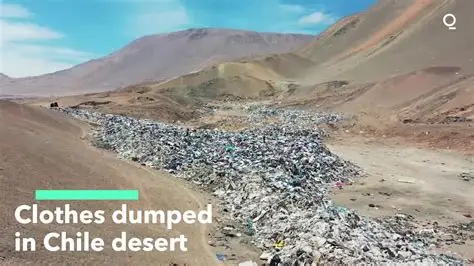
Donating old clothes may seem like a sustainable choice, but many of these garments never reach people in need. Instead, a large portion ends up dumped in remote desert areas in Chile, creating a growing environmental crisis.
Chile has become one of the world’s largest importers of second-hand clothing. Every year, the country receives around 123,000 tonnes of used garments from regions such as North America, Europe, and Asia. While some of these clothes are resold, a significant amount fails to find buyers.
Much of this trade passes through Iquique, a key hub for imported goods. The city operates within the Zona Franca de Iquique (Zofri), a tax-free area established to promote economic development. Businesses here can import and sell goods without paying customs duties, making it an attractive destination for second-hand clothing traders.
Once the clothing arrives, workers sort items based on quality. Better-quality garments are sold locally or exported to other Latin American countries. This process also creates job opportunities, especially for women in the region, as sorting does not require advanced skills.
However, the system has a major flaw. Low-quality or unsellable clothing often has nowhere to go. As a result, large quantities get discarded in nearby desert areas, contributing to massive textile waste piles.
One of the most affected locations is Alto Hospicio, near Iquique. Here, informal markets like La Quebradilla display rows of second-hand garments laid out for sale. Shoppers can find extremely low prices, attracting both locals and tourists looking for bargains.
Despite these markets, a large volume of clothing remains unsold. These leftovers often end up dumped in the surrounding desert, where the dry climate slows decomposition. Over time, this creates vast “fashion graveyards” that harm the environment.
The issue highlights a larger global problem driven by fast fashion and overconsumption. While recycling and donation programs aim to reduce waste, they often shift the burden to developing regions rather than solving the root cause.
In response, new policies and initiatives are emerging in Chile to address textile waste more effectively. Some companies are now exploring ways to recycle or repurpose discarded clothing instead of dumping it.
This growing crisis serves as a reminder that sustainable fashion requires more than just donating clothes. Reducing consumption, improving recycling systems, and promoting responsible production are essential steps toward long-term environmental protection.