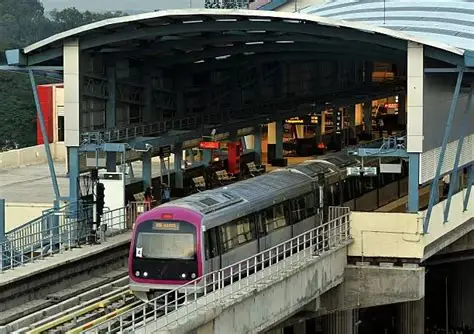
Mumbai’s Aqua Line metro train empties out early on weekday evenings. Passengers deboard at a final station that looks like a deserted Soviet relic, not a busy hub in India’s crowded financial capital.
This new 33.5km underground line links Cuffe Parade’s old business district to BKC, commercial hubs, and airport terminals. It opened last year.
Planners expected 1.5 million daily passengers to ease congestion. Reality hits hard: actual ridership reaches only about 10% of that, per estimates.
A ticketing executive at Cuffe Parade station explained, “Not a lot of people use the line. It’s too expensive.”
Low usage plagues India’s rapid metro expansion.
Since 2014, the Narendra Modi government invested over $26 billion. The network quadrupled from under 300km to more than 1,000km by 2025.
Daily ridership soared from 3 million to over 11 million in a decade.
Yet these totals hide problems.
Most systems achieve just 25-35% of projected ridership, says a 2023 Indian Institute of Technology Delhi report. Numbers stayed similar in 2024-2025, an author confirmed.
Other research agrees:
-
Observer Research Foundation (ORF): Kanpur hit 2% of projections; Chennai’s first phase reached 37%.
-
Institute for Transportation and Development Policy (ITDP): Pune and Nagpur ranged 20-50%.
Delhi’s vast network slightly exceeds projections. But experts Aditya Rane (ITDP) and Ashish Verma (Indian Institute of Science) note it counts interchanges as separate trips, inflating figures.
Key Stats
-
Network growth: 300km to 1,000km+.
-
Daily riders: 3M to 11M+.
-
Typical ridership: 25-35% of projections.
-
Mumbai Aqua Line: ~10% expected.