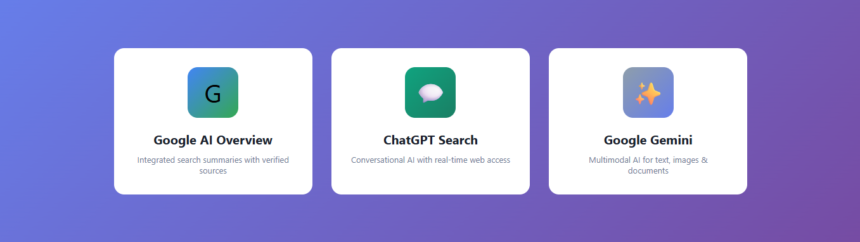
Businesses are facing a major shift in online traffic as artificial intelligence reshapes how users search for information, with companies like HubSpot reporting significant declines in website visits.
HubSpot recently revealed it lost around 140 million website visits in a single year, highlighting the growing impact of AI-powered search tools on traditional web traffic.
AI Changing How People Search
According to HubSpot’s Chief Marketing Officer Kipp Bodnar, the way users interact with information online has fundamentally changed.
Instead of scrolling through multiple search results, users are increasingly turning to AI tools that deliver instant, direct answers. Traditional search engines are also adapting by introducing AI-generated summaries at the top of results, reducing the need to click through to websites.
Bodnar noted that click-through rates drop by 60% to 70% when AI overviews appear, significantly affecting site traffic.
Rise of Answer Engine Optimisation (AEO)
To adapt, businesses are now focusing on Answer Engine Optimisation (AEO) — a strategy designed to help content appear in AI-generated responses.
Unlike traditional SEO, which targets search engine rankings, AEO aims to make content easily understandable for large language models (LLMs) used by tools like ChatGPT.
Companies are restructuring their content into smaller, clear sections that AI systems can quickly extract and present in answers.
HubSpot has already implemented this approach, shifting away from long-form product pages to more modular content. As a result, AI now drives between 7% and 12% of its monthly traffic, a figure expected to grow.
Businesses Adapting to the Shift
Other companies are also evolving their strategies. UK-based Spice Kitchen is building educational content hubs to establish authority and attract AI-driven traffic.
Its head of PR, Ann Lowe, explained that the company is experimenting with in-depth content designed to be picked up by AI systems, rather than focusing solely on direct product promotion.
Digital agency Lumos Digital advises brands to create buying guides and authoritative content, as AI tools tend to favour structured, decisive information.
Declining Traffic, But Higher Conversions
Retailers like MKM Building Supplies are also seeing fewer website visits as users rely on AI for answers.
Digital director Andy Pickup said customers often no longer need to visit websites for basic guidance, such as how to complete DIY projects.
However, there is a positive shift: AI-driven visitors are more likely to convert into customers, as they arrive with clearer intent after receiving detailed answers.
A Fundamental Shift in Digital Strategy
Experts describe this transition as a “seismic shift” in user behaviour. While Google Search remains dominant, AI platforms are rapidly gaining ground as preferred tools for information discovery.
Businesses are now adopting what some call a “defensive strategy” — ensuring their content is cited by AI systems rather than competitors.
The focus is moving away from keyword-heavy content toward clear, structured, and problem-solving information that AI can easily interpret.
As Bodnar puts it, adapting to this new landscape is no longer optional: businesses that fail to evolve risk becoming invisible in the AI-driven future of search.