


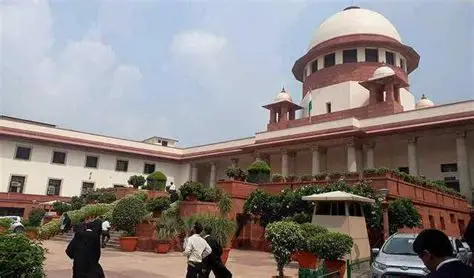
Menstrual Leave Policy in India: Why the Supreme Court Refused a Nationwide Mandate in 2026
The menstrual leave policy debate in India reached the Supreme Court again on 13 March 2026, when a two-judge bench led by Chief Justice of India Surya Kant declined to issue a nationwide judicial mandate for paid period leave. The court warned during the hearing that compulsory leave could have unintended consequences if employers began to see women as more expensive or less convenient to hire.
That does not mean India’s Supreme Court ruled that menstrual leave is illegal. Nor did it close the door on governments, universities or private employers adopting their own arrangements. The written order instead said there was no need for the petitioner to repeatedly seek a positive judicial direction and expressed confidence that the competent authority would consider earlier Supreme Court observations when examining a model menstrual leave policy with stakeholders.
What the Supreme Court actually decided on 13 March 2026
The case was brought by advocate Shailendra Mani Tripathi, who had pursued the issue through earlier petitions in 2023 and 2024. In the latest proceeding, Shailendra Mani Tripathi v Secretary, Ministry of Women and Child Development, the bench comprised Chief Justice Surya Kant and Justice Joymalya Bagchi.
The court’s 13 March 2026 order is narrower than some headlines suggested. It recorded that Tripathi had already brought the issue to the authorities and had made sufficient efforts to promote the welfare of young working women. The judges said there was no need for him to repeatedly approach the court seeking a positive mandamus.
Crucially, the written order also said there was no reason to doubt that the competent authority would earnestly consider the court’s earlier observations for the purpose of formulating a model menstrual leave policy for stakeholder consideration.
During the hearing, however, the bench raised a separate practical concern. Chief Justice Surya Kant warned that making leave compulsory by law could create incentives for some employers to avoid hiring women. The court also questioned whether a legally mandated benefit might unintentionally strengthen the stereotype that women are less able to meet workplace demands.
Those oral observations explain the controversy, but they should not be confused with the binding text of the written order. The Supreme Court did not declare that every menstrual leave policy is discriminatory. It declined to create a national entitlement through a judicial direction and left the policy question with government.
| Question | Position after the March 2026 order |
|---|---|
| Did the Supreme Court create national paid menstrual leave? | No |
| Did it declare menstrual leave unlawful? | No |
| Did it order employers to stop voluntary benefits? | No |
| Did it express concern about a compulsory national rule? | Yes, during the hearing |
| Did it leave room for a government model policy? | Yes |
| Is there one uniform national menstrual leave law in India? | No |
The menstrual leave policy dispute has been before the court for years
The March 2026 hearing was not the first time Tripathi had approached the Supreme Court. Understanding that history prevents the latest decision from being treated as an isolated rejection.
In February 2023, Tripathi sought directions requiring states to frame rules for menstrual pain leave for female students and working women. The court said the issue involved policy choices and allowed him to submit a representation to the Union Ministry of Women and Child Development.
The issue returned in July 2024. In an official Supreme Court order, a bench led by then Chief Justice D.Y. Chandrachud noted that menstrual leave raised multiple policy dimensions. The court asked the Secretary of the Ministry of Women and Child Development to examine the matter after consulting stakeholders and to consider whether a model menstrual leave policy could be framed.
That procedural history shaped the 2026 menstrual leave policy result. The latest bench did not start from zero. It concluded that the petitioner had already placed the issue before the executive and that repeated court intervention was unnecessary.
A short timeline
| Date | What happened |
|---|---|
| 24 February 2023 | Supreme Court treated the issue as a policy matter and permitted a representation to the Union ministry |
| 8 July 2024 | Court asked the ministry to examine the issue with stakeholders and consider a model policy |
| 30 January 2026 | In a separate case, the Supreme Court recognised menstrual health as part of dignity and the right to life in the school context |
| 13 March 2026 | Court disposed of Tripathi’s latest petition and declined to impose a nationwide mandatory leave rule |
The timeline shows why the menstrual leave policy debate cannot accurately be reduced to “the Supreme Court rejected period rights”. The court has simultaneously been cautious about designing employment leave through litigation and forceful about protecting menstrual health in other constitutional settings.
A major January 2026 judgment changed the wider legal context
Only weeks before the March hearing, the Supreme Court delivered an important ruling in Dr Jaya Thakur v Government of India. In that case, Justices J.B. Pardiwala and R. Mahadevan addressed menstrual hygiene and access for schoolgirls.
The January 2026 menstrual-health judgment held that menstrual health is connected to the right to life and dignity under Article 21 and to the right to education under Article 21A. The court directed governments to improve access to menstrual absorbents, functional gender-segregated toilets, water, disposal facilities and menstrual-health education in schools.
This is important because it demonstrates that the March decision was not based on a view that menstruation is medically trivial or legally irrelevant. The court recognised strong constitutional protection for menstrual health while taking a different approach to the specific question of a nationwide employment entitlement.
A menstrual leave policy raises choices that school sanitation does not. Policymakers must decide who qualifies, how many days apply, whether leave is paid, whether proof is required, how privacy is protected, whether the policy covers irregular cycles, and how to prevent workplace discrimination. Those design questions help explain the court’s reluctance to legislate from the bench.
Why supporters say menstrual leave can be a health measure
Period pain is common, but its intensity varies widely. The American College of Obstetricians and Gynecologists explains that more than half of women and girls who menstruate experience some pain for one or two days each month. For some, symptoms can be severe enough to interfere with school, work or ordinary activities.
The NHS guidance on period pain also notes that painful periods can sometimes be associated with conditions including endometriosis, adenomyosis, fibroids or pelvic inflammatory disease. Severe or worsening pain that disrupts daily life may warrant medical assessment.
That variation is central to the menstrual leave policy argument. A universal rule may be unnecessary for someone with mild symptoms, while a worker with severe dysmenorrhoea may struggle to commute, stand for long shifts, concentrate or perform physically demanding tasks.
Supporters therefore argue that a well-designed menstrual leave policy can recognise a genuine health need without treating every menstruating worker as ill. They also point to alternatives such as flexible hours, remote work where possible, ordinary sick leave without intrusive proof requirements, temporary task adjustments and access to rest facilities.
The News Ink has also examined what menstrual blood can reveal about health and broader healthy lifestyle issues. Those health discussions underline a basic point: menstrual experiences differ considerably, and unusually severe symptoms should not simply be normalised or ignored.
Why critics worry about discrimination and stereotypes
The strongest argument against a compulsory menstrual leave policy is not that period pain is imaginary. It is that a benefit designed to improve equality could produce unequal treatment if employers respond badly.
If employers believe women of reproductive age automatically carry more paid absence, some may consciously or unconsciously favour male applicants. Such discrimination would itself be objectionable, but policymakers cannot ignore the possibility when designing a rule.
There is also a stigma problem. A worker may not want a manager, HR department or colleagues to know when she is menstruating. A leave category labelled specifically around periods can reveal private health information. Requirements for recurring medical certificates could make that privacy problem worse and create cost and administrative barriers.
Another concern is essentialism: not every woman menstruates, not everyone who menstruates identifies as a woman, cycles are not always monthly, and symptoms differ sharply. A rigid menstrual leave policy can therefore become less inclusive than a broader health-and-flexibility framework if its eligibility rules are poorly designed.
India already has a patchwork of menstrual leave arrangements
There is no single national menstrual leave policy covering all Indian workers and students as of August 2026. Instead, India has a mixture of state-government rules, education policies, court-registry provisions and employer benefits.
Bihar is the oldest prominent example. Parliamentary records note that the state introduced two days of paid special leave per month for women government employees in 1992.
Odisha has expanded additional casual leave for women state-government employees, with later orders structuring the additional entitlement at one day per month.
Kerala’s approach has focused strongly on education and training. The state extended menstrual-related attendance relaxation in higher education and later granted two menstrual-leave days per month to female ITI trainees.
Karnataka went further in 2025. Its menstrual leave policy provides one paid day per month, up to 12 days a year, for eligible women aged 18 to 52 in registered establishments, including permanent, contract and outsourced workers. The policy does not require a medical certificate for each monthly day and does not allow unused days to be carried forward. In April 2026, the Karnataka High Court directed the state to ensure strict implementation across sectors while proposed legislation remained pending.
| Indian example | Main provision | Coverage |
|---|---|---|
| Bihar | Two special paid leave days per month | Mainly women state-government employees |
| Odisha | Additional casual leave, structured at one day per month under later orders | Women state-government employees |
| Kerala | Menstrual leave/attendance relief in universities, technical education and ITIs | Students and trainees rather than a general workforce entitlement |
| Karnataka | One paid day per month, 12 annually | Eligible women in a broad range of registered public and private establishments |
The state variation is one reason a national menstrual leave policy is difficult to design. India already has different models with different objectives, eligibility rules and administrative systems.
Private companies have adopted voluntary period-leave benefits
Some Indian businesses introduced their own policies before any national rule existed. Zomato announced period leave in 2020, offering eligible employees up to 10 days in a year. Its official period-leave announcement said the benefit was intended to make it acceptable to tell colleagues that someone was on period leave without shame or stigma.
Larsen & Toubro later introduced a monthly menstrual-leave benefit for eligible women employees. Other employers have experimented with additional leave, flexible schedules or wellbeing policies.
However, voluntary policies also create unequal access. A professional at a large company may have benefits that a factory worker, gig worker, domestic worker or employee at a small business does not. That is one reason advocates continue to argue for a more consistent menstrual leave policy or broader labour protections.
Other countries use very different legal models
International comparisons of menstrual leave policy are often simplified, but the details matter.
Japan’s Labour Standards Act has long protected workers who find working during menstruation especially difficult. Under Article 68 of Japan’s Labour Standards Act, an employer must not require such an employee to work if she requests leave. The law is based on difficulty working, rather than granting every woman a fixed paid day each month.
South Korea’s Labour Standards Act provides one day of menstrual leave per month when requested.
Spain uses a medical-incapacity model. Its 2023 sexual and reproductive health law recognises special temporary incapacity for secondary incapacitating menstruation associated with a previously diagnosed condition. That is more targeted than a universal monthly day off.
| Country | General approach |
|---|---|
| Japan | Leave on request when menstruation makes work especially difficult |
| South Korea | One menstrual-leave day per month on request |
| Spain | Special temporary incapacity for medically defined incapacitating menstruation |
| India | No uniform national rule; state, institutional and employer models vary |
These differences show there is no single global template that India can simply copy. A national menstrual leave policy would have to fit India’s labour market, social-security system, informal workforce, privacy norms and existing leave laws.
What a balanced policy could try to solve
The court’s concerns and the health arguments do not have to be treated as mutually exclusive. A carefully designed menstrual leave policy could attempt to reduce pain-related disadvantage while limiting the risk of stigma.
Policymakers could consider several principles:
- access based on self-identification of need rather than intrusive monthly medical proof;
- strong confidentiality protections;
- explicit rules against hiring discrimination or retaliation;
- flexible work, remote work or temporary duty changes where appropriate;
- a limited dedicated leave entitlement for workers who need it;
- ordinary sick leave or disability accommodation for more serious diagnosed conditions;
- inclusive language that reflects the reality that menstrual health needs differ;
- periodic review using data on take-up, retention, absenteeism and employee experience.
Another option is not to create a separate menstrual leave policy at all, but to strengthen gender-neutral sick leave and flexible-work rights so workers can manage episodic health conditions without disclosing unnecessary details. That approach may reduce stigma, although it could also fail to address the specific cultural silence surrounding menstruation.
The best solution may differ between schools, offices, factories and physically demanding jobs. That supports the Supreme Court’s repeated emphasis on stakeholder consultation.
What happens next in India
The March 2026 order leaves the executive with room to act. The Supreme Court said it expected the competent authority to consider its earlier observations when examining a model menstrual leave policy. That means the legal debate is not over simply because the latest petition was disposed of.
Any serious national review would need input from workers, women’s organisations, health specialists, employers, trade unions, state governments, education authorities and labour-law experts. It would also need to examine India’s enormous informal sector, where statutory benefits can be hardest to enforce.
The menstrual leave policy debate should also be informed by the January 2026 Jaya Thakur judgment. That ruling makes clear that menstrual health and dignity can engage fundamental constitutional interests. The challenge is deciding when those interests require a specific leave entitlement and when other forms of support are better suited to the setting.
The menstrual leave policy question is therefore not a simple contest between women’s health and women’s careers. Poorly designed rules can create stigma; poorly designed workplaces can also force people to work through disabling pain. Both risks deserve attention.
The real lesson from the Supreme Court’s decision
The Supreme Court’s March decision is best understood as judicial restraint on one particular remedy, not a rejection of menstrual health. The judges declined to order a uniform nationwide entitlement and warned that compulsory rules could influence employer behaviour in harmful ways. At the same time, the written order left the government free to consider a model menstrual leave policy, and the court’s separate January judgment strongly affirmed the importance of menstrual health, dignity and equal access to education.
India’s next menstrual leave policy step should therefore be evidence-led. State policies such as Karnataka’s, long-running experience in Bihar, education-focused measures in Kerala and voluntary employer programmes can provide information about what works and what creates problems.
A credible menstrual leave policy would need to protect health without turning menstruation into a professional disadvantage. Whether India ultimately chooses dedicated leave, broader health leave, flexible-work rights or a combination of approaches, the goal should be the same: people should not have to choose between managing serious menstrual symptoms and protecting their education or livelihood.
For more reporting on health, law and social policy, readers can follow The News Ink on Instagram.
Medical disclaimer: This article is for general information only. It is not a substitute for professional medical advice, diagnosis or treatment. Severe, worsening or disruptive menstrual pain should be discussed with a qualified healthcare professional.