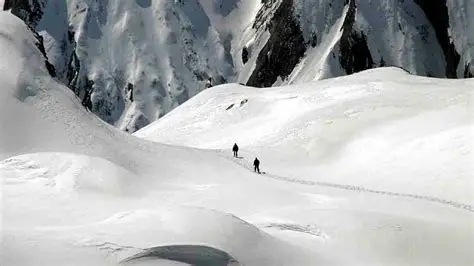
Avalanche Deaths in the Alps: What the Deadly 2025-26 Season Revealed About Snow, Risk and Skier Safety
Avalanche deaths in the Alps became one of the most serious mountain-safety stories of the 2025-26 winter. By mid-March, European Avalanche Warning Services had already recorded more than 100 deaths across European mountain regions. The final seasonal picture was even more severe: the EAWS 2025/26 fatality database now lists 151 avalanche deaths across its participating European countries, compared with 70 in 2024/25.
That total should be described carefully. It is a Europe-wide EAWS figure, not a count limited only to the Alpine arc. However, the four major Alpine countries recorded especially heavy losses: Italy 40, France 35, Austria 33 and Switzerland 18. Those national totals may include incidents outside the strict geographical Alps, but they show why avalanche deaths in the Alps dominated winter safety discussions.
Avalanche deaths in the Alps also exposed a problem that cannot be reduced to a single cause. Unstable snow layers, heavy snowfall after dry periods, wind, rapid temperature changes, terrain choice and human behaviour can combine quickly. Climate change is altering Alpine snow conditions over the longer term, but scientists do not say that global warming alone caused the 2025-26 spike.
For skiers and travellers, the lesson is more practical: beautiful conditions can still hide an unstable snowpack, and technical skiing ability is not the same as avalanche knowledge.
The 2025-26 avalanche toll was unusually high
The final EAWS fatality database lists 151 avalanche deaths during the 2025-26 season across the countries covered by the service. That is more than double the 70 deaths shown for 2024-25 and above the 147 recorded in 2017-18, the earliest season currently displayed in the same EAWS series.
The table below shows how unusual the season was in the recent EAWS record.
| EAWS season | Recorded fatalities |
|---|---|
| 2025-26 | 151 |
| 2024-25 | 70 |
| 2023-24 | 87 |
| 2022-23 | 104 |
| 2021-22 | 70 |
| 2020-21 | 131 |
| 2019-20 | 54 |
| 2018-19 | 95 |
| 2017-18 | 147 |
This comparison gives important context to avalanche deaths in the Alps. The original concern in March 2026 was based on a provisional toll of more than 100 deaths. By the end of the reporting season, the European total had risen further.
France offers a more detailed example. The French snow and avalanche association ANENA maintains a 2025-26 accident register that records fatal and non-fatal incidents, activities, burial information and the danger rating reported at the time. It includes deaths involving ski touring, off-piste skiing, mountaineering and other winter mountain activities.
The pattern behind avalanche deaths in the Alps is a reminder that danger is not limited to people deliberately seeking extreme terrain. Ski tourers, climbers, hikers and snowshoers can all enter avalanche terrain, sometimes without realising how rapidly conditions have changed.
Why the snowpack became so difficult
Avalanches are not caused simply by “too much snow.” What matters is how different layers of snow develop and bond, how wind redistributes snow, how temperatures fluctuate and whether weak layers remain buried beneath newer slabs.
During the difficult winter behind avalanche deaths in the Alps, rescuers described periods of snowfall followed by drier or warmer spells and then renewed heavy snow. That kind of sequence can load weak layers before they have stabilised. A skier or rider can then become the additional load that triggers a slab.
To interpret avalanche deaths in the Alps, European forecasters classify several common avalanche problems, including new snow, wind slab, persistent weak layers, wet snow and gliding snow. The official EAWS avalanche-problems framework is designed to help both forecasters and people travelling in the mountains understand not just the numerical danger level, but the type of instability they may encounter.
This distinction matters when discussing avalanche deaths in the Alps. A slope can look calm, untracked and inviting while a weak layer remains hidden beneath the surface. Fresh powder can even conceal signs of previous instability.
The EAWS database for 2025-26 repeatedly lists persistent weak layers, wind slab and new snow among the recorded avalanche problems in fatal incidents. Later in spring, wet-snow problems also appear. That pattern shows why one simplified explanation cannot cover an entire season.
Danger level 3 is more serious than many visitors realise
One of the most important lessons from avalanche deaths in the Alps is the meaning of the European avalanche scale.
The EAWS danger scale runs from 1, low, to 5, very high. Level 3 is officially called “considerable.” It does not mean that conditions are only moderately risky.
EAWS says that at level 3, triggering is possible even from low additional loads on the indicated steep slopes. The service also notes that roughly half of avalanche fatalities occur during periods rated level 3. Level 2, moderate, is also not a guarantee of safety and accounts for a substantial share of recorded deaths.
| Danger level | EAWS description | Practical meaning |
|---|---|---|
| 1 | Low | Generally stable, but isolated steep terrain can still be dangerous |
| 2 | Moderate | Instability exists on specific terrain features |
| 3 | Considerable | Dangerous conditions; human triggering can be possible with low additional load |
| 4 | High | Very dangerous conditions; triggering is likely on many steep slopes |
| 5 | Very high | Extraordinary conditions with numerous large natural avalanches possible |
This is especially relevant to avalanche deaths in the Alps because some fatal incidents occurred when the regional rating was 2 or 3, not only during the most dramatic level-4 or level-5 warnings. France’s official accident data includes fatal incidents at both levels 2 and 3 during the season.
A regional avalanche bulletin is also not a promise that every slope inside the forecast area carries the same risk. EAWS explains that danger levels describe regions rather than individual slopes. Aspect, elevation, terrain shape, wind loading and local snowpack conditions still matter.
For visitors, that means checking the full bulletin rather than looking only at a single number.
Off-piste terrain changes the safety equation
Avalanche deaths in the Alps also underline the difference between marked pistes and uncontrolled terrain. Patrol teams at major ski resorts monitor conditions, close runs when necessary and use mitigation measures in controlled areas. Once a skier leaves secured terrain, that safety system changes.
The Swiss Institute for Snow and Avalanche Research, SLF, states that most avalanche accidents happen outside secured pistes. Its avalanche prevention guidance recommends that freeriders and ski tourers check the current avalanche danger, carry the correct rescue equipment, observe conditions in the terrain and adapt their behaviour accordingly.
This is central to understanding avalanche deaths in the Alps. Strong skiing technique may help a person descend steep terrain, but it does not automatically provide the skills needed to identify wind-loaded slopes, persistent weak layers, terrain traps or safe spacing between group members.
That gap between athletic ability and mountain judgement was repeatedly highlighted by Alpine safety professionals during the winter.
The issue also fits a broader travel principle: preparation matters most when visitors leave managed environments. The News Ink’s smart travel guide covers the same basic idea in a wider context, encouraging travellers to research risks, local rules and emergency planning before setting out.
Avalanche rescue equipment is essential, but it is not a shield
After avalanche deaths in the Alps, safety experts repeatedly emphasised three standard tools for avalanche terrain: a transceiver, probe and shovel.
The transceiver helps companions locate a buried person. A probe is used to pinpoint the burial location, and a shovel is needed for excavation. An avalanche airbag may also reduce the chance of complete burial in some circumstances, but it does not eliminate the possibility of trauma, deep burial or death.
SLF says the best chance of rescuing a fully buried victim alive is within the first 15 minutes. Its guidance stresses that companion rescue is critical because professional rescue teams may not be able to arrive within that narrow window.
ANENA’s avalanche rescue guidance similarly emphasises immediate action and rapid emergency notification depending on the circumstances.
That helps explain why discussions of avalanche deaths in the Alps focus so heavily on equipment and training. A transceiver sitting in a backpack is not enough. Everyone in the group needs to know how to switch between transmit and search modes, conduct a systematic search, probe accurately and dig efficiently.
Practice matters because an avalanche rescue happens under intense pressure. Visibility may be poor, multiple people may be buried, another avalanche may still be possible and rescuers may have only minutes to act.
A simple backcountry safety kit
For off-piste skiing or ski touring, safety organisations commonly recommend:
- an avalanche transceiver worn correctly and switched on;
- a probe;
- a metal shovel;
- a charged mobile phone or reliable communication device;
- first-aid supplies;
- appropriate clothing and navigation tools;
- an avalanche airbag where suitable;
- the knowledge and practice required to use the equipment.
SLF specifically identifies the transceiver, shovel and probe as standard emergency equipment and recommends regular practice in their use.
Equipment reduces risk only when combined with route planning, avalanche education and conservative decisions.
What happened at La Chapelle-d’Abondance
The human cost of avalanche deaths in the Alps is clearer when looking at individual accidents.
On 22 February 2026, two experienced ski tourers were caught and killed by an avalanche at La Chapelle-d’Abondance in Haute-Savoie. ANENA’s accident record lists two people caught, two buried and two fatalities, with the regional danger rated level 3, considerable.
French reporting said the women were located the following day after they failed to arrive at work. Their vehicle had been found at a parking area used as a starting point for ski touring. Rescue teams later located them in avalanche debris.
This case helps explain why avalanche deaths in the Alps cannot be dismissed as a problem affecting only inexperienced tourists. Experience can reduce risk, but it cannot remove it. Familiarity with a mountain can even create confidence that becomes dangerous when the snowpack has changed.
The same principle applies across the Alpine region: conditions on a familiar route can be completely different after wind, rain, warming or fresh snowfall.
Climate change is changing the Alpine snow environment
Climate change belongs in any serious discussion of avalanche deaths in the Alps, but it needs precise language.
The European Environment Agency says snowfall and snow-cover extent have generally decreased across Europe, especially at lower elevations, and snow seasons have become shorter in many regions. An Alpine-wide analysis covering 1971 to 2019 found declining snow depth at most stations and a shorter duration of seasonal snow cover.
The News Ink’s broader climate change guide explains why warming affects weather patterns, ecosystems and human activity. In the Alps, the consequences are particularly visible because winter recreation, water resources, glaciers and natural hazards all depend heavily on temperature and precipitation.
However, it would be misleading to say climate change simply means “more avalanches everywhere.”
Research from SLF paints a more complicated picture. In its analysis of future avalanche activity, researchers found that dry-snow avalanches are projected to decrease overall as snow cover declines, while wet-snow avalanches can become more frequent at higher elevations and occur earlier in the season.
The European Environment Agency’s snow and ice assessment likewise documents declining snow cover and shorter snow seasons across much of Europe.
So what does climate change mean for avalanche deaths in the Alps?
It means the background environment is shifting. Freeze-thaw cycles, rain-on-snow events, the elevation of reliable snow and the timing of wet-snow instability can change. But whether a particular fatal avalanche was “caused by climate change” usually cannot be established from a single accident report.
The safer conclusion is that climate change is reshaping Alpine snow conditions while day-to-day avalanche danger still depends on the immediate weather, snowpack, terrain and human decisions.
Why a heavy-snow winter does not contradict global warming
Avalanche deaths in the Alps can occur during very snowy periods without contradicting the long-term warming trend.
Climate describes patterns measured over decades. Weather describes short-term conditions. A warmer atmosphere can still produce intense snowfall when temperatures remain cold enough, and mountain regions can experience large year-to-year variations even while average snow cover trends downward.
The EEA notes that Europe has experienced substantial regional and year-to-year variation even as overall snow cover declines, particularly in the Alps and other mid-altitude regions.
That is another reason avalanche deaths in the Alps should not be explained with slogans. A winter can include deep powder at high altitude while lower elevations experience reduced snow reliability. It can also include alternating warm and cold periods that create complicated layering within the snowpack.
For forecasters and resort operators, the challenge is not simply predicting how much snow will fall. It is understanding what happens to that snow after it lands.
Five decisions that can reduce avalanche risk
No checklist can eliminate the conditions behind avalanche deaths in the Alps, but established safety guidance points to several decisions that substantially improve preparation.
1. Read the full avalanche bulletin
Check the regional forecast before leaving, including the danger level, avalanche problem, elevation bands, slope aspects and expected changes during the day.
Météo-France publishes mountain avalanche information and advises people to prepare routes using both weather and avalanche information. Its mountain avalanche guidance also recommends travelling with others and carrying a detector, probe and shovel.
2. Match the route to the conditions
A planned objective should never become mandatory. If the forecast, visibility or snowpack is worse than expected, change the route or stay in secured terrain.
This is one of the simplest ways to reduce exposure behind avalanche deaths in the Alps.
3. Carry rescue equipment and practise with it
Every member of a backcountry group should have a transceiver, probe and shovel and know how to use them. Training should be refreshed regularly, not treated as a one-time course.
4. Avoid travelling alone
Companion rescue can begin immediately. A lone skier buried completely may have no one nearby to start a transceiver search during the critical early minutes.
5. Know when experience is not enough
Experienced skiers can still make poor terrain choices. Human factors such as familiarity, group pressure, commitment to a route and the attraction of fresh powder can influence decisions.
A professional mountain guide or qualified avalanche instructor can be valuable when visitors lack local knowledge or formal training.
Rescue teams face a race against time
The physics behind avalanche deaths in the Alps are unforgiving. A moving avalanche can carry a person into rocks, trees or terrain traps. Once the snow stops, it can compact around the body and make movement extremely difficult.
EAWS notes that even a medium, typical skier-triggered avalanche can involve around 1,000 cubic metres of snow and can bury, injure or kill a person. Larger slides can carry vastly greater destructive force.
That scale helps put avalanche deaths in the Alps into perspective. The danger is not simply suffocation under soft powder. Trauma can occur during the slide, while burial can restrict breathing and make self-rescue impossible.
Professional rescue remains essential, but the first response often comes from companions. That is why avalanche organisations repeatedly emphasise self-rescue training and rapid action.
The 2025-26 season changed the conversation
The most useful lesson from avalanche deaths in the Alps is not that skiing has suddenly become unsafe. Millions of people use Alpine resorts without being caught in avalanches, particularly on secured pistes.
The lesson is that the boundary between managed resort skiing and uncontrolled mountain terrain matters.
The 2025-26 season combined unstable snowpack problems, periods of heavy snowfall, significant human exposure and repeated off-piste incidents. The final EAWS toll shows that the consequences extended well beyond the provisional numbers reported in February and March.
It also showed why danger level 3 deserves respect, why rescue equipment must be paired with training, and why experienced skiers should still make conservative decisions when conditions are uncertain.
Climate change adds another layer. The science indicates that the Alpine snow environment is evolving, with shorter snow seasons at many elevations and a shift in the balance between dry- and wet-snow avalanche activity. That does not create a simple straight line between warming and every accident, but it does mean historical expectations about winter conditions cannot always be relied upon.
What skiers should remember before the next Alpine winter
Before entering backcountry or off-piste terrain, check the official avalanche bulletin, understand the specific avalanche problem, carry a transceiver, probe and shovel, travel with trained companions and be prepared to abandon the route.
Avalanche deaths in the Alps are a reminder that the mountains do not become safe because the weather looks clear, the powder looks perfect or a skier has visited the same slope many times before.
The strongest lesson from avalanche deaths in the Alps is that the safest decision is often made before anyone clips into their skis.
For more reporting and practical explainers, readers can join The News Ink on WhatsApp.