


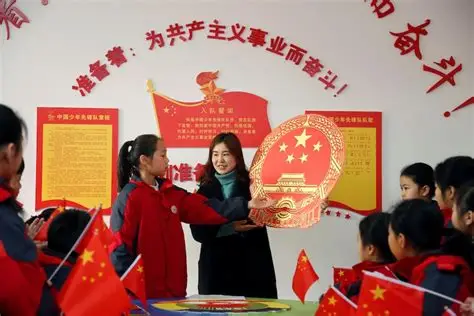
CHINA has approved a new law aimed at promoting what officials call “ethnic unity.”
The legislation requires children from ethnic minority groups to learn Mandarin Chinese from early childhood through high school.
Supporters say the law will strengthen national unity. Critics argue it may weaken the cultural identity of minority communities.
New Education Rules for Minority Students
The new law requires schools to teach Mandarin to all children before they enter kindergarten and continue the instruction throughout their school years.
Previously, students in some regions could study many subjects in their native languages.
These languages include Tibetan language, Uyghur language, and Mongolian language.
The legislation was approved during the annual session of the National People’s Congress in Beijing.
The parliament has never rejected a proposal presented during its sessions.
Critics Warn of Cultural Impact
Some scholars and activists believe the law could reduce linguistic diversity.
Magnus Fiskesjö said the policy reflects a major shift in China’s approach to ethnic diversity.
He argued that such policies could force future generations to lose their traditional languages and cultural practices.
Critics say the law could limit how minority communities preserve their heritage.
Government Defends the Policy
Chinese officials say Mandarin education will improve opportunities for minority students.
They argue that stronger Mandarin skills will help young people access better jobs and economic opportunities.
Authorities also say the law supports modernisation and national unity.
The policy is part of a broader strategy often described as the “sinicisation” of ethnic minorities.
Focus on National Integration
The majority of China’s population belongs to the Han Chinese community. This group represents more than 90% of the country’s 1.4 billion people.
The government has increasingly encouraged minority groups to integrate into the broader national identity.
These policies have drawn international attention in regions such as Tibet, Xinjiang, and Inner Mongolia.
Ongoing Human Rights Concerns
Human rights groups have long raised concerns about policies affecting minority communities.
In Tibet, authorities have tightened control over religious institutions and monasteries linked to Dalai Lama.
In Xinjiang, international organisations have accused the Chinese government of detaining large numbers of Uyghur Muslims in facilities described as “re-education camps.”
United Nations reports have also highlighted alleged human rights violations in the region.
Beijing denies these accusations and says its policies aim to combat extremism and improve economic development.
Debate Over Cultural Identity
Experts say the new law reflects the approach of Chinese leader Xi Jinping toward building a unified national identity.
Some analysts believe the policy could increase pressure on minority communities to adopt the dominant Han culture.
Others say it will strengthen social integration and improve economic opportunities across the country.
The debate over the law highlights the continuing tension between national unity and cultural diversity in China.