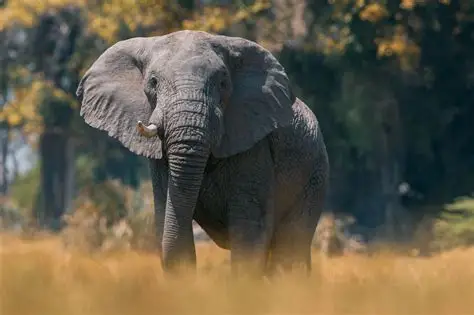
For decades, locals in southeastern Angola spoke about mysterious “ghost elephants” living deep in the wilderness. Many believed the animals were only part of legend. But explorer Steve Boyes finally proved the herd exists.
An Ancient Story
The Nkangala people have a unique origin story. According to their tradition, a young elephant once walked away from its herd and reached the Quembo River. At the riverbank, the elephant removed its skin. A hunter helped the animal, and a woman emerged from inside. The two formed a family, and the Nkangala believe they are descendants of that elephant.
Because of this belief, they see themselves as guardians of elephants. For many years, however, the animals they protected seemed to exist only as legends.
Why the Elephants Stayed Hidden
A 27-year civil war that began in 1975 made exploration of Angola’s remote highlands almost impossible. The region is vast and difficult to access. It covers a landscape nearly the size of England and remains largely uninhabited.
These conditions also made it the perfect place for elephants to hide from the outside world.
A Decade-Long Search
Explorer Steve Boyes spent years trying to confirm the herd’s existence. Over a decade, he placed more than 180 camera traps and used motion, acoustic, and heat sensors. He even searched the region by helicopter.
Despite these efforts, no elephants appeared. The mystery became an obsession for Boyes.
The story later inspired a documentary called Ghost Elephants, directed by Werner Herzog. The film follows Boyes’ 2024 expedition with a team of expert KhoiSan trackers from Angola and Namibia.
Unlike technology, the trackers’ traditional skills finally led the team to the hidden herd.
Discovering the Evidence
The documentary opens at the Smithsonian National Museum of Natural History. There, Boyes examines the remains of “Henry,” a giant bull elephant. The animal measured about 13 feet tall and weighed around 11 tons when it was killed in Angola in 1955.
Boyes believes the modern “ghost elephants” could be descendants of this massive animal.
A Harsh Landscape
The elephants live in Angola’s high plateau, known locally as Lisima lya Mwono, meaning “Source of Life.” This region contains wetlands, peatlands, and forests where the Okavango River begins its journey south.
The terrain is extremely challenging. Helicopters cannot land in many areas, and vehicles can only travel part of the distance. Explorers often carry motorbikes across rivers. Some parts of the region still contain active minefields left from the civil war.
From Discovery to Protection
After years of searching, Boyes finally located the elusive elephants. The discovery solved a long-standing mystery.
Now his mission has changed. Instead of searching for the elephants, he is focused on protecting them and their fragile habitat in Angola’s remote wilderness.