


Iran Weapons Stockpiles: Alarming 2026 War Warning as Missiles and Drones Run Low
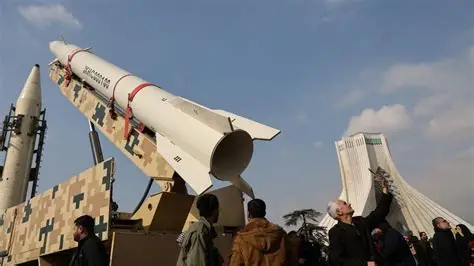
Iran weapons stockpiles have become one of the most important questions in the 2026 war because this conflict is no longer only about targets, speeches or battlefield claims. It is also about inventory.
The United States and Israel launched their campaign against Iran on 28 February, saying they wanted to destroy Iran’s missile, drone, naval, air-defence and nuclear-linked military capabilities. Iran responded with missiles and drones against Israel, U.S. forces and Gulf states. Within days, both sides were consuming advanced weapons at a pace that raised a basic military question: who can keep firing longer?
President Donald Trump insisted the United States had a “virtually unlimited supply” of munitions and could sustain the fight. Iran’s defence establishment has also claimed it can resist longer than Washington expects. But analysts are more cautious. Missiles, drones, interceptors, cruise missiles and precision-guided bombs are not political slogans. They are industrial products. They take money, supply chains, factories, rare components, trained workers and time.
That is why Iran weapons stockpiles could shape the length of the war. If Iran loses too many ballistic missiles and mobile launchers, its ability to threaten Israel and Gulf bases falls. If the United States and Israel burn through too many interceptors and long-range strike weapons, their freedom to keep fighting becomes more expensive. If drones remain cheap and available, Tehran can keep creating pressure even after losing more advanced systems.
For a wider explanation of how the conflict started, The News Ink’s report on why the US and Israel attacked Iran gives useful background on the nuclear, military and regional arguments behind the war.
Why Iran weapons stockpiles now matter so much
Iran weapons stockpiles matter because the war has turned into a race between destruction and replacement. The U.S.-Israeli side is trying to destroy launchers, depots, air defences, production sites and command systems. Iran is trying to preserve enough missiles, drones and hidden weapons to keep pressure on Israel, Gulf states and the United States.
This is not unusual in modern war. Early strikes often create dramatic images and bold claims, but long conflicts are decided by endurance. A country may lose launchers and still keep missiles underground. A defender may intercept hundreds of drones but spend expensive missiles doing it. An air campaign may dominate the sky but still struggle to find every mobile launcher.
That makes the numbers important, but also dangerous. Exact stockpiles are usually secret. Governments release figures that support their side. Independent analysts rely on satellite images, launch counts, debris, procurement estimates and intelligence leaks. The best article should treat every number carefully.
The main conclusion is still clear: Iran weapons stockpiles are being depleted, but they are not exhausted. U.S. and Israeli munitions are powerful, but not infinite. The war is now partly an industrial contest.
What U.S. officials claim
U.S. officials say the campaign has badly reduced Iran’s ability to launch missiles and drones. In a Pentagon briefing four days into Operation Epic Fury, Gen. Dan Caine said Iran’s theatre ballistic missile launches had fallen 86% from the first day of fighting and one-way attack drone launches had fallen 73% from the opening days. He also said U.S. Central Command had established localized air superiority along Iran’s southern coast and was expanding operations deeper inland.
Those figures help explain why Washington argues that the campaign is working. If Iranian launch rates fall sharply, U.S. officials can say launchers, command systems and stockpiles are being hit.
But a decline in launch rates does not prove Iran is close to running out. Iran may be rationing missiles. It may be saving weapons for higher-value targets. It may be shifting from ballistic missiles to cheaper drones. It may be waiting for gaps in air defences. It may also be struggling to coordinate attacks after losing senior commanders and launch infrastructure.
Iran weapons stockpiles therefore cannot be judged by one statistic. The key is whether launch rates stay low, whether the remaining missiles become less accurate, and whether Iran can still hit politically sensitive targets.
The scale of early weapon use
The early days of the war were intense. U.S. officials said Iran fired more than 500 ballistic missiles and more than 2,000 drones in the opening phase. Other reports and analysis gave slightly different counts, including figures of 571 missiles and 1,391 drones. The exact number depends on methodology, timing and whether attempted launches, intercepted weapons and salvos are counted differently.
The important point is not whether the number is 500 or 571 missiles. The important point is scale. Iran used hundreds of ballistic missiles and well over a thousand drones in a short period. That is a large expenditure even for a country with the Middle East’s biggest missile arsenal.
On the other side, every attempted interception also costs money. Patriot, THAAD, Arrow, David’s Sling, Iron Dome and ship-based systems are not unlimited. Some interceptors cost far more than the drones or rockets they destroy. That creates an uncomfortable equation for the United States, Israel and Gulf partners: defending every target can be more expensive than attacking it.
The News Ink’s analysis of global markets during the Iran war shows why this matters beyond the battlefield. If drones and missiles threaten energy facilities or shipping routes, the economic cost spreads quickly.
How large was Iran’s missile arsenal?
Iran weapons stockpiles were large before the war, but estimates vary widely. Reuters reported that Iran had the largest ballistic missile stockpile in the Middle East before the conflict. Israeli military officials estimated about 2,500 ballistic missiles capable of reaching Israel, while other analysts put the wider missile stockpile closer to 6,000.
That wide range matters. If Iran began with 2,500 longer-range missiles and lost a third, the damage is serious. If the broader arsenal was closer to 6,000 across different ranges and types, the picture changes. Iran may lose many launchers and still retain thousands of weapons, especially shorter-range systems and drones.
The U.S. has not publicly released a full pre-war estimate. Reuters reported that U.S. officials could confirm only about a third of Iran’s missile arsenal had been destroyed, with uncertainty around how many weapons were stored underground or buried in hardened sites.
This is the problem with Iran weapons stockpiles. The visible part may be damaged. The hidden part is harder to measure.
The underground problem
Air superiority does not automatically mean total destruction. Iran has spent years building underground missile facilities, tunnels and hardened storage sites. Some are designed specifically to survive airstrikes.
That limits what U.S. and Israeli aircraft can achieve. They can destroy surface launchers, radar, command centres, hangars, depots, vehicles and exposed infrastructure. They can collapse entrances, damage ventilation, strike power systems and kill commanders. But destroying every missile stored deep underground is much harder.
Military history supports this caution. Air campaigns can degrade an enemy, but rarely erase it completely. Hamas remained active in Gaza despite years of Israeli bombing. The Houthis survived a long U.S. and Saudi-led pressure campaign in Yemen. Russia and Ukraine have both kept fighting despite enormous strikes on depots, airfields and energy systems.
Iran weapons stockpiles may therefore survive in smaller, more hidden and more carefully used forms. That does not mean Iran is strong. It means the war may last longer than early claims suggest.
Drones change the calculation
Drones are the most important reason Iran weapons stockpiles may last longer than missile counts suggest.
Iran is a major manufacturer of one-way attack drones, especially Shahed-type systems. Reuters has reported that Iran pioneered the Shahed drone and supplied large quantities to Russia for use in Ukraine. Drones are cheaper than ballistic missiles, easier to disperse and often easier to produce in large numbers.
This changes the attrition equation. A ballistic missile can be expensive and difficult to replace. A simple attack drone can be built more cheaply, launched in groups and used to force defenders to spend expensive interceptors. Even if many drones are shot down, the attacker may still gain by exhausting defences, forcing alerts, damaging infrastructure or disrupting shipping.
That is why Iran weapons stockpiles should not be measured only by ballistic missiles. If Iran has fewer missiles but many drones, it can still threaten energy sites, ports, desalination plants, bases and shipping routes.
The News Ink’s cybersecurity guide is relevant because modern drones increasingly depend on communications, navigation, jamming resistance, targeting data and electronic warfare. The contest is physical and digital at the same time.
The U.S. stockpile problem
Trump’s public message was confidence. He said the United States had enough weapons to fight for as long as needed. U.S. officials also said they had sufficient precision munitions for the mission.
But the industrial reality is more complicated. Reuters reported in June that the war with Iran, combined with years of supplies sent to Ukraine, had depleted U.S. weapons stockpiles. The White House met defence firms to discuss speeding up production, including major companies such as Lockheed Martin, RTX, Northrop Grumman, Boeing, BAE Systems and others.
CSIS later assessed that replenishing some key U.S. weapons would take years. Tomahawk missiles, THAAD interceptors and Patriot missiles were listed among systems that could require three or more years to return to pre-war inventory levels. Standard Missiles could take around two years, while some other systems could be replaced faster.
This does not mean the United States is about to run out in the Iran war. It means the U.S. must think about the next war too. If Washington uses too much in Iran, it may face shortages in a future crisis involving China, Russia or another major conflict.
That is why Iran weapons stockpiles are only half the story. American and allied stockpiles matter too.
The interceptor dilemma
The interceptor dilemma may be the most dangerous military-industrial problem in the war.
Iran can launch relatively cheap drones and some cheaper missiles. Defenders often respond with expensive interceptors. If a $50,000 or $100,000 drone forces the defender to spend a missile costing millions, the attacker can lose many drones and still impose economic pain.
AP reported that analysts were concerned about the strain on U.S. and Israeli interceptor supplies. Tom Karako of CSIS warned that the United States and Israel could run out of interceptors before destroying the rest of Iran’s missile stockpiles and mobile launchers. That is the nightmare scenario for defenders: Iran still has enough weapons to fire, while the defence side becomes more selective about what to intercept.
This does not mean missile defence is failing. It has saved lives and protected bases. But every successful interception reduces inventory. Every missed interception creates political pressure to defend more aggressively. Both outcomes consume resources.
Iran weapons stockpiles are therefore shaping decisions on both sides. Tehran may aim to stretch defences. Washington and Israel must decide which threats justify the most expensive responses.
Air superiority helps, but it is not victory
U.S. and Israeli air forces appear to have gained major freedom over parts of Iran. That helps them hit launchers, air defences, naval assets, command sites and production facilities. It also allows faster follow-up strikes when intelligence identifies a target.
But air superiority is not the same as strategic victory. Iran is large. Mobile launchers can move. Drones can be launched from dispersed sites. Production can be hidden, repaired or relocated. Some facilities are underground. Others may be mixed with civilian infrastructure, increasing the risk of civilian harm.
That is why the next phase of the war is likely to focus on intelligence. Finding missiles matters as much as destroying them. If the U.S. and Israel can identify launchers before launch, Iran’s threat drops. If Iran can hide enough systems, it can keep firing at a lower but politically painful rate.
This is where Iran weapons stockpiles become a tracking problem. It is not only how many weapons exist. It is where they are, whether they can be launched, and whether commanders can coordinate them.
What stockpile pressure does to strategy
When weapons become scarce, strategy changes.
Iran may use fewer ballistic missiles and more drones. It may concentrate attacks on energy infrastructure rather than military bases. It may fire less often but aim for higher-value targets. It may try to create economic disruption through the Strait of Hormuz rather than seek direct military victory.
The United States and Israel may also change tactics. They may shift from expensive long-range standoff weapons to cheaper bombs once air defences are degraded. They may prioritize launchers and factories over symbolic targets. They may use drones or lower-cost systems for some missions. They may become more selective about intercepting low-probability threats.
That is what attrition does. It forces both sides to ask which targets are worth the weapon.
Iran weapons stockpiles are therefore not just a supply issue. They are changing the way the war is fought.
Key stockpile pressures in the Iran war
| Side | Main pressure | Why it matters |
|---|---|---|
| Iran | Ballistic missile losses | Reduces ability to hit Israel and Gulf bases at scale |
| Iran | Mobile launcher destruction | Weapons are less useful if they cannot be launched |
| Iran | Drone production and storage | Cheap drones can keep pressure on defences and energy sites |
| United States | Tomahawk and long-range strike use | Replenishment can take years |
| United States | Patriot and THAAD interceptors | Critical for defending troops and allies |
| Israel | High-end interceptor use | Defence decisions become harder if salvos continue |
| Gulf states | Air-defence strain | Bases, energy sites and ports require constant protection |
| Global economy | Energy infrastructure vulnerability | Drone attacks can move oil, gas and insurance markets |
Why the Strait of Hormuz matters
The Strait of Hormuz gives Iran a way to turn stockpiles into global leverage. Reuters reported that the waterway carried around a fifth of global oil and gas supplies before the war. If Iran can threaten ships, ports, pipelines, refineries or LNG facilities, it can affect energy prices far beyond the battlefield.
This makes drones especially important. Cheap drones can threaten expensive infrastructure. Even failed attacks can force shipping delays, insurance increases, rerouting and military escorts. That gives Iran a pressure tool even if its ballistic missile stockpile declines.
The News Ink’s report on Iran retaliatory strikes across Dubai and Gulf bases explains how the conflict has already reached civilian and commercial spaces. Once hotels, airports, ports and energy systems become targets, the war becomes harder to contain.
Iran weapons stockpiles are therefore linked directly to the global economy. The question is not only whether Iran can hit a base. It is whether it can make the region feel unsafe enough to force negotiations.
Production capacity may decide the timeline
The war will last longer if both sides can keep replacing what they use. It will shorten if one side loses the ability to sustain pressure.
Iran’s production system is under attack, but it has experience building missiles and drones under sanctions. That may help it repair, hide and improvise. The United States has a far larger defence industry, but advanced missiles and interceptors have long production lead times. Money helps, but factories cannot instantly produce complex systems at wartime scale.
CSIS made this point clearly: the problem is not only funding. It is time. Production lines, subcontractors, motors, sensors, guidance systems and trained workers all limit how quickly inventories can recover.
Iran weapons stockpiles may therefore shape the war in two ways. In the short term, remaining missiles and drones determine battlefield pressure. In the long term, industrial capacity determines who recovers faster.
What to watch next
The next signs will be visible in patterns rather than speeches.
First, watch Iran’s ballistic missile launch rate. If it keeps falling and does not recover, the campaign against launchers and stockpiles is likely working. If it rises again, Iran may have been rationing.
Second, watch drone attacks. If drones become more common than missiles, Iran may be shifting to cheaper attrition.
Third, watch interception choices. If Israel, the United States or Gulf states become more selective, that may suggest interceptor pressure.
Fourth, watch strikes on factories and depots. If U.S. and Israeli operations increasingly target production, the goal is no longer only to stop today’s launches but to prevent rebuilding.
Fifth, watch defence-industry announcements. New contracts, emergency production deals and delayed exports will show how seriously Washington views the stockpile problem.
Finally, watch diplomacy. Wars often move toward negotiation when weapons stocks become painful. Leaders rarely admit that openly, but inventory pressure can push them toward an off-ramp.
The final judgment
Iran weapons stockpiles could shape the war because this conflict is becoming a contest of endurance.
The United States and Israel have damaged Iran’s military capabilities, reduced launch rates and gained air superiority in important areas. Iran has lost launchers, missiles, drones, air defences and command capacity. But Iran has not been disarmed. It still appears able to fire missiles, launch drones, threaten Gulf infrastructure and use the Strait of Hormuz as leverage.
At the same time, the U.S. and its allies face their own stockpile problem. Advanced munitions and interceptors are powerful, but many take years to replace. A country can have the world’s strongest military and still face hard choices if a war consumes weapons faster than factories can rebuild them.
That is the real lesson. Modern wars are not won only by the side with better aircraft or louder statements. They are shaped by magazines, factories, supply chains and the ability to keep pressure on the enemy after the first dramatic strikes.
The Iran war may not end because one side suddenly runs out of weapons. It may end because both sides discover that every additional week costs more than it gains.
For more world politics and conflict analysis from The News Ink, follow The News Ink on X.